
From the beginning, our parent-led garden club decided to be completely open with the development of the garden. We had no agenda, hidden or otherwise, in what the garden would eventually look like. Our plan was to create the stage (mulch the pathways, amend the soil, build a shade structure, renovate the gazebo) and let it grow from there.
One reason is that we didn’t want teachers to feel any pressure whatsoever; the other reason is that we understand how creativity works. Too many predetermined conclusions equals very little room for interesting things to happen.
The breast cancer awareness garden was one of the first projects to spring up. A parent and teacher were in conversation about cancer diagnoses in the lives of their friends and family. As Marisa writes,
The conversation gave me the idea to create a garden bed that could bring awareness to people, memorialize our loved ones, and also be a character building activity for the students. Then, in a Family Circle magazine, I came across an article about a woman making a difference in Maine. Robin Whitten founded the Pink tulip Project which raises awareness and funds for women’s cancer research. I registered us as a potential garden site for the Pink Tulip Project and then sent out the website to everyone that I knew. The students were encouraged to send out emails to their family members also. After receiving over $250 in donations on behalf of our garden bed, the organization sent us 100 pink tulip bulbs to plant. Mrs. Younces’s and Mrs. Cauzza’s second grade students planted the bulbs after Kathy and I dug out the bed in the shape of a ribbon.
It is one of the most beautiful elements of our garden, and it is starting to come up this week. The ribbon is mulched with red bark and lined with stone. Daffodils are planted in the center of the ribbon.
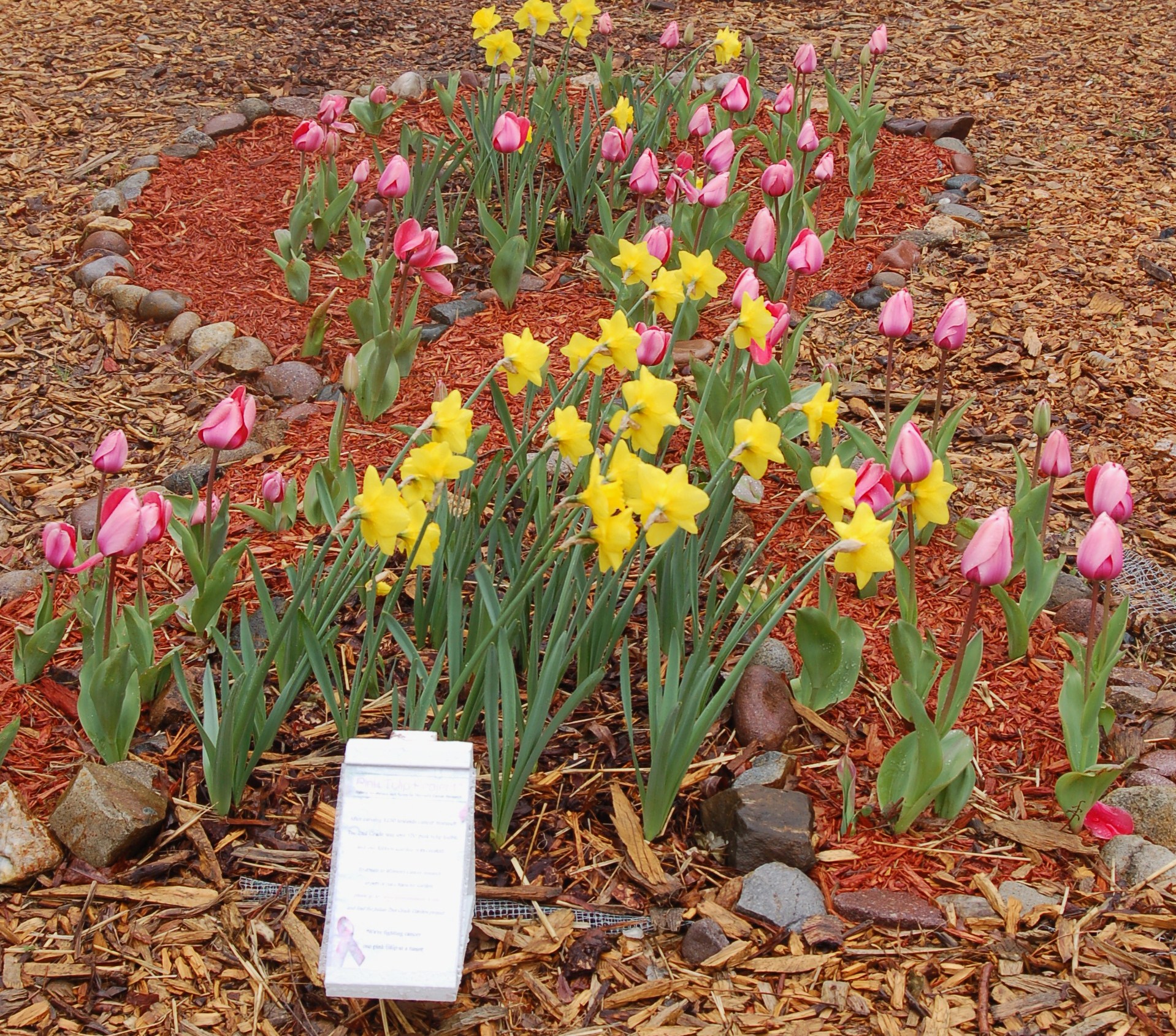
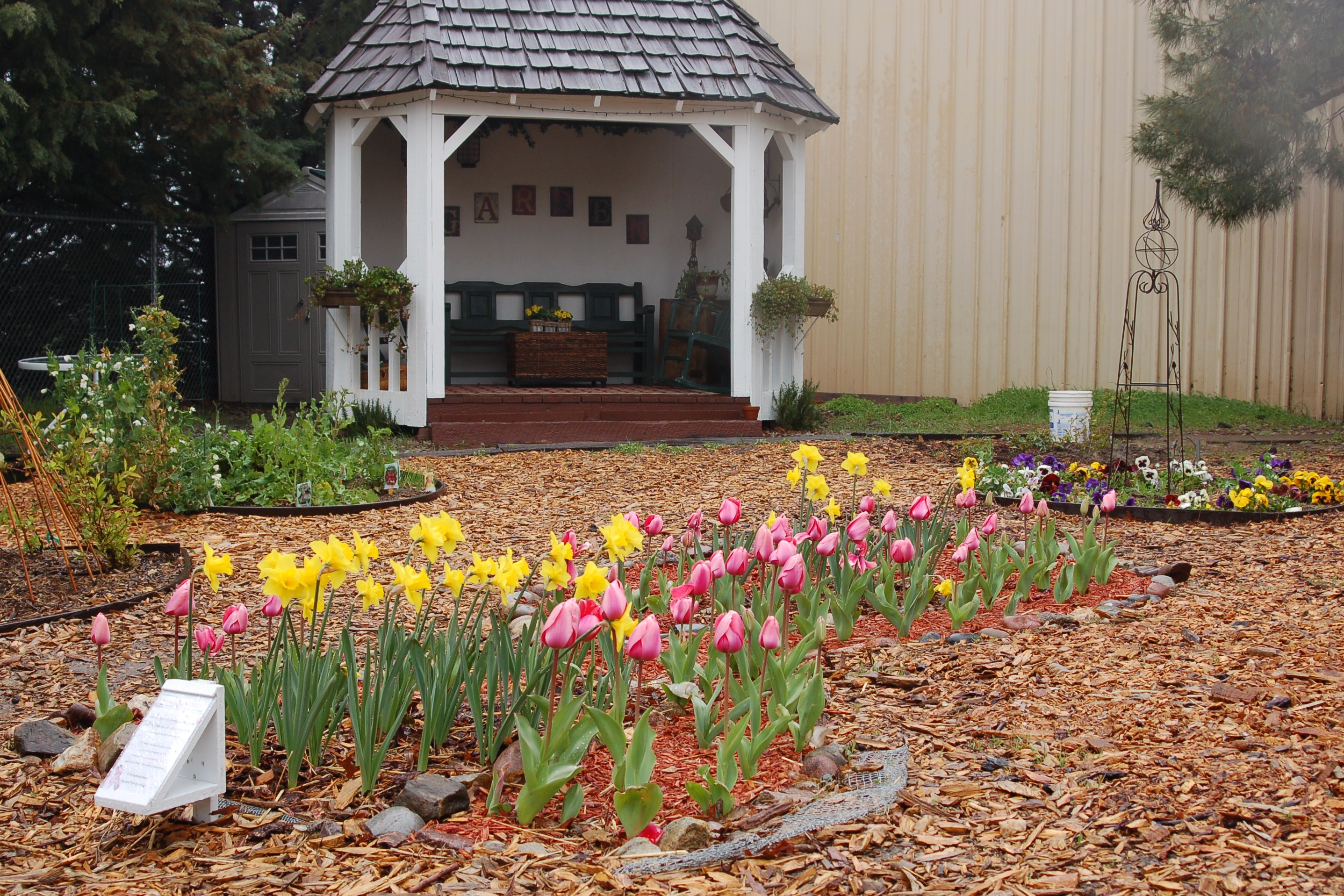
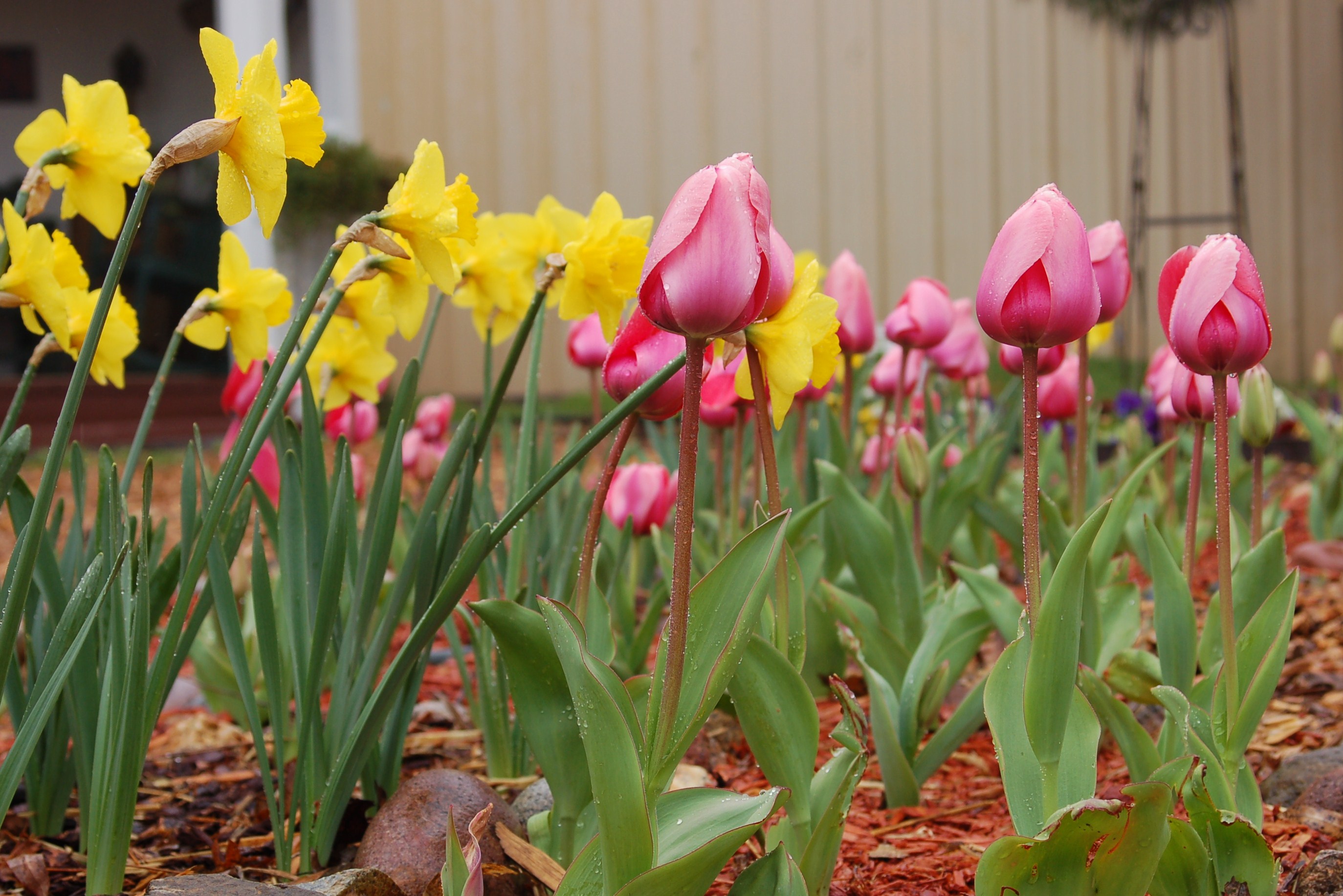

Photos courtesy of Marisa McFedries
 What's not to like?