Scary statistics/hopeful trends

At our backcountry collaborative meeting this week, a guest speaker from the San Diego County Office of Education talked about the growing national obesity epidemic.  Consider these frightening statistics she mentioned:

-A child born today in the U.S. is likely to have a shorter lifespan than his/her parents.

-40% of children in San Diego County are considered overweight or clincally obese.

-The Department of Defense has called the obesity epidemic an issue of national security because 75% of young people otherwise eligible for service in the armed forces cannot pass the fitness test.

The good news is that we are starting to see an increased emphasis on physical education, outdoor exposure, and healthy eating habits in school programs, community initiatives and funding opportunities.  Similarly, increasing attention is also being placed on connecting school children to local, fresh food, often through school garden programs.  One thing I hope to do more with kids at our school is to help them understand where and how food is grown in our community, starting with our neighborhood farms and reaching out into the county.

Yesterday I led an after school field trip for the GATE students to Volcan View Farms where we were given a tour by local farmer and early-friend-to-our-school-garden, Ryan Wannamaker.
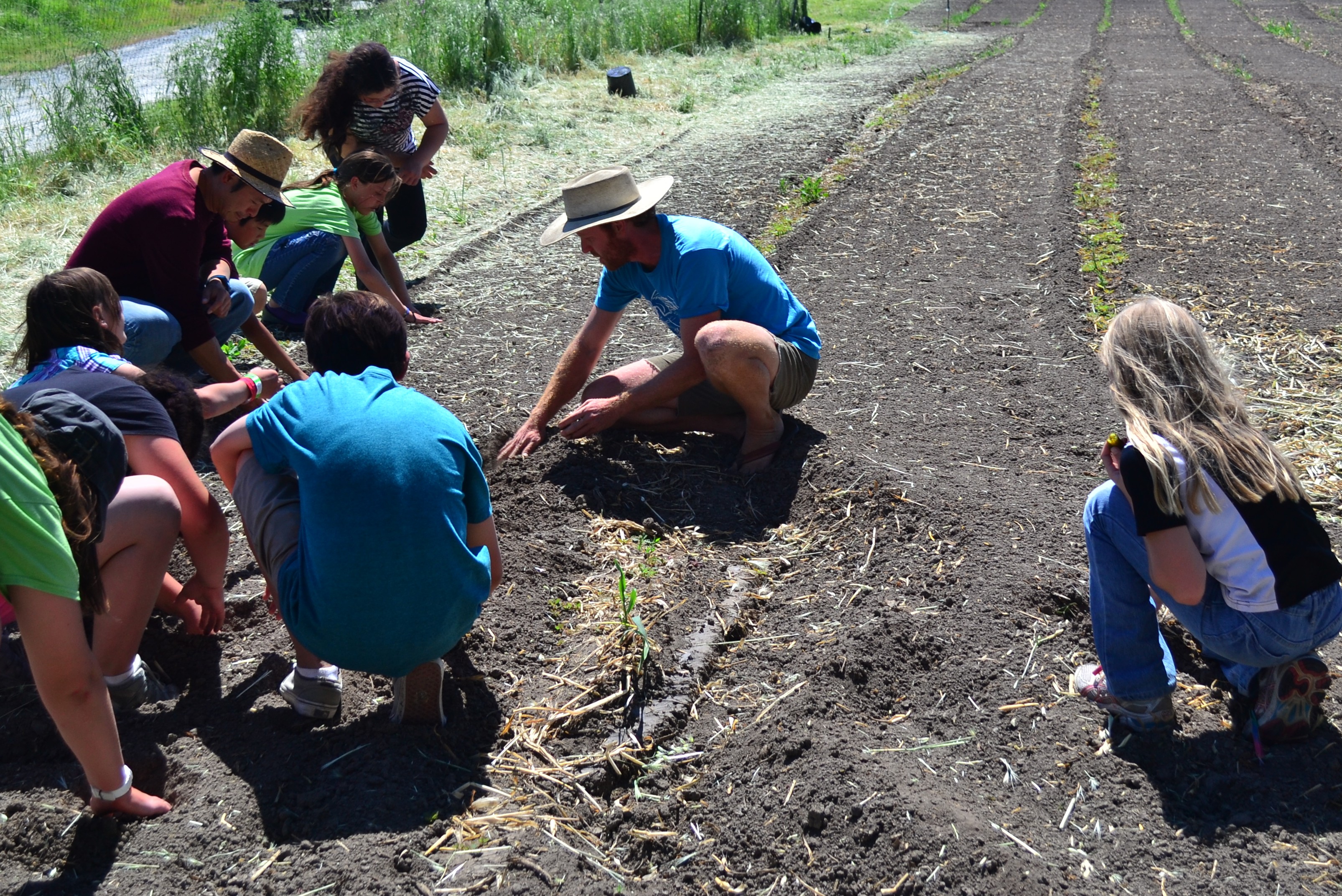
Ryan showing how he “grows” soil—the rye grass and bell beens grown in this field as a cover crop and plowed under six weeks ago now make for rich and rejuvenated soil for this year’s plantings (Photo courtesy of Marisa McFedries)

Up close with what’s growing now in Julian (Photo courtesy of Marisa McFedries)
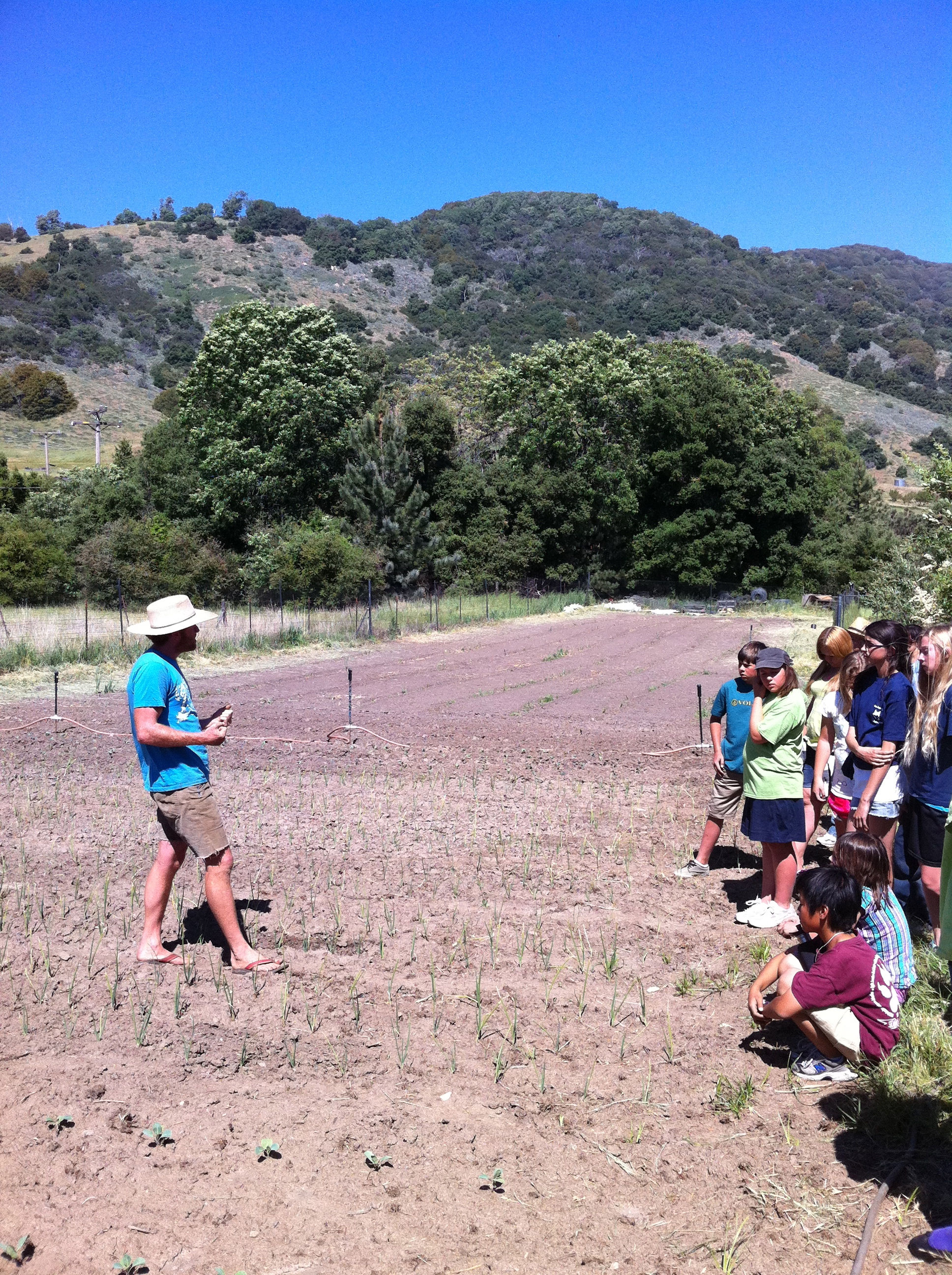
Talking about 3,000 onion transplants in the shadow of Mount Volcan
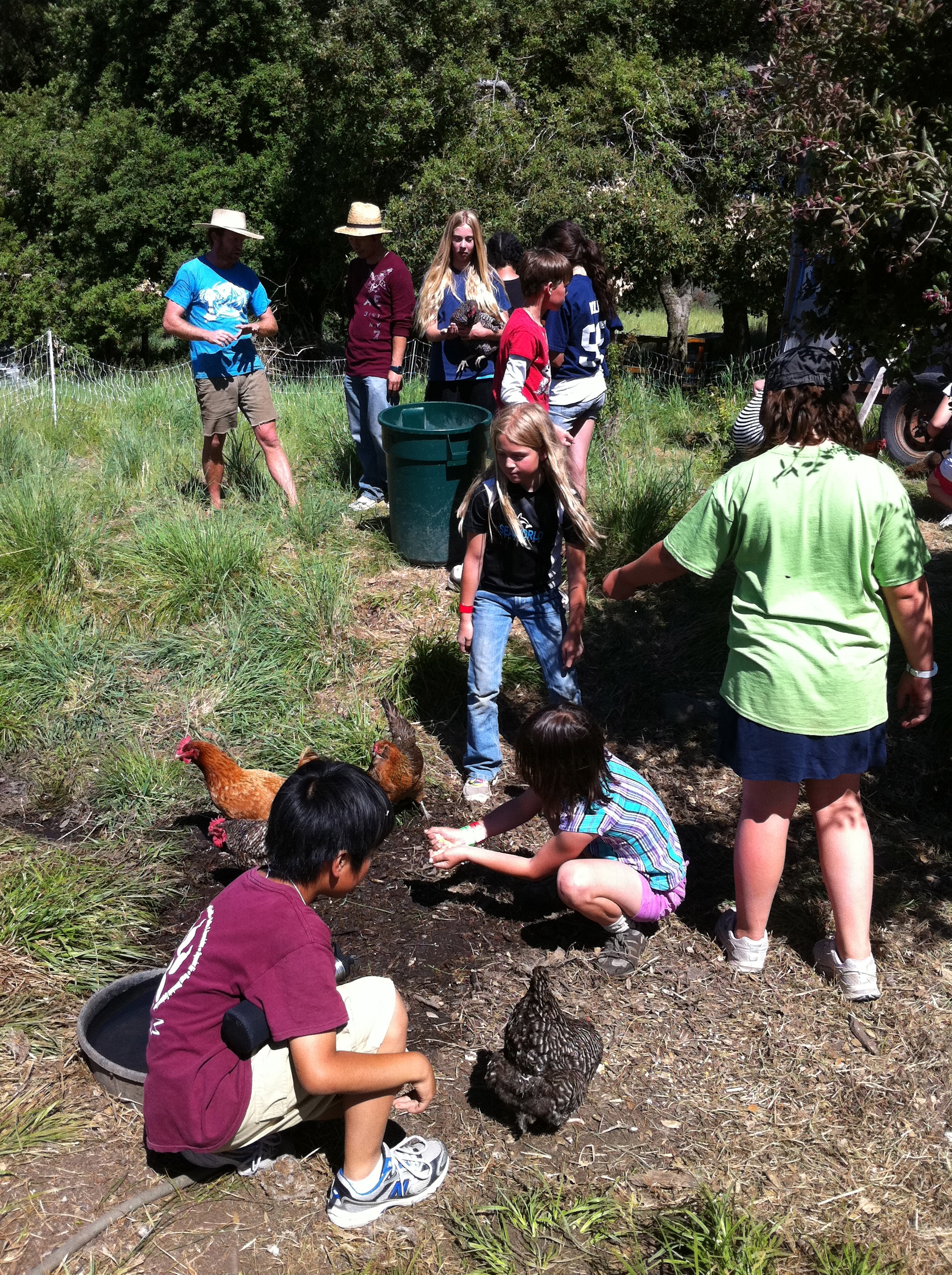
 

Hanging with the chickens

95% of students report “yum” on kale

Our garden ambassadors periodically cook/prepare garden produce and host a “taste test” during the 10:15 recess at this adorable cart:

Thank you Kymm for repurposing this old AV cart we found in the storage barn!

Today we tackled kale—considered by many to be the most nutritious vegetable to eat.  It also seems to grow effortlessly and abundantly—here’s some plants grown from seed by our PLUS team (junior high leadership).

Kale framed by yellow snapdragons

Kale can also be perceived as hard to eat.  To introduce it to our kids in a positive way, the ambassadors met before school to blend up smoothies with kale, apple juice, bananas, celery and fresh lemon juice.  Kids lined up for a taste, and the girls recorded a “yum” or “yuck” rating.

I love this idea because it introduces kids to new foods and flavors, all in the fun of a recess “taste test.”  One girl lingered for a few minutes before getting up the nerve to down her ounce of green smoothie—once she did, she asked for the recipe so her grandmother could make her more.  Some kids got back in line and begged for seconds.  Another little girl said she wished we had it every snack recess.  Teachers came out to taste test too!

Mrs. Younce gives kale smoothie an enthusiastic “thumbs up”!

From the garden to the cafeteria

Last month I attended the “Garden to Cafeteria Food Service Workshop” held in a conference room at the San Diego Zoo.  Recognizing the need for school gardens, and their recent surge in popularity, this one-day seminar was about establishing good protocols for harvesting garden produce for school lunch programs.  Here’s a sampling of my notes from the day:

  • Ventura School District buys 80% of their produce locally and has moved to scratch cooking—and this is serving 2 million meals a year!  Farewell Mystery Meat!  We heard about their innovative program, which included the district purchasing vegetables from one of their high school garden clubs.  Sandy Curwood, the district’s Food Services director, said that in preparing fresh, local food she has seen her budget remain the same but with an important shift.  What she has saved in processed food has been spent on hiring more people to prepare food.  A great trade-off, I think!
  • Sandy emphasized the importance of nutrition education in conjunction with the introduction of new foods.  Kids may not like new fruits or vegetables at first, but much like teaching math, we don’t eliminate teaching something because kids have initial resistance to it!
  • Great quote from Sandy Curwood:  “The famer/gardener is the frontline health practitioner.”
  • Interestingly enough, one of the organizers of the event was the San Diego Childhood Obesity Initiative.  With 30% of kids considered “clincally obese,” this group has an interest in school gardens and nutrition, maintaining that kids who have a hand in growing their food are more likely to form good eating habits.
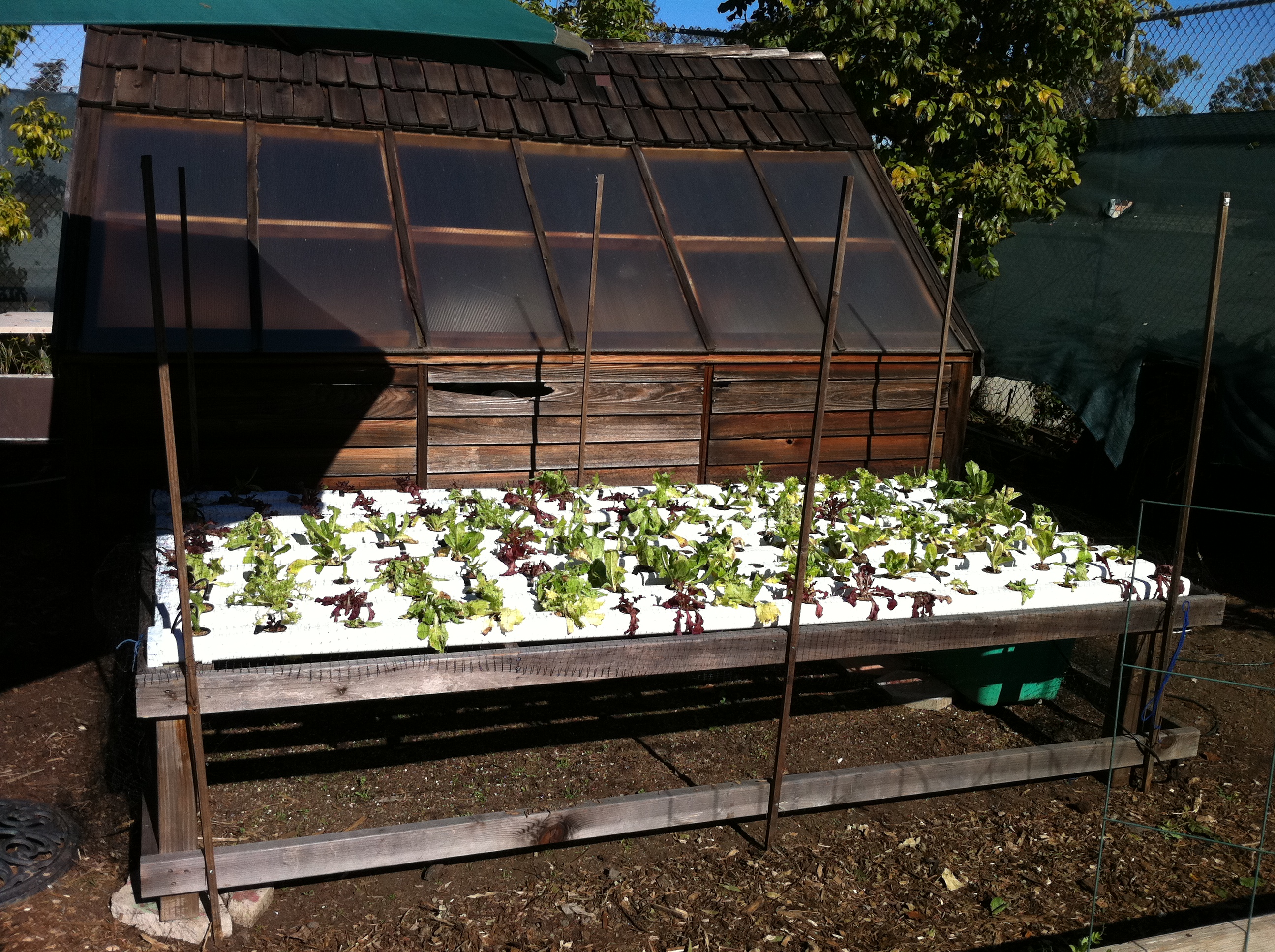
  • Another presenter was San Diego Unified.  This district has recently written up a set of protocols for maintaining school gardens and safely harvesting food.  We walked to Roosevelt Middle School, an adjacent campus to the zoo that has a garden.  From their hydroponic garden, we harvested, rinsed and prepared lettuce, practicing the new SDUSD rules and regulations.
  • The workshop had a waiting list of people wanting to attend.  Hopefully this interest signals the fact that school gardens are slowly becoming more incorporated into the central life of schools.

The hydroponic system (and potting shed) at Roosevelt Middle School