Garden Tour, August 2012

Here’s a look at what’s happening in the garden this month:

The sixth graders helped put a fresh layer of straw mulch around the fruit trees.  (Note that the mulch is pulled away from the tree trunk–that’s so the trunk doesn’t get wet and disease prone.)

We’ve had luck with this blackish-purpleish heirloom tomato called “Indigo.”

Our school had a lot of remodeling and shuffling of classes this summer, and the garden ended up with an extra white board.  Hanging on the fence in front of the table, it’s ideal for teaching lessons in the garden.

The five kids that served as garden ambassadors for two years are now recognized in the habitat garden.

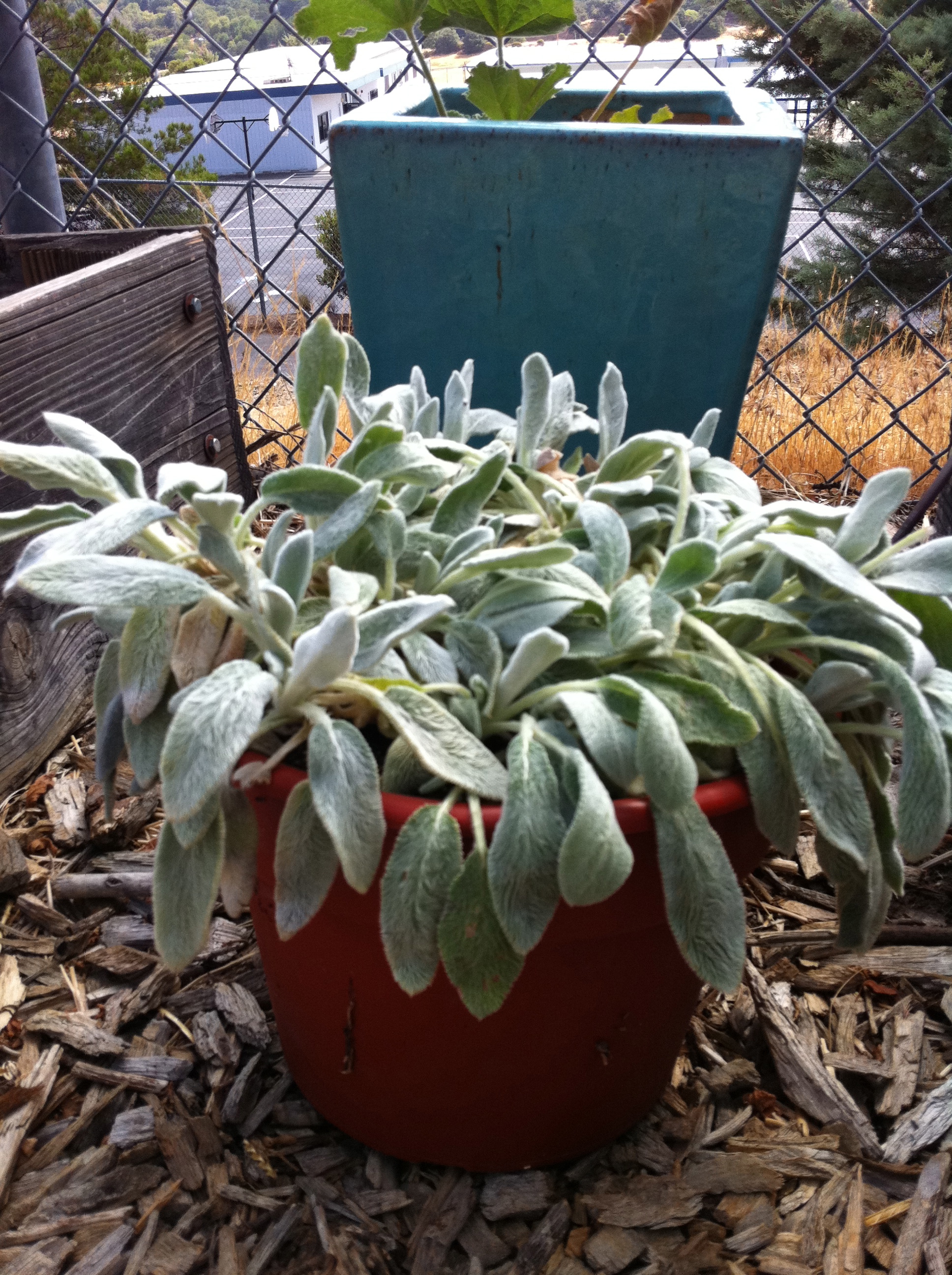
An idea from a long time ago that I’d like to get going is to have a sensory garden.  I’m thinking this might be a collection of plants in containers, so I added our first specimen this week:  the irresistible “lambs ear.”
Don’t you just love volunteers, of all kinds?

Here’s a cool thing about school gardens: they are not perfectly manicured showpieces but learning spaces.  So you forget about your oregano and it goes a little crazy, flowering and seeding?  Leave it!  It’s pretty, you can teach about the plant life cycle, and you encourage the pollinators.

Two baby milkweed plants I got from another school garden.  It’s fun to think a monarch butterfly might find them; it’s also fun to think they came from a kindred project.

Something remarkable is about to happen

Julian has a few famous people.  One of these local/global treasures is the artist James Hubbell, who lives and works in our little town.  Mr. Hubbell has buildings, sculptures and paintings all over the globe.  People find his work wildly creative and soaringly beautiful, and he’s known the world over for his visionary spirit, wide artistic range and kind heart.

Guess what?  He’s making a piece for our school garden.

Not just any piece—an original gate, inspired by our little garden.  This work of art is going to be installed on a section of our school garden that was once a no account piece of broken asphalt in a weedy corner of campus that no one ever visited.  This, I believe, is redemption writ large, and it’s all happening in the next two weeks.

I’ll be telling the story in the next couple posts.  For now, just know that something remarkable is on its way, and this is the “before.”

Gardens as places to recharge

The goal of this blog is to tease out all of the good things that school gardens can do.  Some things are obvious: kids learn good nutrition when they plant, tend and harvest their own food.  But other things are more subtle, and I like to point out these less obvious values.  A benefit of school gardens that I have never heard explicitly talked about before is described below by Susi Jones, the executive director of our family resource center.  A beautiful campus gardens is a place where staff can recharge.  Susi writes:

It may seem curious to see a school staff member wandering in the Character Garden in the middle of the day, but not when you think of gardens as an antidote to the day’s chaos!

Our beautiful school garden- with its native strawberries, gazing ball, dry rock river bed, and flowering orchard- was a calming retreat for me on a particularly busy morning. My feet took me to the garden before I really had determined where I was headed.  After just a few minutes of wandering in the garden by myself, enjoying the quiet and peaceful surroundings and collecting my thoughts, I was ready to head back and meet the next challenge.

I know that school gardens enrich curriculum and are healthy for children… and now I know that our school garden is where I will head the next time I want a few moments to relax, refocus, and reenergize.

95% of students report “yum” on kale

Our garden ambassadors periodically cook/prepare garden produce and host a “taste test” during the 10:15 recess at this adorable cart:

Thank you Kymm for repurposing this old AV cart we found in the storage barn!

Today we tackled kale—considered by many to be the most nutritious vegetable to eat.  It also seems to grow effortlessly and abundantly—here’s some plants grown from seed by our PLUS team (junior high leadership).

Kale framed by yellow snapdragons

Kale can also be perceived as hard to eat.  To introduce it to our kids in a positive way, the ambassadors met before school to blend up smoothies with kale, apple juice, bananas, celery and fresh lemon juice.  Kids lined up for a taste, and the girls recorded a “yum” or “yuck” rating.

I love this idea because it introduces kids to new foods and flavors, all in the fun of a recess “taste test.”  One girl lingered for a few minutes before getting up the nerve to down her ounce of green smoothie—once she did, she asked for the recipe so her grandmother could make her more.  Some kids got back in line and begged for seconds.  Another little girl said she wished we had it every snack recess.  Teachers came out to taste test too!

Mrs. Younce gives kale smoothie an enthusiastic “thumbs up”!

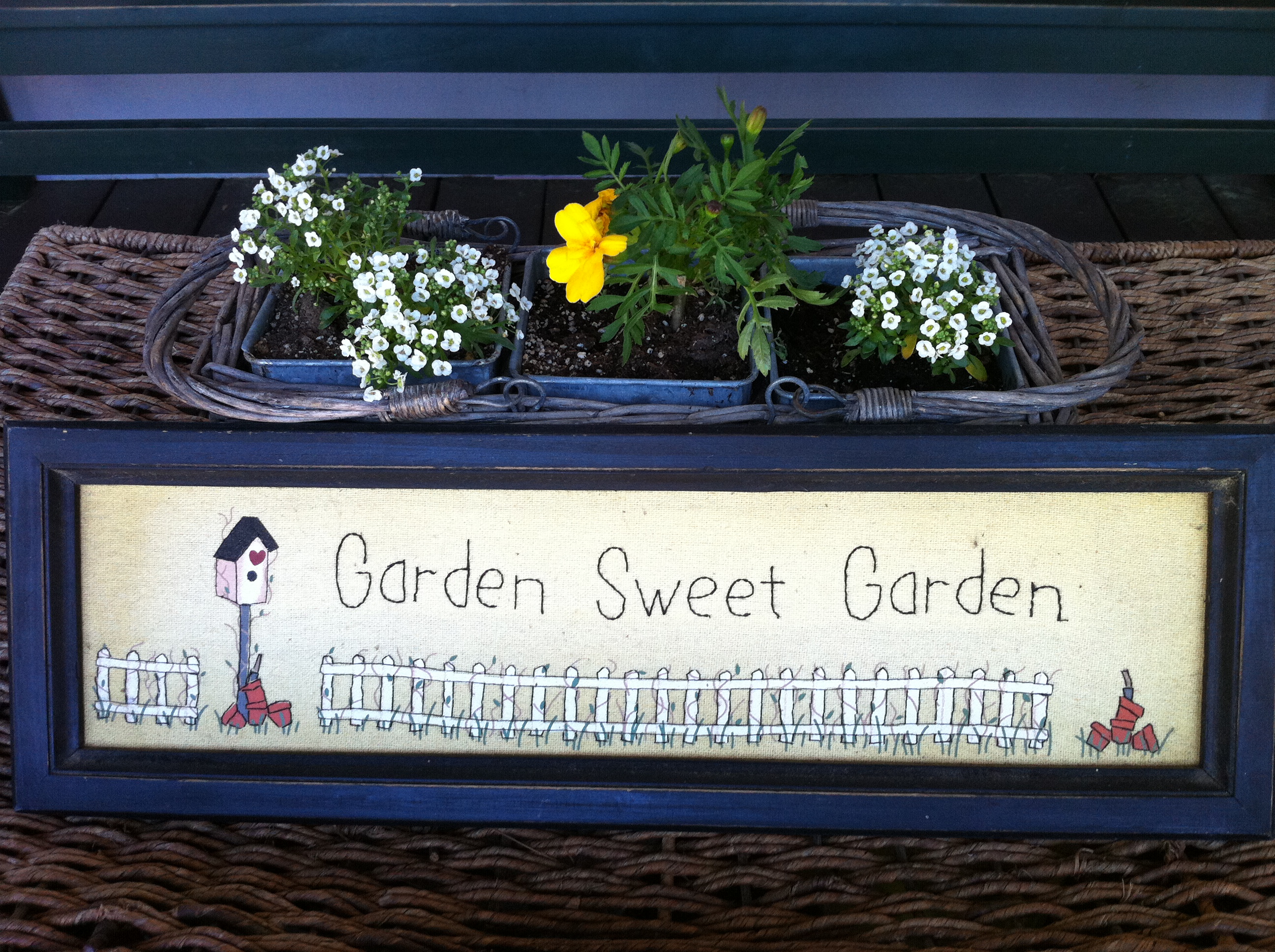
Garden traditions: a tea party for our staff

For any school starting a garden, I would recommend the early implementation of traditions.  One we started our first year was throwing a tea party on Administrative Professionals Day.  Seven beloved staff members receive an invitation:

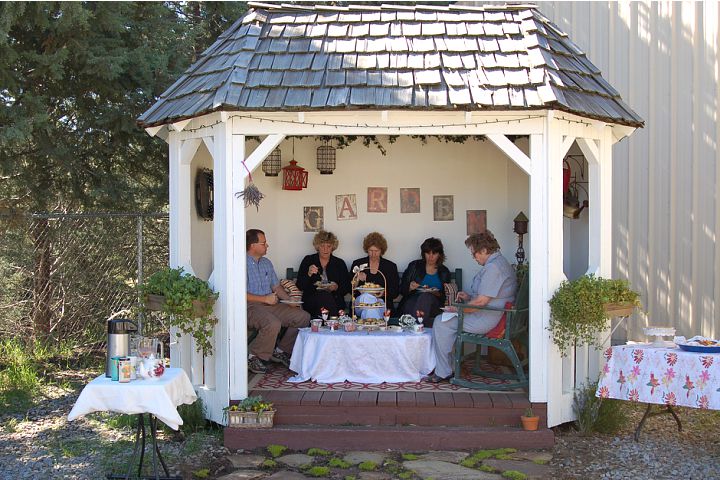
And then we have high tea in the garden!

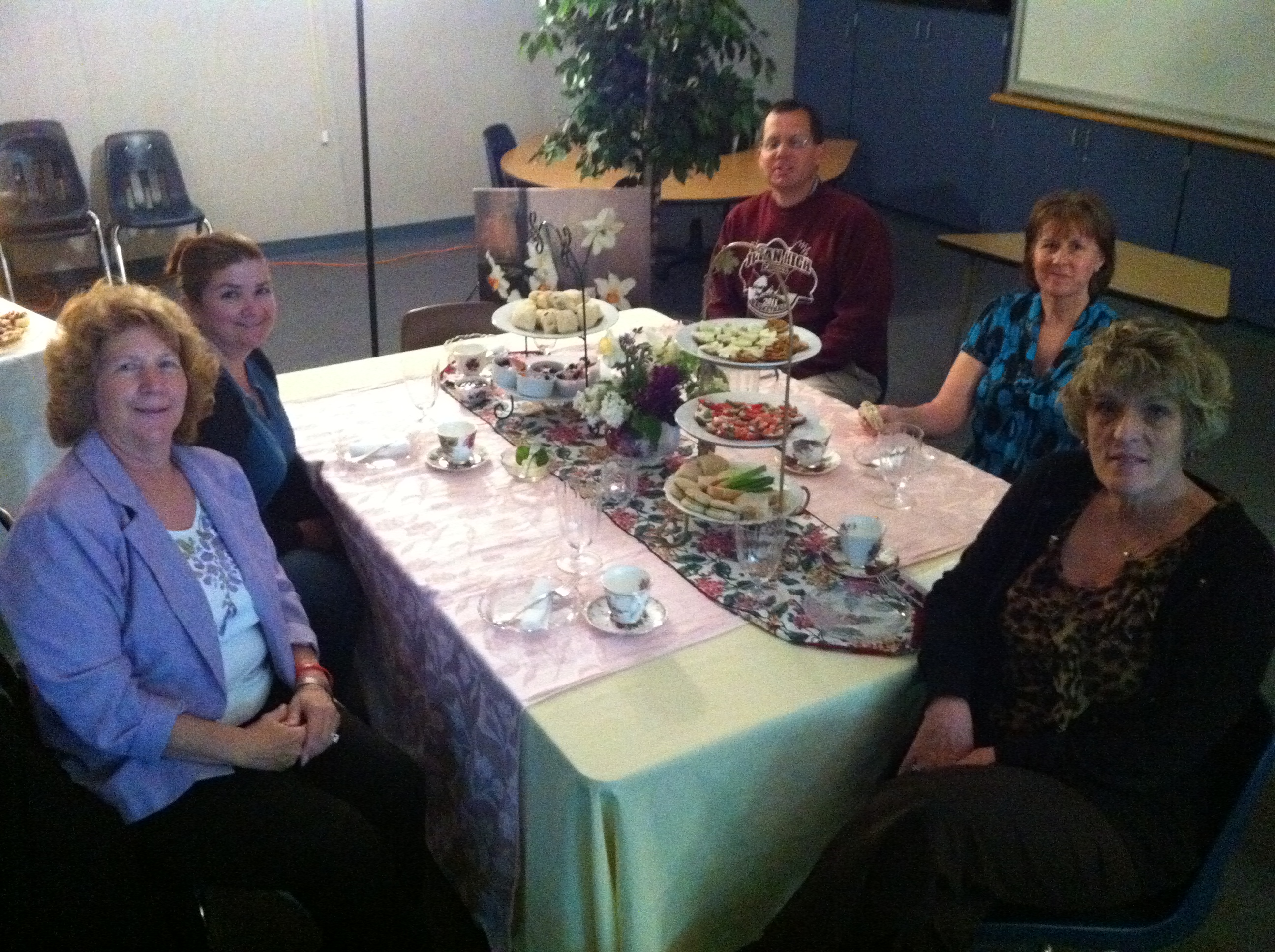
OK, this year we were forced to move it inside because of the cold, breezy, damp weather.  And that proved to be a more enjoyable experience for all!

Here is a picture from last year:

Garden Tour, April 2012

Every once in a while, I’d like to give you a quick tour of what’s current in the school garden.  Welcome to the first installment.

Mrs. Dawson’s first grade class broadcast California wildflower seed in this demonstration bed:

Our grapes are growing along the fence:

We have a new cedar shed.  Isn’t it adorable?  We waited a long time for this shed, raising the money to buy a quality unit.  So glad we did!

Our native strawberry bed continues to be lush and prolific:

A cute sign my younger son made in a craft workshop with Marisa:

Here’s a bed we sowed with nitrogen-fixing legumes to organically improve our soil:

Our current garden bulletin board:

A craft project from a couple years ago:  Our garden rocks!  Yes, it does.