The most beautiful broccoli…

….is (of course) the broccoli you grow yourself!

One of my Garden Ambassadors harvested the broccoli yesterday.

IMG_5880

And after thorough washing, it went back to the classroom.  From stem to mouth in the same afternoon!

IMG_5886

P.S.  Today I saw some of the fifth graders, and I asked them how they liked the broccoli, compared to other broccoli they had eaten.  One said, “More moist.”  Another said, “Fresher, sweeter.” A third summed it up: “It tasted more green.”

They also said the teacher offered seconds, and the kids rushed the bowl.  (Who says kids won’t eat vegetables?)

Love me a good mission statement

In my role as “school garden consultant” through Master Gardeners, I am now working with three schools.  The school I met with recently in San Diego is just starting off with their project, and I am excited because they have all of the ingredients for an amazing garden: a supportive principal, a passionate lead teacher, other interested teachers, potential community partners, possible funding and an amazing space (Flat, sunny, with water!  Oh my!)

IMG_5830

As y’all know, good projects start with a mission statement.  Some people find this part of the process tedious and kinda academic, but not me. How do you know what to do if you don’t know where you want to end up?  As such, I like the process of writing out objectives.  It helps keep me on track, sort our priorities, and assess progress.

Here is ours.  We are in process of having an artist transfer this to a large sign for the garden, reminding us all of what we’re growing…

What we grow in the Julian Elementary Character Garden

We grow food.

We promote good nutrition by planting, tending, harvesting and eating organic fruit, vegetables and herbs.

We grow citizens.

We connect children to the natural world and create environmental stewards.

We grow character.

We learn leadership, responsibility, and respect when we work in the garden.

We grow practical gardening skills.

We learn the nuts and bolts of growing a garden.

We grow beauty.

We enjoy our peaceful, beautiful garden as it relaxes our bodies, inspires our minds, and ignites our creativity and imagination.

We grow academics.

We study biology, ecology and natural history in our garden classroom.

We grow stories. 

We develop a “sense of place” as we build a garden that reflects who we are as individuals, as a school and as residents of Julian and the backcountry.

We grow community.

We  create positive relationships among students, staff, parents and neighbors when we work together. 

Teaching and tasting a “ray of California sunshine”

(Or citrus, as it used to be marketed for folks back East when citrus was being established here in southern California.)

Many of you know I am six weeks into my role as the Farm to School Coordinator, a postion funded by a USDA grant we received in the fall.  It is a planning grant.  In other words, I have been calling myself “chief researcher” in our district’s process of exploring what infrastructure modifications (i.e. school lunch program) and education programming (i.e. nutrition lessons, fieldtrips, garden expansion, etc.) are a good fit for our schools.

One thing I’m looking at is getting free or discounted produce (local, seasonal and preferable organic) to work into lessons for University of Wednesday.  I haven’t figured this out yet, so last week I went to Whole Foods in Hillcrest and bought 5 each of every citrus item they had (excluding limes and lemons.)  Cut into sixths, this was the minimum amount I needed for a class of 26.  (It cost $50.)

IMG_5619

I set up the fourth grade room in groups of six, with each seat having a plate, pencil, and taste test sheet.  The citrus was set out in the middle of the table.  A bag to the side was open for rinds, to be later sent to the compost.

IMG_5629

Kids were to make their best guess on whether this was a new fruit for them.  After tasting, they were supposed to give each a rating and one descriptive word.

IMG_5631

I made a keynote presentation on citrus.  We talked a little bit about the history of citrus and where different varieties are grown today.  Here’s a story I told, like a botanical thriller (arms waving, eyes flashing):

In 1869, a serious citrus pest, the cottony-cushion scale was imported into the state, and within 15 years it threatened to destroy all of the citrus plantings in California.  In the late 1800’s, an entomologist affiliated with the USDA, Albert Koebele, conquered the cottony-cushion scale with a natural predator of the pest imported from Australia……

If told dramatically, you can now pause for effect, and ask kids what they thought it was, before revealing it to be

….the Vedalia beetle, more commonly known as the LADYBUG or LADYBEETLE (capitalization mine) .  It was the first spectacular biological-control success story.*

Then we took time to get up and wash our hands properly.  Properly.  It’s flu season.

And then we got to the fruit. I’d introduce one, give a few facts, and the kids would cut them into slices (with plastic knives.)  We got into this groove and it took to the end of the period to finish all of the varieties. Kids loved it!  I loved hearing them say things like, “I think I like the Cara Cara orange better than the Valencia” and “I’ve never had grapefruit before but I like this” and “I like the last tangerine better than the first tangerine which I already gave a 10.  Can I give a 10 plus?”

IMG_5641

IMG_5647

IMG_5644

IMG_5659

*CaliforniaMaster Gardener Handbook, pg. 533.

Xeriscape + Botantical Drawing

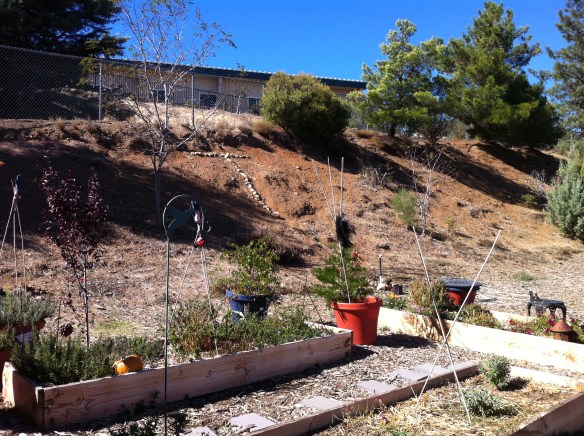
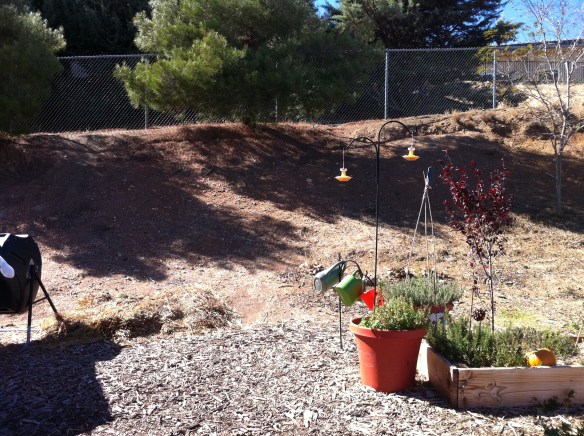
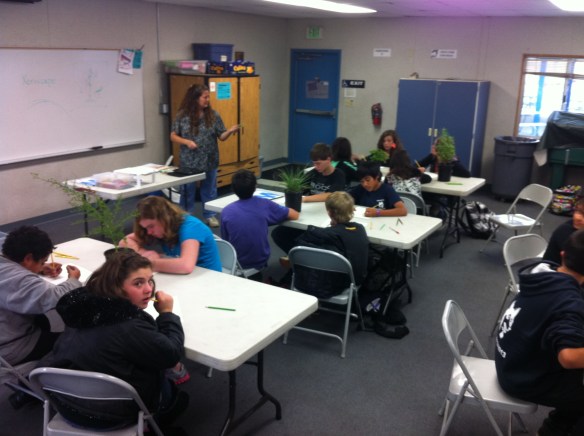
Our junior high has an enrichment afternoon called Tech Thursday, much like the elementary’s University of Wednesday.  Marisa and I just completed two sessions on xeriscape and botantical drawing.  First, I explained the principles of xeriscape (drought-tolerant landscaping) and talked about our plans to have students help us plant a “demonstration garden” on the slope edging the school garden.

IMG_5059

IMG_5060

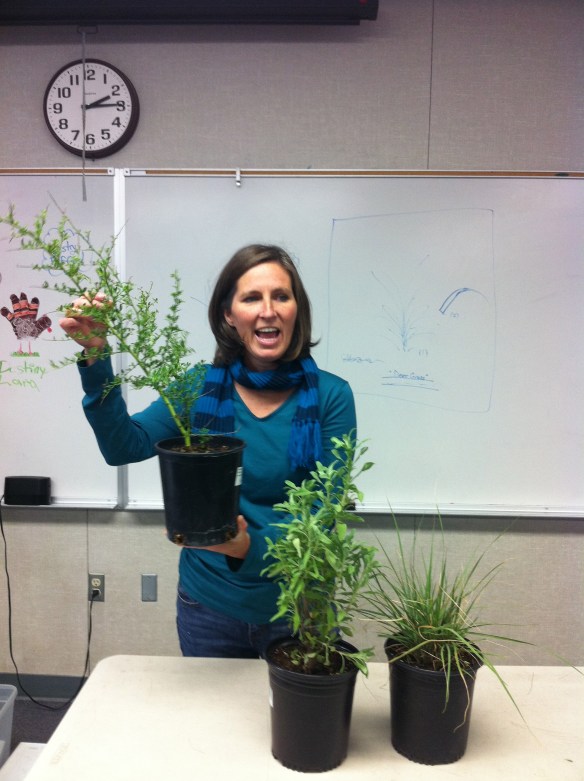
Then I introduced a handful of “rockstar” plants.  I gave a little natural history and botany for each.

IMG_5229

Mouthing off about ceanothus, deer grass and salvia

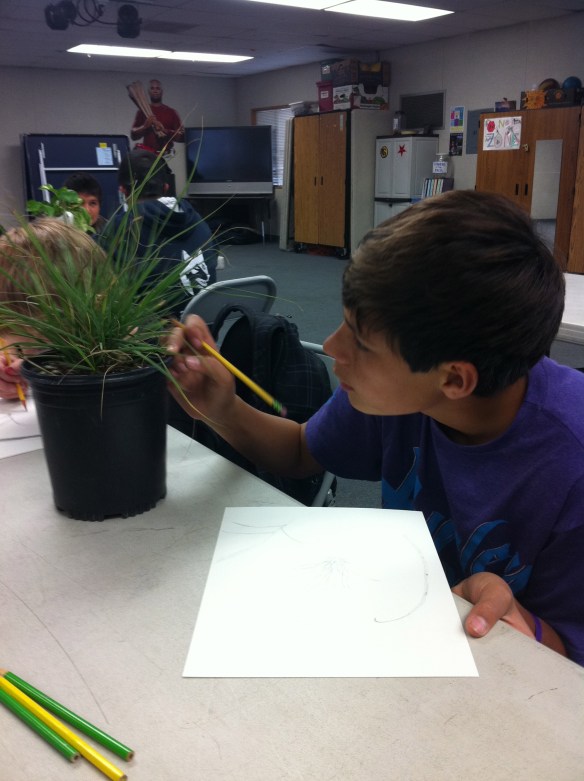
Then, to help students really look at the plants, Marisa took over and talked about the art of botanical drawing.

IMG_5217

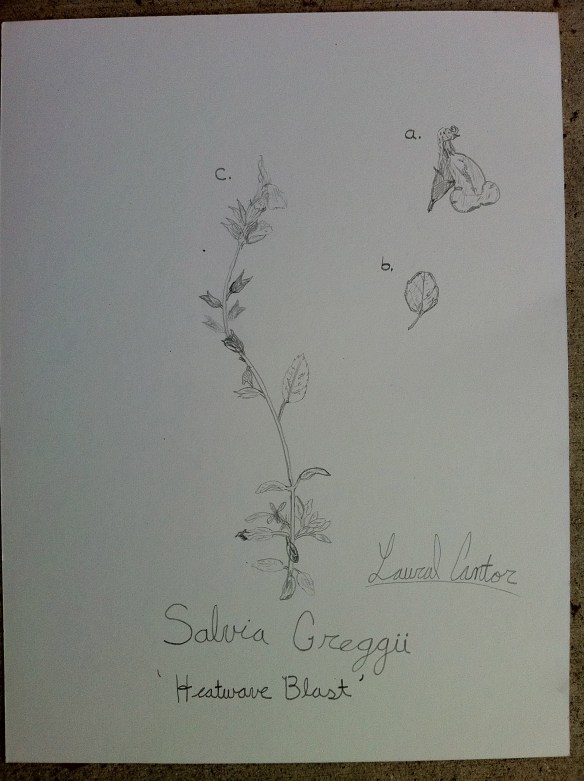
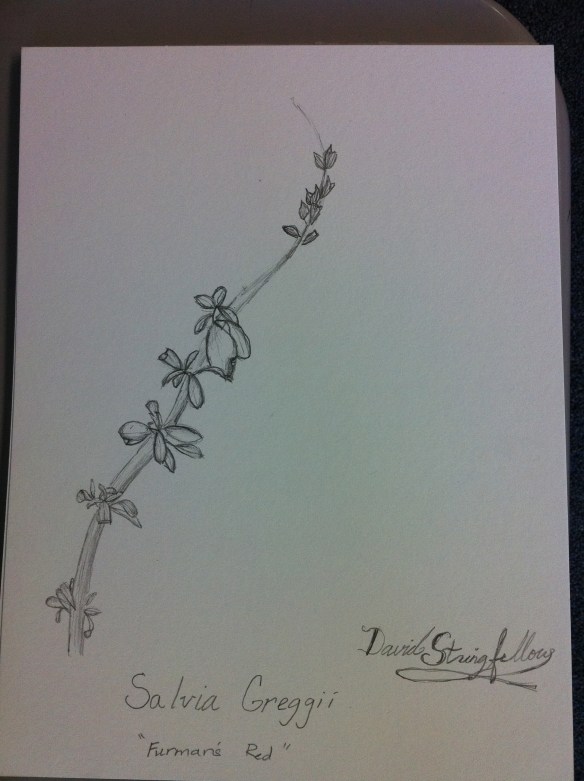
Students then began to sketch.  Our hope is that they learned a bit about this style of drawing.  We also hope that they have learned a few plant ID’s, having looked so carefully at the plants.

IMG_5216

002

Two particularly great examples:IMG_5324IMG_5299

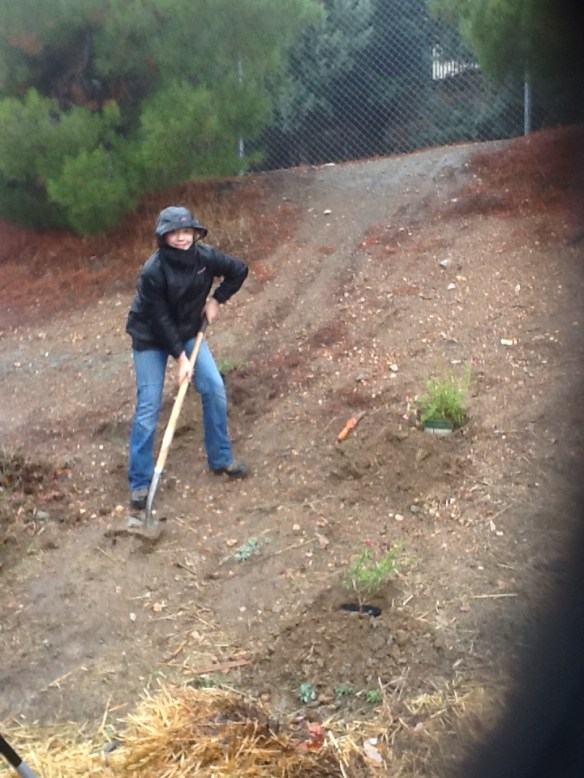
Last step!  Kids in the after school Club Live program putting them in the ground…in the drizzle! photo

Destination farm stand

Last week Kids with Cameras took a field trip to a farm stand run by a Julian family dedicated to sourcing food as locally as possible.  First our guest instructor, Bill Bevill, worked with the students on sharp focus and filling the frame, and then we drove five minutes down the road to Wynola Flats Produce.  Stacey Peyakov was a wonderful host, allowing kids to roam through the store as well as the orchard, snapping away. The indoor/outdoor space allowed for experimenting with lighting, and the produce gave us a chance to capture colors, textures, and patterns.  One of the goals of both the KWC program and the garden is to develop in kids a “sense of place”—what makes living in Julian unique and wonderful?  To do that you have to get out and look around, and what better way to do that than with a camera in hand?

Photo courtesy of Jeff Holt

Then and Now

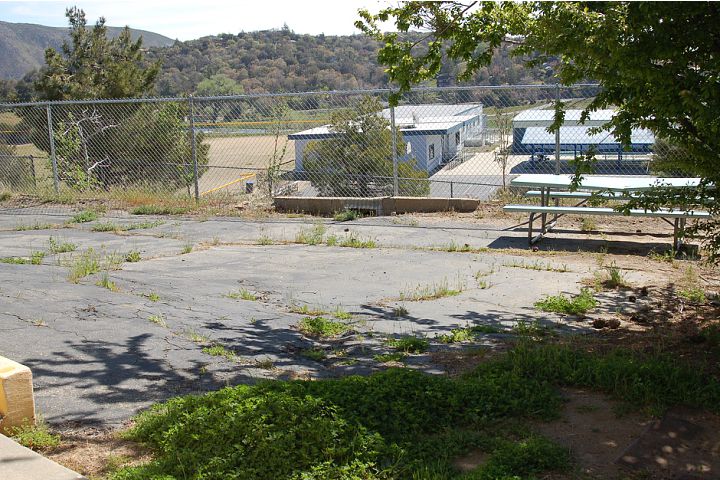
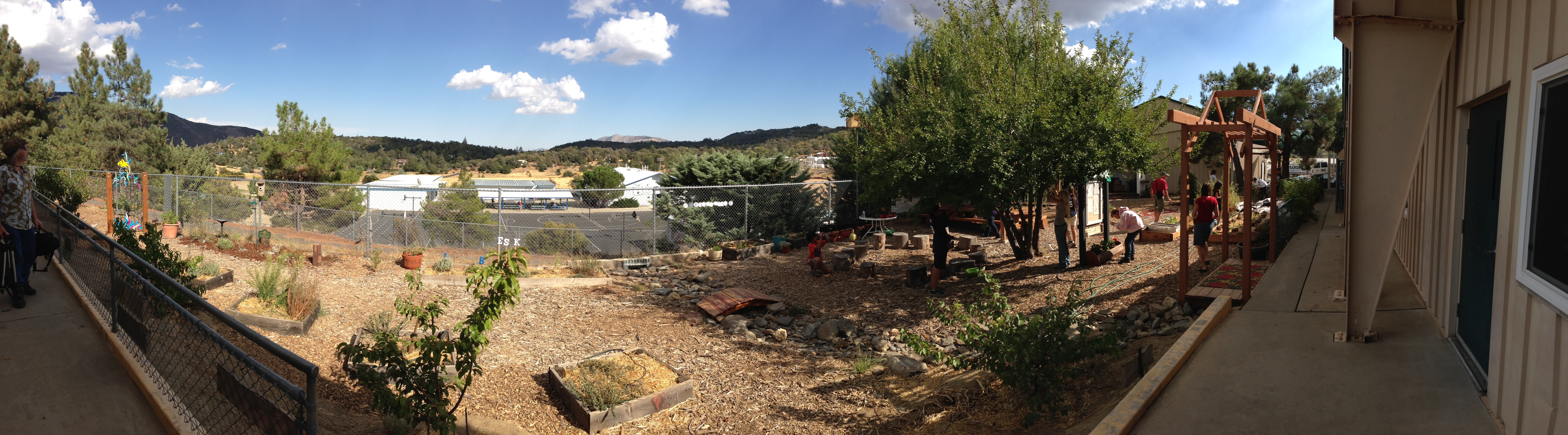
Sometimes it’s good to stop and remember how far you’ve come:

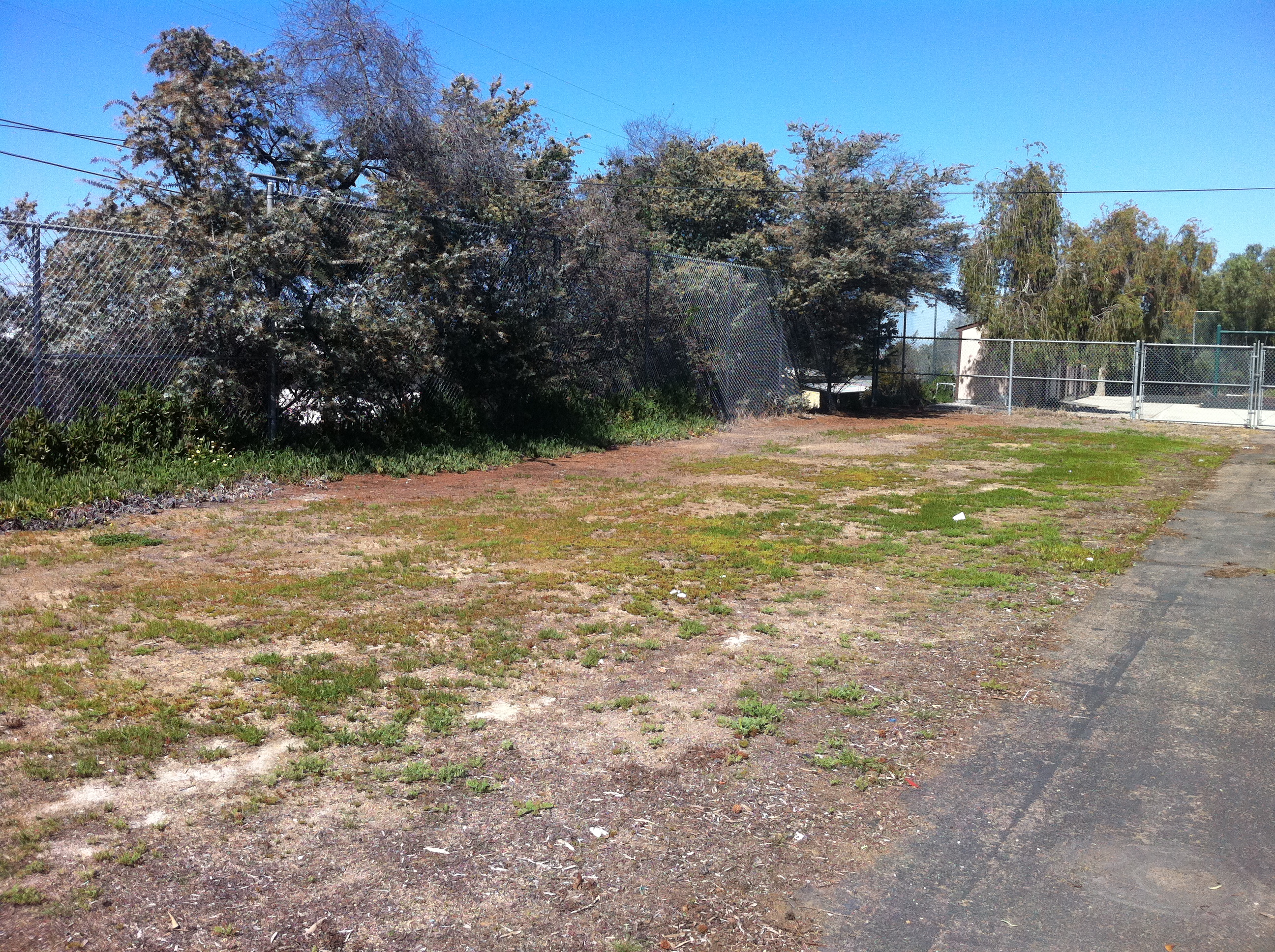
Before we started this garden project:

Photo courtesy of Marisa McFedries

And now:  (Click photo for full panorama.)

Photo courtesy of David Pierce

University of Wednesday

University of Wednesday is a new program at out school.  After lunch on Wednesday all of the classes go to an enrichment class: art, garden, natural history, etc.  Every week they rotate.  This is a great development for the garden as it allows me to be a true “garden educator,” creating a lesson plan tailored to each grade.

Photo courtesy of Marisa McFedries

Last week I divided the group in half.  One half played Garden Bingo with me.  I don’t simply call out the words—I give examples of them in our garden and the kids have to come up with the words.  It was windy so I had to tape down the boards.  And the plastic bingo chips were too lightweight so I finally hit upon this idea.  (Easy clean up–just flick these chips off the table.)

The other half did this scavenger hunt.  It’s an exercise in observation, with a few  academic standards thrown in.  I usually have adult volunteers with me, so they walk around the garden, helping kids who are stumped or seizing teachable moments.  This “scavenger hunt” format works really well, as kids are self-directed, working in pairs with the questions below on a clipboard. And it’s easy to adapt to the grade and the season.

Sample:

1)  How many varieties (different types) of tomatoes are currently growing in our garden?

2)   We are currently growing yellow snapdragon flowers.  Examine the flowers.  Why do you think they have this name?

3)   Draw the most beautiful thing in the garden:

4)   Cite one example of insect damage or plant disease in the garden.  (Look closely at leaves.)

5)   Write three words that come to mind when you see the Hubbell Gate.  (The new colorful one at the end of the garden).  Now use the thesaurus on the main table and fine a synonym for each of these words.

Your word                                                Word from thesaurus

__________________________                        _________________________________

__________________________                        _________________________________

__________________________                        _________________________________

6)   Smell at least three herbs in the herb garden.  Draw the leaf of the one you like most.  Do you know its name?

7)   We are a “certified wildlife habitat.”  What are the four things needed for a habitat?  (This is printed somewhere in the garden.)  Pick two elements and give an example of both.

8) Watch the 4 minute video on tendrils.  What did scientists recently learn?  Where are there tendrils in our garden?  Do you notice the phenomenon pointed out in the video?

(We couldn’t get this excellent Science Friday clip to play out in the garden, so I explained it and the kids watched it later in class.)

Then the kids switch so they both have a chance at each activity.  We end by gathering together at the table to share our answers and questions, and I try to always have something from the garden prepped to eat as we talk together.  The containers get passed around until all the food is gone!

Monday morning garden report

Two years ago I started a program called Garden Ambassadors.  Fifth grade and sixth grade students apply at the beginning of the school year, with a written application and interview, to be garden representatives.  All year long they receive special training from me as they assume certain leadership responsibilities related to the school garden.

One of their jobs is giving the “Monday Morning Garden Report.” Every Monday morning one of our principals welcomes children back to school on the school-wide intercom and goes over relevant information for the week.  Then the garden ambassador takes the mic (phone):

Here is this week’s report:

Good morning!  My name is Ethan, and I am a sixth grade garden ambassador.

Spring has come to the garden.  The table has a fresh coat of stain, the tulips are blooming and new plantings are going in.  In the habitat garden, there is newly planted lavender, monkey flower, butterfly weed and germander—all plants that attract butterflies.  Along the riverbed are also three new, native plants:  deer grass, mountain savory and “blue pozo” sage.  You might also notice the wildflowers are starting to come up in Mrs. Dawson’s bed too.  Finally, some strawberries were transplanted to the left of the pergola.

Thank you for observing the “caution tape” at the far end of the garden.  This space is being readied for a beautiful gate being created by the world-renowned artist James Hubbell. 

That’s all for now!  See you in the garden!

To my friends, the early garden dreamers

Believe it or not, this post ends with photos of two very dear friends, one in an Elvis suit, both in a small plane, doing something that demonstrates the depth of their commitment to projects we dream up.

But first….let me say that there are dozens and dozens of people who are responsible for making the school garden what it is today.  You can’t scroll through these posts and not know that a small army of people, doing both small and large things, built this little slice of heaven.  (Thank you, every single one of you–parents, teachers, administration, staff, garden club, students, family, neighbors.)

And yet there are three women in particular who with me gave birth to this idea in the Spring of 2009. Without these friends/fellow parents, the area that is our garden would still possibly be an asphalt-cracked, weed-infested, graveyard for broken equipment.  They are Allison, Marisa, and Kathy.

Together we caught the vision for a school-wide garden program. We whispered the idea to each other, and our eyes grew big.  Over and over we would walk that corner of campus, starting every sentence with “What if?”  We took notes, sent each other e-mails, and hunched over notebooks filled with garden magazine clippings at the coffee house.  Hands gesturing, arms flying, we would talk over each other in excitement, and then a big idea would come and we would lift our sleeves and say “I’ve got goosebumps.”  Then we’d head out and walk the space again.

We pounded out a proposal and presented it to our PTO.  We asked for money to launch the project, and our parent community and school administration gave us the green light.  We started breaking ground (or rather, leveling it) that very week.

All of my local friends are amazing.  They live their lives with creativity, whole-heartedness, love, possibility and commitment to things that matter.  I feel lucky to be carving out a rich life with them in this town, striving to offer up our best gifts to enhance the lives of kids growing up here—our own as well as others.

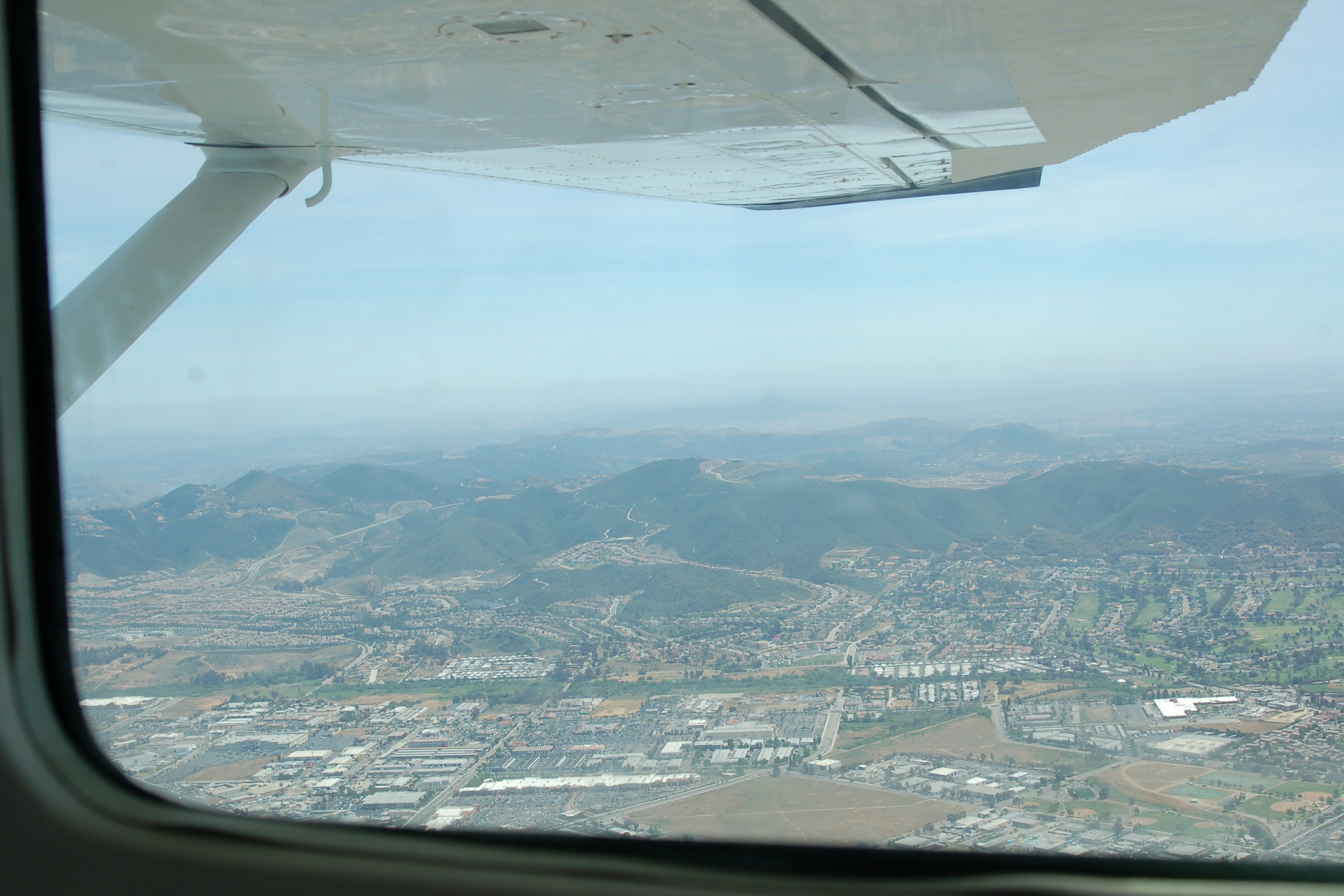
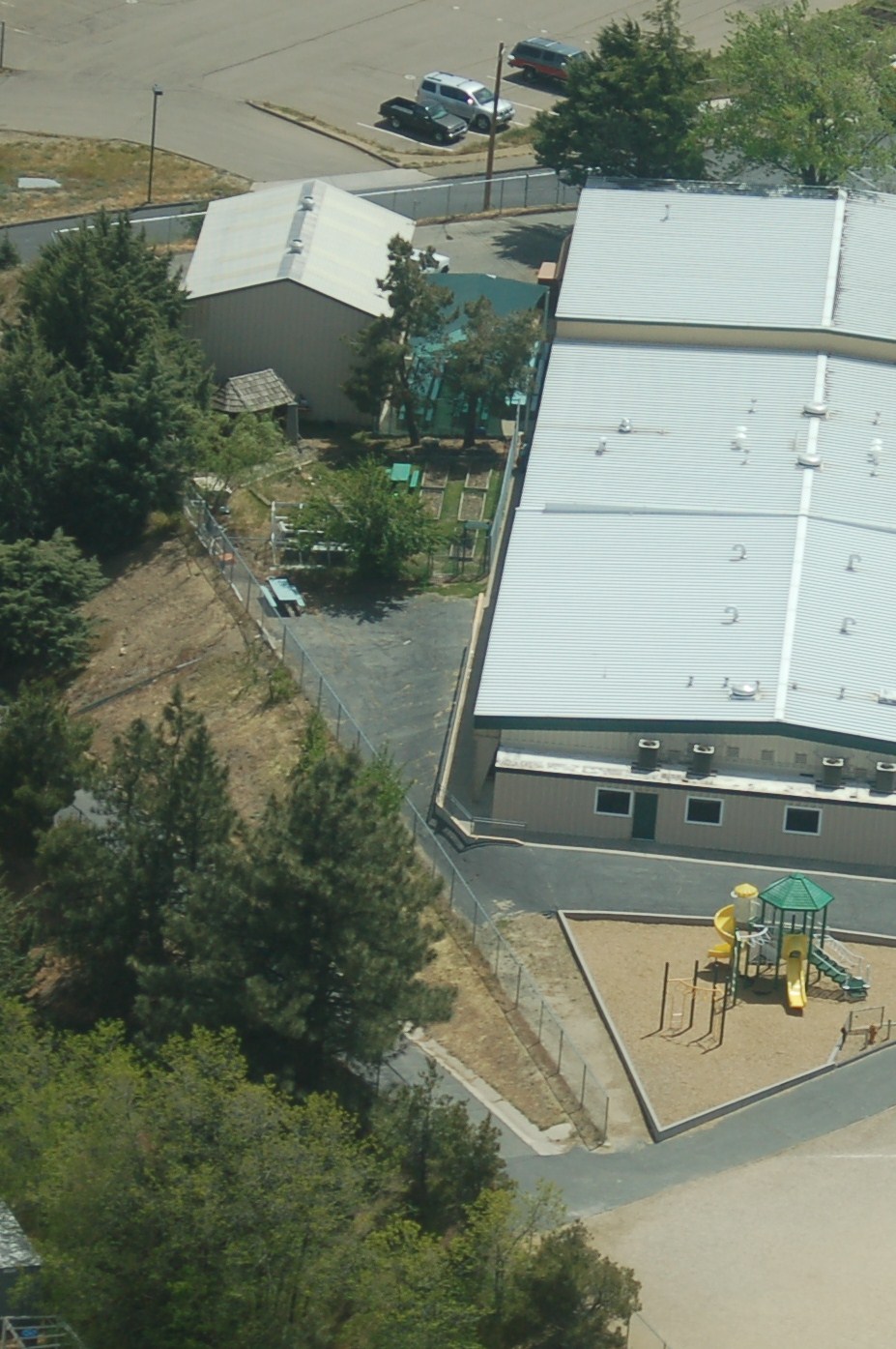
Here’s proof of the kind of fun, vibrant and “sky’s the limit” women they are.  Two of them decided it would be great to get an “aerial photograph” of the garden as we were in the planning stages…you know, for good artistic renderings and archival documentation.  So they flew up over the school and took one.

The “asphalt triangle” below was the space that became half of the garden; the space above it was a outdoor area used years ago by a now-retired, dedicated gardening teacher but since fallen into disrepair.

Now….as for one of them being dressed as Elvis, well…. that’s another (very good) story……