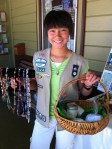
Who’s got a new owl box? We do, that’s hoooo….

Couldn’t resist.  🙂

Sara Itogawa, a local girl scout, decided to do her Silver Award on a natural rodent control project by researching, funding and managing the installation of an owl box on our school campus.  The Garden Club partnered with her by helping to upgrade the box to a model with an installed camera, so the school can get live video feed when a owl takes up residence and lays eggs.  Sara wants to educate other kids about the dangers of poisoning pests such as rats and gophers.  One serious problem is that when pests consume toxic bait, the animals are sometimes then eaten by owls, and the poision moves up the food chain, ultimately killing birds.  Creating habitat for natural predators is one alternative to traditional poisons.

The box went in this week!

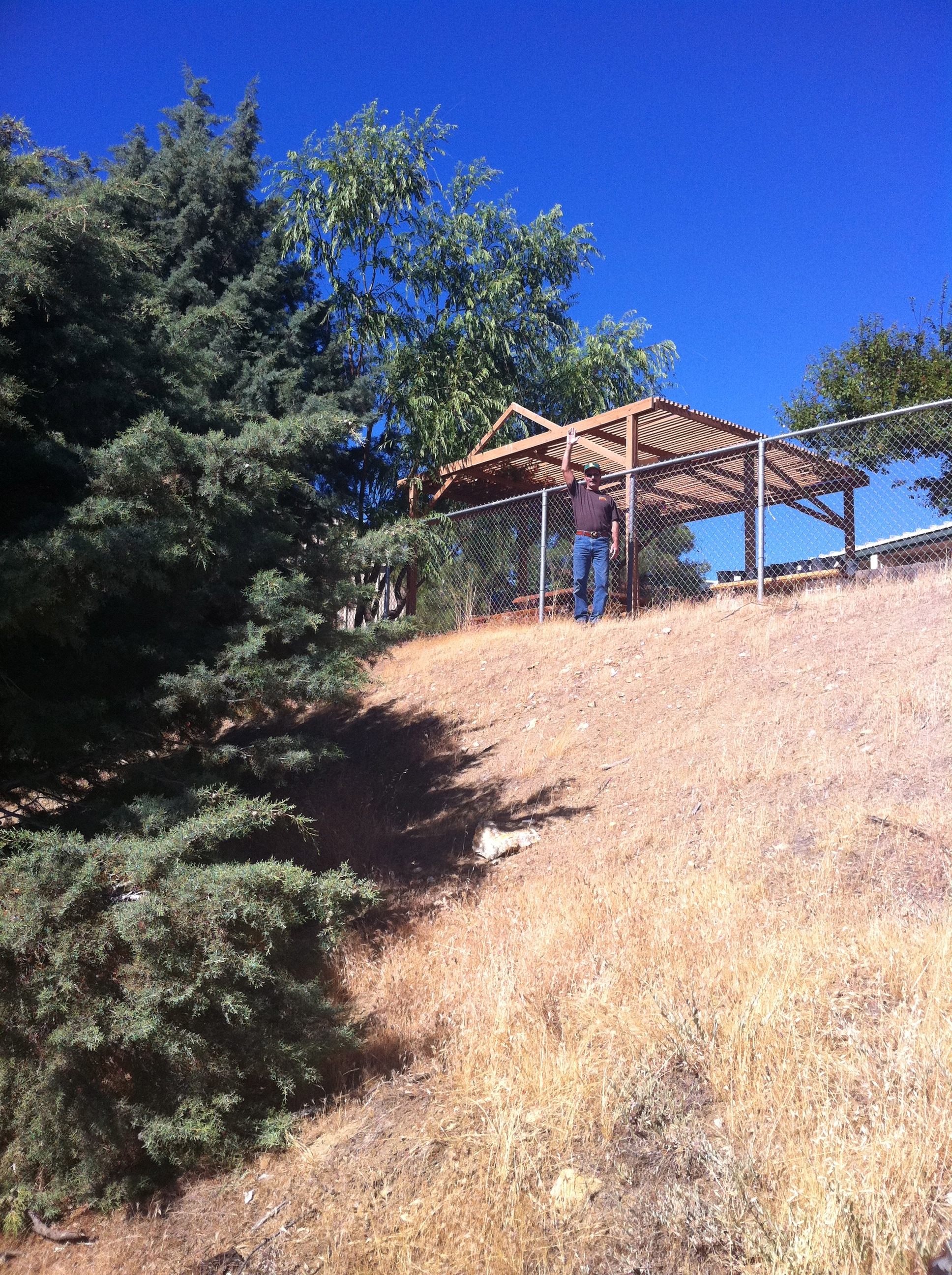
Tom Stephens from Air Superiority in Ramona below, scoping out the best place for the box.  This spot was chosen because it’s north-facing, overlooks a flat “hunting” area (the junior high fields), and is protected on the backside by a stand of trees.  This is the slope that edges the garden (you can see the pergola in the background.)

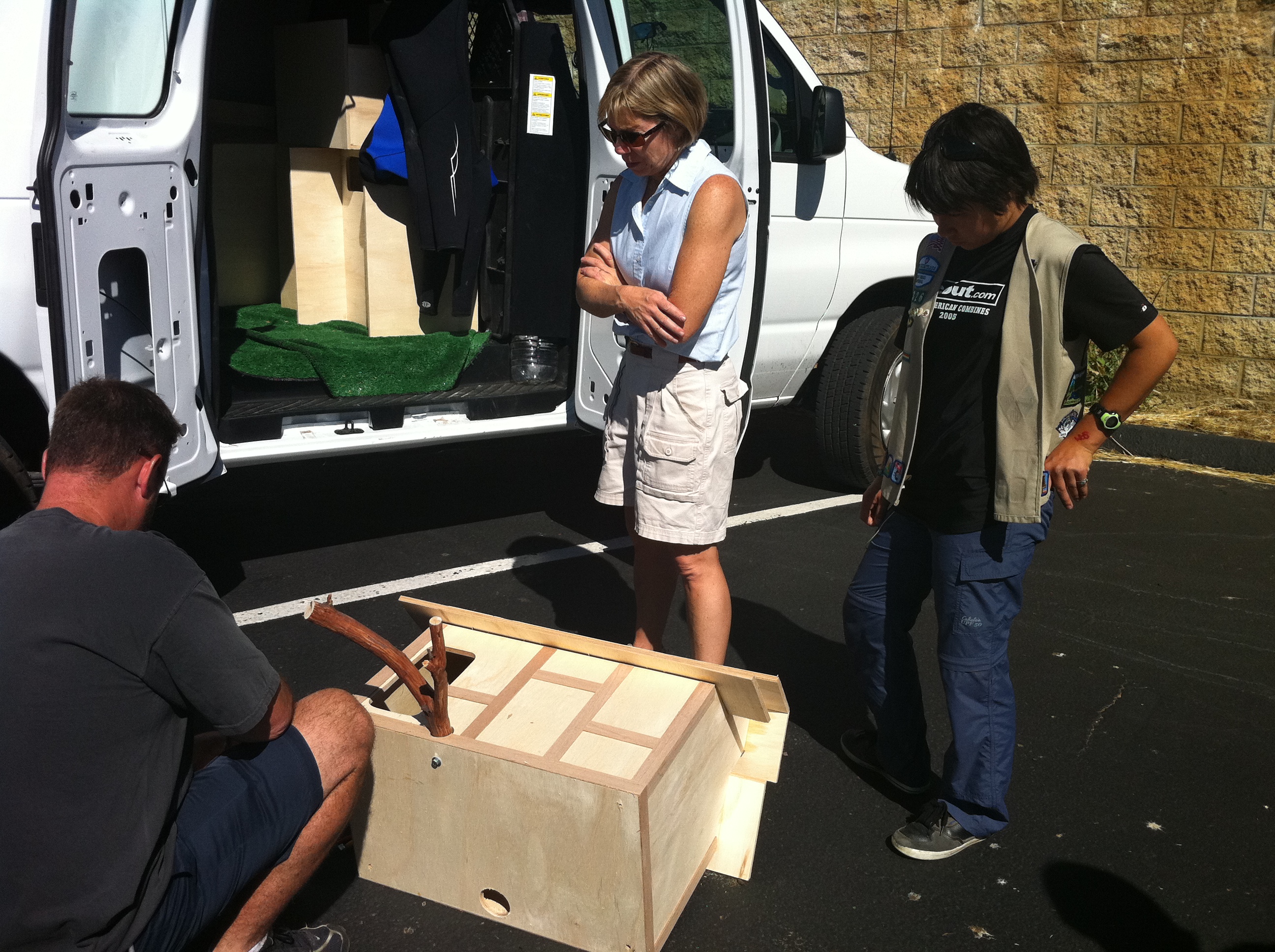
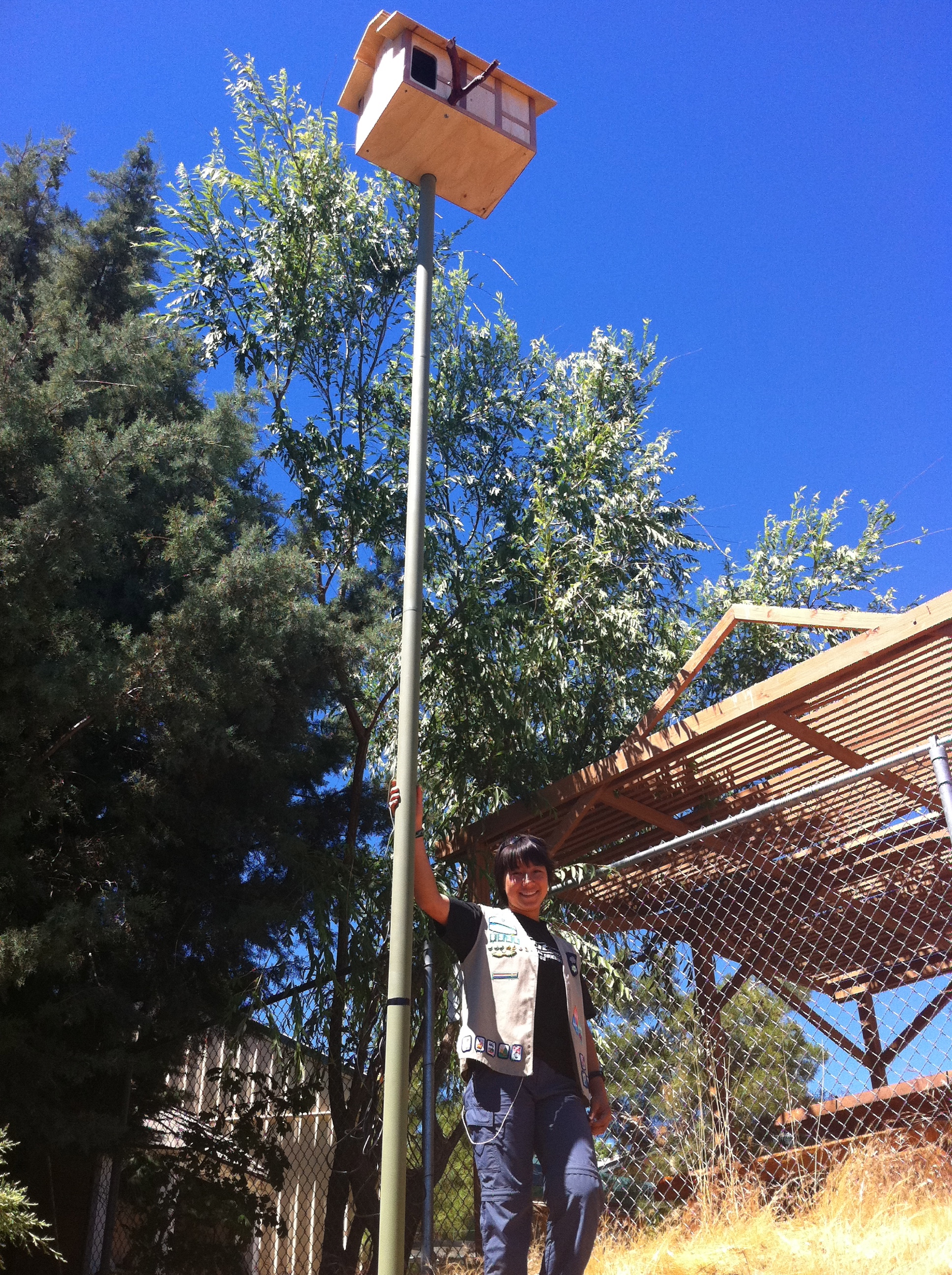
The camera is mounted inside. The box is erected on a 16 ft. pole.

Sara, me and Mr. Duffy, who along with Mr. Pierce, was a great help in helping Sara figure out logistics for running the electric/video wiring.

We’re proud of you Sara.  Can’t wait for owls!

Circle of knowledge, circumference of ignorance

Two weeks ago I took my Master Gardener final. Well, I attempted to take it.  God bless the working/studying/multi-tasking moms of the world.

I sent Chris to the zoo with the kids.

The last day of class we corrected the exams and took our first class picture.

And then today we had a fabulous party and received our certificates.

Upon completion, I must say that this is an OUTSTANDING program.  Thorough, well-organized, hands-on, professional—there wasn’t a lecture or a homework assignment or a lab activity that was a dud.  I feel honored to have participated, and I vow to make good on the “public service” end of the agreement that is at the heart of the Master Gardener program.

Just one small suggestion I’d make based on Pascal’s words about the larger the circle of knowledge, the greater the circumference of ignorance.  (Or when we know more things, we also have more cognitive surface area touching the edges of what we don’t know.)  We got a t-shirt to wear at volunteer activities that looks like this:

And I’d like to suggest that it be amended to read:

Ask a Master Gardener

but please go easy on me because really, there is a ridiculous amount to know about gardening, and I can be an absolute genius in one thing and still be an idiot in another and this program has laid the foundation for me to be a lifelong garden learner, eager to share what I learn with you…so just realize that I may know an answer but then again I may not and then I will do my best to find it….”Master” is a big word, I know, but I didn’t come up with the title. Thank you and have a nice day.

It would be a little wordy, but at least it would provide full disclosure.

Do a small job, be our hero

You know how a single job can be quick work for one person, and a seemingly massive task for another?  I’ve thought about this a lot, in my quest to get everything done in the school garden that needs getting done.  And I’ve come up with this idea: compiling a list of small jobs in the garden and putting it out to our community at large to see if we can get any takers.  The idea is that if you want to help our school garden, you don’t necessarily need to join the Garden Club or commit to a big, ongoing project.  Just look over our list of “small jobs” and see which ones might be easy and fun for you to do. We’ll quickly reimburse you for any expenses.  Come do one job and be our hero for the day!

Take our wheelbarrow.  It needs fixed, and for me to do it, I’d spend an inordinate amount of time assessing it, researching what bolts and nuts and braces it would need, and then shopping for the right things, and finally locating all of the necessary tools. (Sad, but true.) Yet for the right person with the right tools…this would be a relatively quick task.

My church has expressed interest in helping with the garden, and so I published a list of jobs in a newsletter, and Hans (who also happens to be my next door neighbor) was the first to say he’d help out.  In no time at all, he got our wheelbarrow operational and repaired a fruit tree sign as a bonus!  I was so grateful to cross this task off my list, thanks to Hans’ willingness to serve!  It’s a good example of a community member investing in kids and public schools, even though his own children have long since graduated.  Thanks neighbor!

Creating wildlife habitat on the school campus

Did you know you can register your backyard as a “certified wildlife habitat” through the National Wildlife Foundation?  Or your schoolyard?  If you have the four elements of habitat, and can show that you garden in an environmentally friendly way, you can earn this distinction.  You can then display a NWF sign, which can help educate others about the elements of habitat that people can provide for wildlife in our own backyards (no matter how small) and school grounds.

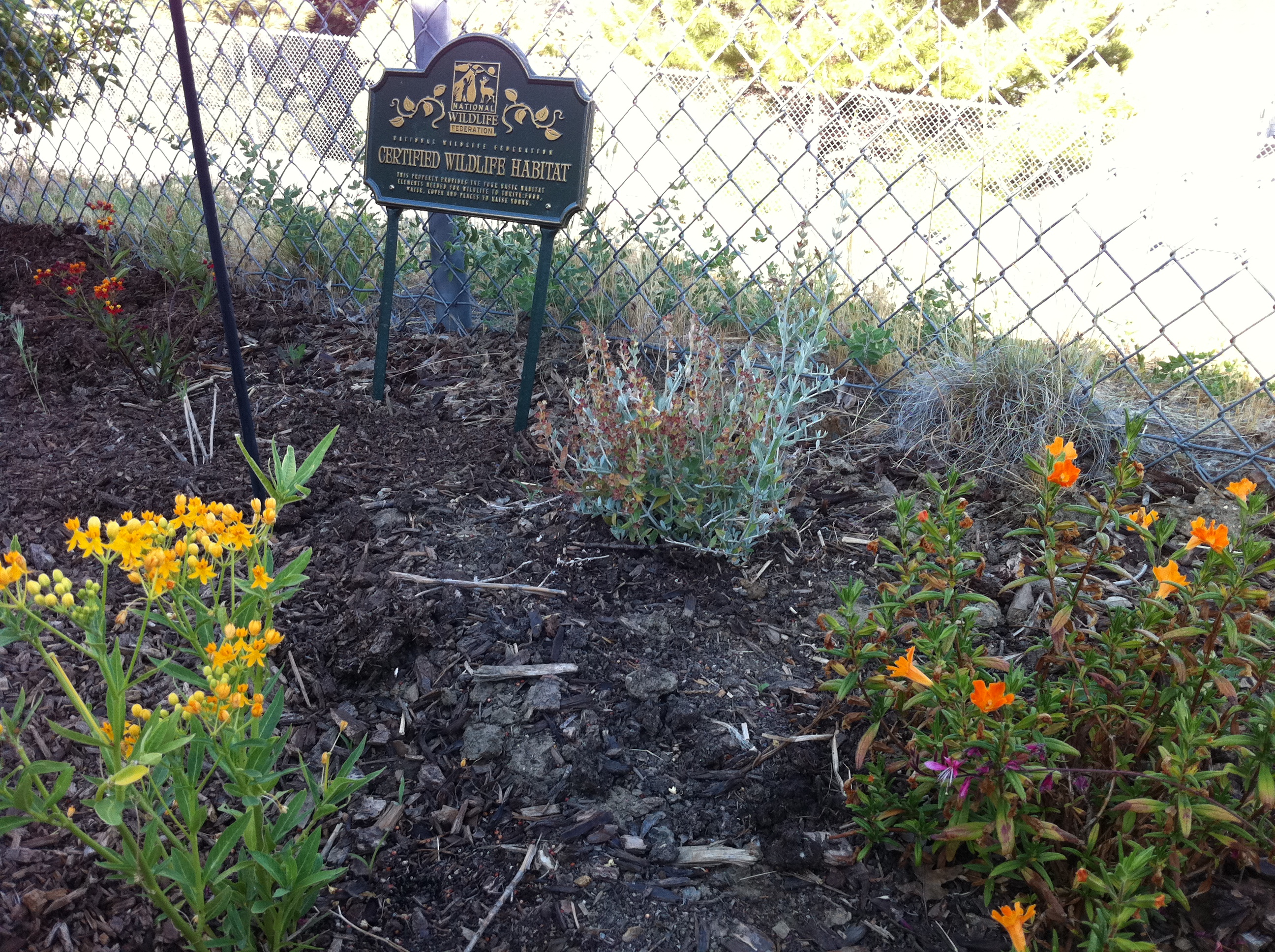
Our school garden has met these requirements (both in a butterfly/hummingbird habitat bed and also throughout the larger garden), and we recently did the paperwork and received our sign.  After the photos below, read more about the habitat elements and go here for more information.

We got the fancy yard sign, so the total cost with registration was $119

Asclepsias (host for larval monarch butterfly), monkey flower and germander to attract hummingbirds
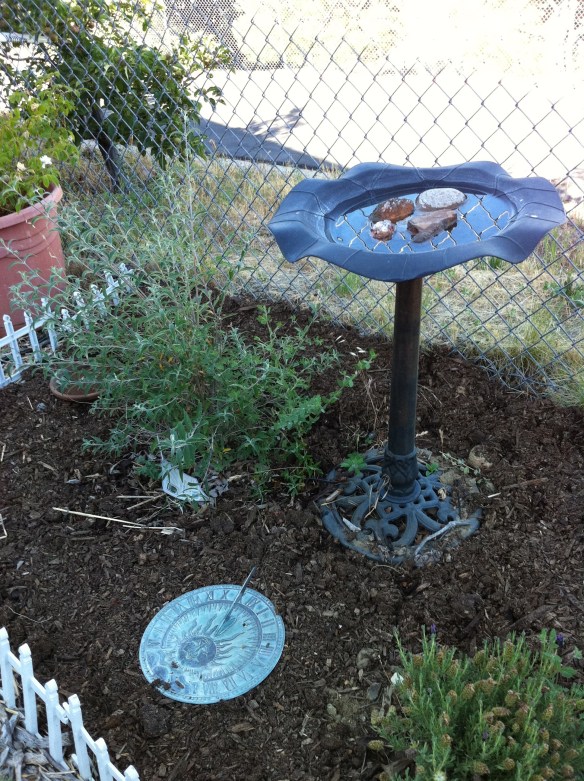
All habitats need a water source, even as simple as a bird bath. Rocks placed inside give birds a place to perch. Our water evaporates quickly, but if yours doesn’t, be sure to empty every few days for good mosquito control. Also pictured are lavender and buddleia (butterfly bush)
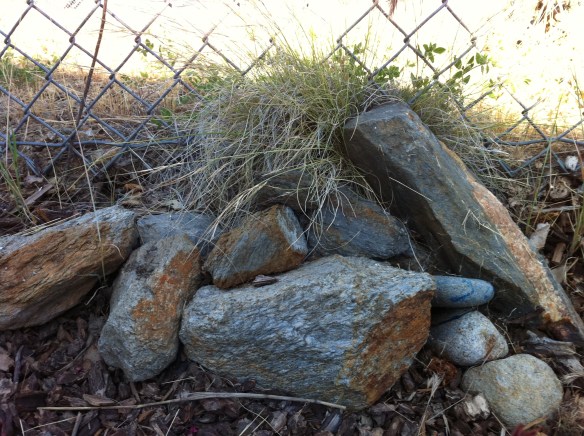
Even a pile of rocks can be a habitat element for lizards

Extra feeders and a birdhouse

 From the National Wildlife Foundation website:
bee on coneflower

Provide Food for Wildlife

Everyone needs to eat! Planting native forbs, shrubs and trees is the easiest way to provide the foliage, nectar, pollen, berries, seeds and nuts that many species of wildlife require to survive and thrive. You can also incorporate supplemental feeders and food sources.

bird drinking water

Supply Water for Wildlife

Wildlife need clean water sources for many purposes, including drinking, bathing and reproduction. Water sources may include natural features such as ponds, lakes, rivers, springs, oceans and wetlands; or human-made features such as bird baths, puddling areas for butterflies, installed ponds or rain gardens.

rabbit

Create Cover for Wildlife

Wildlife require places to hide in order to feel safe from people, predators and inclement weather. Use things like native vegetation, shrubs, thickets and brush piles or even dead trees.

blue bird at nesting box

Give Wildlife a Place to Raise Their Young

Wildlife need a sheltered place to raise their offspring. Many places for cover can double as locations where wildlife can raise young, from wildflower meadows and bushes where many butterflies and moths lay their eggs, or caves where bats roost and form colonies.

And finally….

What sustainable gardening practices do I need to certify?

You should be doing two things to help manage your habitat in a sustainable way.
Soil and Water Conservation: Riparian Buffer • Capture Rain Water from Roof • Xeriscape (water-wise landscaping) • Drip or Soaker Hose for Irrigation • Limit Water Use • Reduce Erosion (i.e. ground cover, terraces) • Use Mulch • Rain Garden
Controlling Exotic Species: Practice Integrated Pest Management • Remove Non-Native Plants and Animals • Use Native Plants • Reduce Lawn Areas
Organic Practices: Eliminate Chemical Pesticides • Eliminate Chemical Fertilizers • Compost

Gardening: so complicated, so easy

Two weeks ago the topic in Master Gardeners was temperate fruit trees.  As we reviewed all of the things that can negatively affect fruit set, I had this overwhelming thought:

How does anything grow at all when there are so many things that can go wrong?

Really, a gardener could get freaked out looking into all of the variables that allow a healthy plant to grow.  Consider the odds against fruiting—abscission of bud and flowers, weather, competition, disease, insect pests, shade, improper pruning…..

But then this is also true:  you can buy a tomato plant, put it in soil, water it regularly and you will probably get a tomato.  And you will most likely be blind to all of the things that conspired together to make things go right.
I find that a lot of gardening—life itself?—is about holding these two things in tension.

1)  It’s complicated.  Lots of things can go wrong, and lots of things can go right.  As we meet hard stuff with courage and persistence and faith, we ought to meet the good stuff with some deep gratitude. I will truly never look at fruits and vegetables the same way again because everything I have learned has taught me that they are nothing short of miracles.

2) It’s simple.  I think it’s important to slow down and demystify things so that we don’t get overwhelmed and paralyzed by them—things like gardening and scratch cooking and raising children and car maintenance.  We ought not to overcomplicate things.  We try, learn, experiment, fail, succeed, and ultimately, make progress.  At the end of the day, we’ll probably have grown something good.

Exhibit A: a wisteria vine growing up our pergola:

And here’s the wisteria vine we planted six feet away, same soil, same orientation, same watering and care.

Yep, nothing there.  It died, and I have no idea why. See? Complicated.

But then there’s this: artichokes.

Photo courtesy of Marisa McFedries

Photo courtesy of Marisa McFedries


Kids with Cameras 2.0

On Wednesday evening we wrapped Kids with Cameras 2.0 (an afterschool photography program I’ve written about here and here.)  Program partners (Garden Club, Volcan Mountain Foundation, Club Live and volunteer instructors) held a reception at the public library with brief remarks, a celebratory presentation of some of the kids’ best shots, and delicious refreshments. The collection will remain on display for the next couple weeks at the Julian Library, and photo gift cards are on sale at the front office of the elementary school.
The photos we chose for the show represent all of the topics we covered (sports photography, composition, environmental portraiture, using manual settings, etc.) as well as fieldtrips (shooting in the school garden, at our historic cemetery and on Volcan Mountain.)

Representing Volcan Mountain and the volunteer photographers/instructors, Jeff Holt did a brilliant job of sneaking an art lesson into the remarks as he went over why we chose each photograph.  Each kid was individually affirmed, and it was totally cool.

Below: a few of the students whose “show” picture happened to be taken during the school garden session.  (Glares are from the room lighting and not in the original photographs.)

And of course, it was beautifully, extravagantly catered by my dear Rita.

Thank you to Bill Benson, Bill Bevill, Anne Garcia, Dana Pettersen, Jeff Holt and David Pierce for making Kids with Cameras a simply outstanding program.  3.0—-here we come!

Spring Garden Market

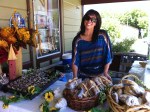
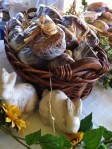
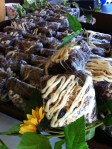
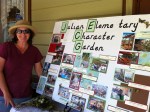
Twice a year we hold a “Garden Market” on Julian’s Main Street to raise money for the garden.  Here are highlights from this Spring’s effort.