When a garden photo says a lot

Last week I posted the picture below on our afterschool program’s Facebook page with the caption “Students explore the garden, using microscopes.”

IMG_7568 (1)

Our principal “liked” it, writing “This photo says a lot.”  When I asked him to “Say more!” he responded with this comment which I thought deserved its own post.  Thanks Mr. Copeland for being a principal who “gets it” on so many levels!

…..I see a school and a beautiful garden in a mountain community. And very young ladies (even a princess) being given tools that they will use later in life. Tool use that begins at a young age accelerates the development of familiarity and confidence. These tools are now theirs, not something they might see being used by special (often male) scientists in movies. They’re learning manual dexterity of the rotary adjustments – differential focal adjustment. They’re discovering eye dominance and monocular use of the eye, and thus, the brain. I see outdoor education too, and the interaction with weather and the environment. And that’s just what comes to mind readily…


Thank you Sage Garden Project!

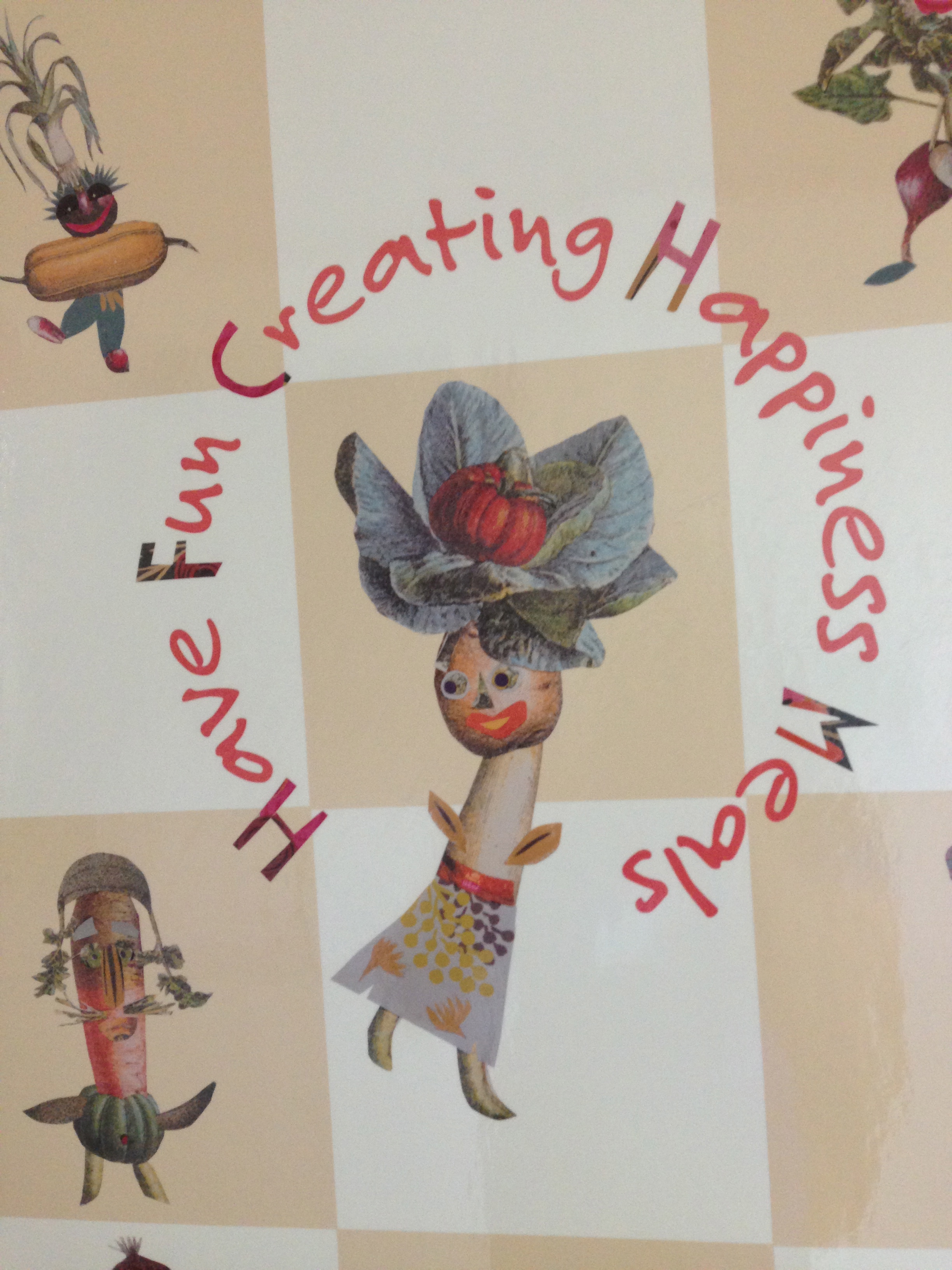
If you’ve been following along, you’ll know that this year we are working in partnership with  the Sage Garden Project who has generously gifted us with funds for a garden educator position, access to their curriculum and a scholarship to the Edible Schoolyard Academy this past summer. (Scroll down to read five posts about that magical experience.)  We were thrilled to welcome them to campus two weeks ago for the first time.  Garden Ambassadors made this poster for them.

IMG_7420

Garden Ambassadors greeted Program Director Dawn Mayeda and Garden Instructor Karen Saake at the front of the school with an apple pie—our local dessert!  Then we spent the morning giving them a tour, introducing them around school and receiving items included in the Sage Garden award….

IMG_7427

A huge treat that comes with the grant package is a fully equipped cart which can be wheeled around campus for cooking demos.  Unpacking all of the items that go in it was like Christmas morning.  Here I’ve displayed it all in one place.  Notice the mirror flips around to be a white board.  Feel free to drool.

IMG_7497 IMG_7498

Also included in our box of garden treats were beautiful posters and banners which we promptly hung in the garden room and the garden.

IMG_7489 IMG_7490 IMG_7501 IMG_7487

Julian Elementary is very proud to be an recipient of a Sage Garden Project grant.  Thank you to everyone involved for helping to grow our garden program!

A little idea: “garden treasure hunts”

Last week I made this poster on 11×14 paper, with color clipart, and laminated it.

IMG_7432

Then looking at a jigsaw puzzle template online, I scored it into pieces with a ballpoint pen.

IMG_7433 (1)

I cut the puzzle into pieces, re-laminated each piece so all of the edges were sealed, and hid them in the garden.  When I took the K students out for afternoon garden class, they hunted for the pieces, returning to the table to fit it together.  I had little rolls of masking tape on the table to help the pieces stay together.

IMG_7434 (1) IMG_7436

After we assembled the message, I passed out magnifying glasses and we went looking for signs of fall.

IMG_7441

In the process, we discovered a stick bug.  We made a circle and gently passed it around.

IMG_7450

And then we posed for this picture!  I love how this activity turned out and plan to make a set for each season.  Fun way to end: I gave each student a piece and they re-hid them for my next class—almost as much fun as finding them!

IMG_7438


A little idea: “freshly picked”

I started a new tradition this year.  When I visit my K-2 classrooms, I bring something “freshly picked.”  This week it was rosemary.

IMG_7148

Now that my garden ambassadors are chosen, they make the bouquets for me at recess and return the vases to the garden room for me to pick up on the way to class.

IMG_7288

IMG_7284The idea is that the vase stays in the class until the arrangement withers, and then the ambassadors collect them after a week.  It’s a small touch that “brings the outside in,” fills the room with a nice fragrance and gives students a chance to make observations and learn plant names.  Beauty is a language of care!

Garden Ambassadors = Girl Power

Every year I have a different number and mix of 5th grade Garden Ambassadors.  This year, I’m thrilled to have 10 amazing girls.

IMG_7282

A new feature in the program this year is the “Headquarters” board in the garden room. The girls love checking the board….

IMG_7285

A few snippets from one of the outstanding Garden Ambassador applications:  (You know who you are!)

I would like to serve as a Garden Ambassador because when I was little I looked up to the garden ambassadors.  I would like that to happen to me.

I think a garden ambassador should have the ability to be a school representative.  A garden ambassador should be a good public speaker. They should also be willing to give up their extra time for the garden.  I think they should be focused, determined, mature, hardworking, trustworthy.  They should be respectful, responsible and compassionate.

I would also like to be a garden ambassador because it will give me an opportunity to interact with people.  I can also help the garden.  Being a garden ambassador is something to be proud of.

I know being a garden ambassador will help me be a better public speaker.  I will also gain more self-confidence. I will gain more knowledge of the scientific world and the garden.  It could make a remarkable impact upon my life.

To learn more about our Garden Ambassador program, look here or here or here.

It works, it works, it works!

Nutrition/cooking education.  Make no mistake: it works.

It’s said all the time but I’m here with hard evidence to prove it: When you grow and cook food with kids at school, in a fun, interactive way, they are more likely to try new foods and want to cook at home.

As mentioned in the last post, we made ratatouille in our garden/kitchen class.  I also sent home a letter with the recipe to each family and encouraged the kids to teach their parents the recipe.  I said, “If you do make ratatouille at home, please send me a picture.” The very next day I started receiving these:

IMG_7250 IMG_7251 IMG_7252

Image 1 Image 3

IMG_7257 IMG_7258 IMG_7259 IMG_7261

anotherhomecooked

Once I received the picture, I visited the student’s class with congratulations,  a few questions about his/her cooking experience at home, and an invitation  to have lunch in the garden that day with a friend.  I’m thrilled that at our school “lunch in the garden” is a motivating reward, as it is sometimes hard to think of incentives that aren’t sweets/snacks or little throwaway objects.

None of this is lost on you, dear readers, but allow me to list the levels of goodness here:

-Students have a positive experience with a certain food at school and bring that excitement home.

-Students show off newly acquired skills to parents, and we all know that re-teaching is good learning.

-Families learn new recipes—in this case, one that is vegetarian, seasonal, adaptable and affordable.

-Students are congratulated and rewarded in front of their peers for extending their learning after school.

Many thanks to Wynola Flats for sourcing these delicious vegetables and ordering what I needed.  I can’t tell you how exciting it was to stop in yesterday for more ingredients and have Stacy say, “People have been coming in, buying ingredients for ratatouille….”


……But I love ratatouille!

Today we started our series of one-hour garden/cooking lessons with our upper grades, adapted from the curriculum from the Sage Garden Project.

Huge. Success.

It went like this:

10 minutes in the classroom to discuss the theme of “seasonality” and how vegetables can be classified as warm season or cool season.  We also ran through glove protocol, hand washing reminders and stern words about consequences for misusing a tool.  (I like to set a firm precedent.)

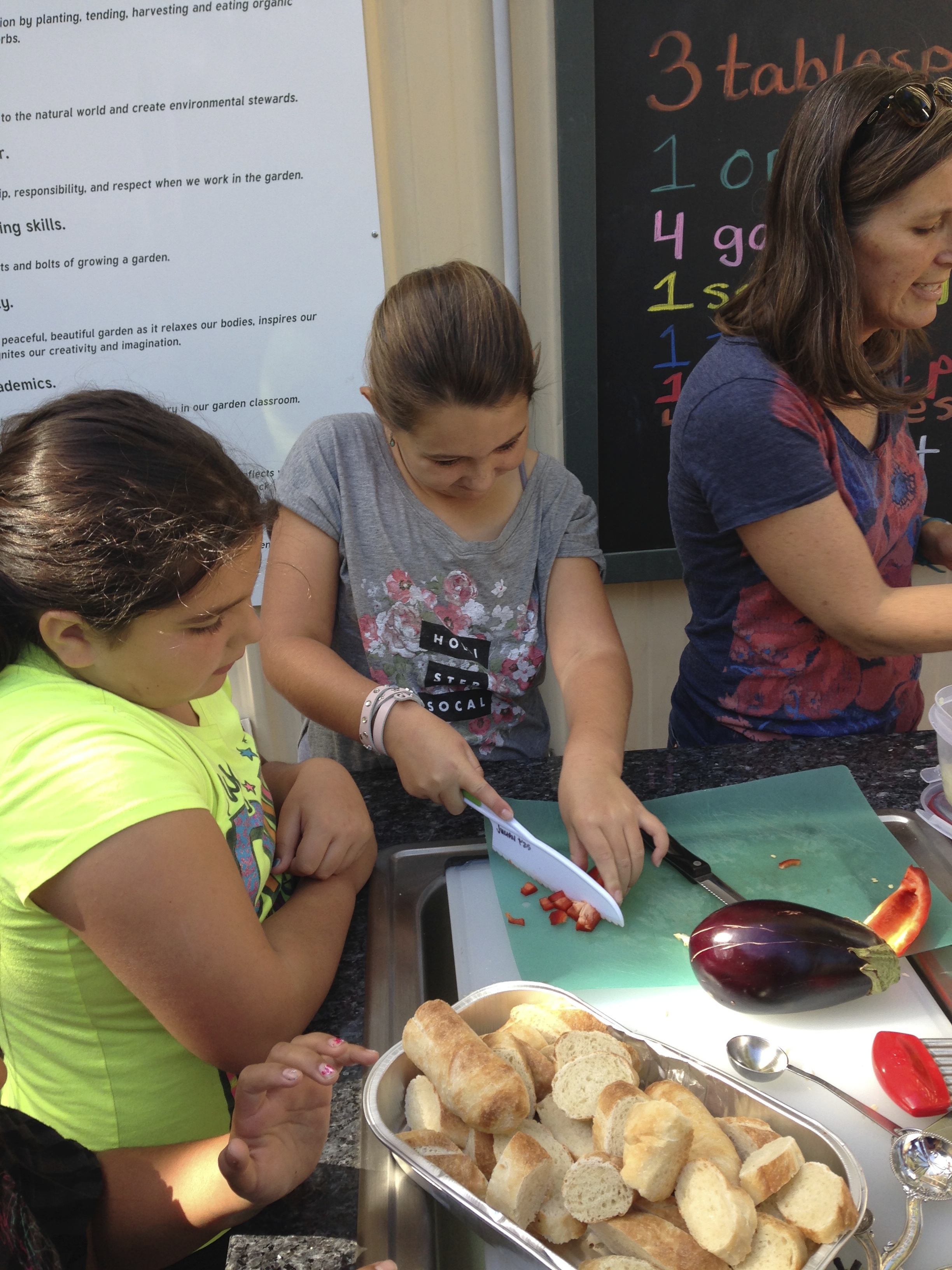
Then to the garden for two 20 minute stations.  I took one group to the outdoor kitchen to cook a warm season dish (ratatouille), and the classroom teacher and parent volunteers led their half of the class in preparing raised beds for our late September planting of cool season vegetables.

Then we tasted the ratatouille on baguette slices from a local bakery, the Candied Apple.   I also sent home a letter to each family with the recipe and gardening tips for winter gardens.  Enough words—look at what fun we had!

IMG_7198 IMG_7204IMG_7216 IMG_7218 IMG_7223

IMG_7237 IMG_7238 IMG_7227

IMG_7199 IMG_7211 IMG_7235

Best comment of the day:

“Mrs. Elisara—I hate tomatoes, zucchini, eggplant and peppers but I LOVE ratatouille!”

Last bits of awesomeness (ESY Part 5)

And finally, here I will dump all of the great ideas that I want to share (and not forget) that didn’t fit in the preceding posts about the Edible Schoolyard.

After our garden sessions, we were asked to write down questions that still lingered in our minds. During break, the presenters had a chance to review the questions and then address them if they weren’t already going to be covered.  Good technique.

IMG_6387

At the end of each day, we filled out three cards: head, heart, feet.  On each we wrote, what we learned? (head) what we felt? (heart) and what we’ll do next? (feet)  They were strung up in the dining commons each day for everyone to see.

IMG_6535

Right by the exit in the kitchen classroom was this set of folders stocked with recipes that the class just cooked.  Students are encouraged to pick one up on their way out, if they’d like.

IMG_6474

Once a week, students and their parents are invited to “Family Nights Out” where families cook the same recipes students learned in class.  Students become teachers as they recreate the menu, and everyone goes home with more skills. So incredibly cool.

IMG_6476

I’m always looking for good, simple rules to guide cooking/garden.  I may just rip these off for the coming year.

IMG_6475

Students know where to find these take-out boxes so they can leave with any unfinished food.

IMG_6457

LIttle vocabulary thrown in—the word geek in me loves this.

IMG_6439

The room is full of interesting decorations:  botanical prints, kites, hats from various world cultures, clocks that tell the time in different world cities, a piano, quotes….

IMG_6316

ESY loves hand-drawn visual aids.  This is on the wall to help students learn their greens.

IMG_6309

The Charlie Cart was on display—expensive but amazing.  Wheel this thing in to a classroom and you have a mobile kitchen with a sink, running water, stovetop, microwave and cabinets filled with every pot, pan or utensil you might need to run a demo.

IMG_6528

All in all, the ESY was a wonderfully rich experience.  A million thanks to the Sage Garden Project who made it possible for me to attend!

Humanities in the garden and kitchen (ESY Part 4)

Something garden educators believe:  all subjects can be taught in the garden.  Something I believe:  this is true, but some subjects are easier to teach in the garden than others.  Science and math come easily, and language arts is not hard to incorporate either.  I think the most challenging curricular integration is social science.  It takes a lot of planning to align lessons, plant the historical crops and create the wrap-around materials to deliver the material.  Edible Schoolyard excels at this.  Here is one of their staff laying out how all of their garden and kitchen lessons match up with 6th, 7th and 8th grade social science.

IMG_6504

Then they walked us through one of their lessons.  As you can see below, there are numerous concepts involved in teaching the history of rice in China.  (This is hand-drawn and colored—again, back to beauty!)

IMG_6485

Then they laid out all of the vegetables we’d be cooking with (beauty, again)….

IMG_6477

And we got cooking in our teams….

IMG_6496

..to create the most beautiful and delicious platter of fried rice, with veggies from the garden.IMG_6497

Here’s another lesson they teach:

IMG_6416

We rotated through various stations to learn this content, one of which was a snack-making station, which involved amaranth from the garden.

IMG_6415


IMG_6417

It goes on….here we ate a meal in the dining commons that represents the Columbian Exchange.  Like I said, amazing.

Activities in the garden also teach history.  Here is a lesson on various techniques ancient cultures used to move things.  After this mini-lesson, students were challenged…IMG_6412


…to move various heavy items using this pile of stuff.  History, engineering, experiential learning…oh my.


IMG_6413

Other activities work as scavenger hunts in the garden:

IMG_6414Can an average school garden replicate this?  It would be very challenging without significant resources, but nonetheless I remain inspired to think through connections between the garden and the social sciences in the coming year.  It’s always helpful and inspiring to look at the “best of the best”—thank you Edible Schoolyard for pioneering this work!

Edible Schoolyard Academy (ES Part I)

Before I plunge into all that I learned, let me explain the basics of the Edible Schoolyard (ES.)  It is a project started 20 years ago by Chef Alice Waters at Martin Luther King Middle School in Berkeley, California.

IMG_6584

It has a one-acre garden…

IMG_6388

IMG_6545

with a beautiful central teaching space: straw bales in a ring under a ramada with kiwi vines…

IMG_6360

…a small but efficiently run greenhouse with timed irrigation….

IMG_6366

IMG_6544

….a compost row, when these very hot piles are turned every two weeks, resulting in finished compost in 8…

IMG_6357


IMG_6358

…a well-organized tool shed (more on that later)…

IMG_6355

…outdoor oven…

IMG_6394

…and much more (veggies, flowers, fruit and nut trees, olive grove, rainwater harvesting, etc.)

They also have a beautiful kitchen and cooking education building…

IMG_6542

…a peek inside (more on this later too)

IMG_6297

..all of which is based on Alice’s principles of an “edible education,” spelled out on the side of the building.

IMG_6507

Take a look at the jaw-dropping dining commons…

IMG_6541

…where we ate delicious things such as…

IMG_6539

This program is run by a team of garden managers and interns, head chef and cooking instructors, program administrators and office staff, Americorps volunteers, summer interns, and consultants, all of whom we met the first day of the Academy.  They run the Academy once a year, for about a 100 attendees, to share all of their secrets.

IMG_6318

St. Alice also spoke, emphasizing her big, audacious idea: a free, delicious, sustainable school lunch for every child in America.

IMG_6319

Then we broke into three cohorts, by region, and spent one full day on each rotation: garden, kitchen, and administration.  We also had panels on fundraising, the farm to school movement and school lunch reform and one night went out for an a-w-e-s-o-m-e dinner in Oakland at Pizzaola.  Our days were full–example of garden day below:

IMG_6333

My next four posts will talk about the Academy thematically, starting with one of Alice’s main principles: “Beauty is the language of care.”  Stay tuned….meanwhile, happy, fuzzy picture of me by the lovely, handmade ES banner.

IMG_6556