This past year Mr. Copeland made quick little movies to be shown in all classes in order to teach school norms. This one explains school-wide expectations for behavior in the garden.
This past year Mr. Copeland made quick little movies to be shown in all classes in order to teach school norms. This one explains school-wide expectations for behavior in the garden.
In addition to being one of my favorite David Wilcox songs, this is also how I feel about any big project. Mission statements are important because they serve as a roadmap to where you want to go. Our school garden has had one for a long time, and I return to it all the time, but just yesterday we finished a project to have it printed on a sign and hung in the garden for all to see.


And just in time for this Saturday’s 2nd Annual Julian Garden Tour! If you’re in Southern California, consider coming up for the day. Seven gardens are on display, including the school garden, from 10-4. Tickets, which are the maps to and the descriptions of the gardens, are $20 and can be bought at Town Hall on Main Street or Julian Elementary on the day of the event. All proceeds benefit the district’s Farm to School efforts.
Thank you to Leslie and Brian at Wet Duck Design for creating and installing our sign!
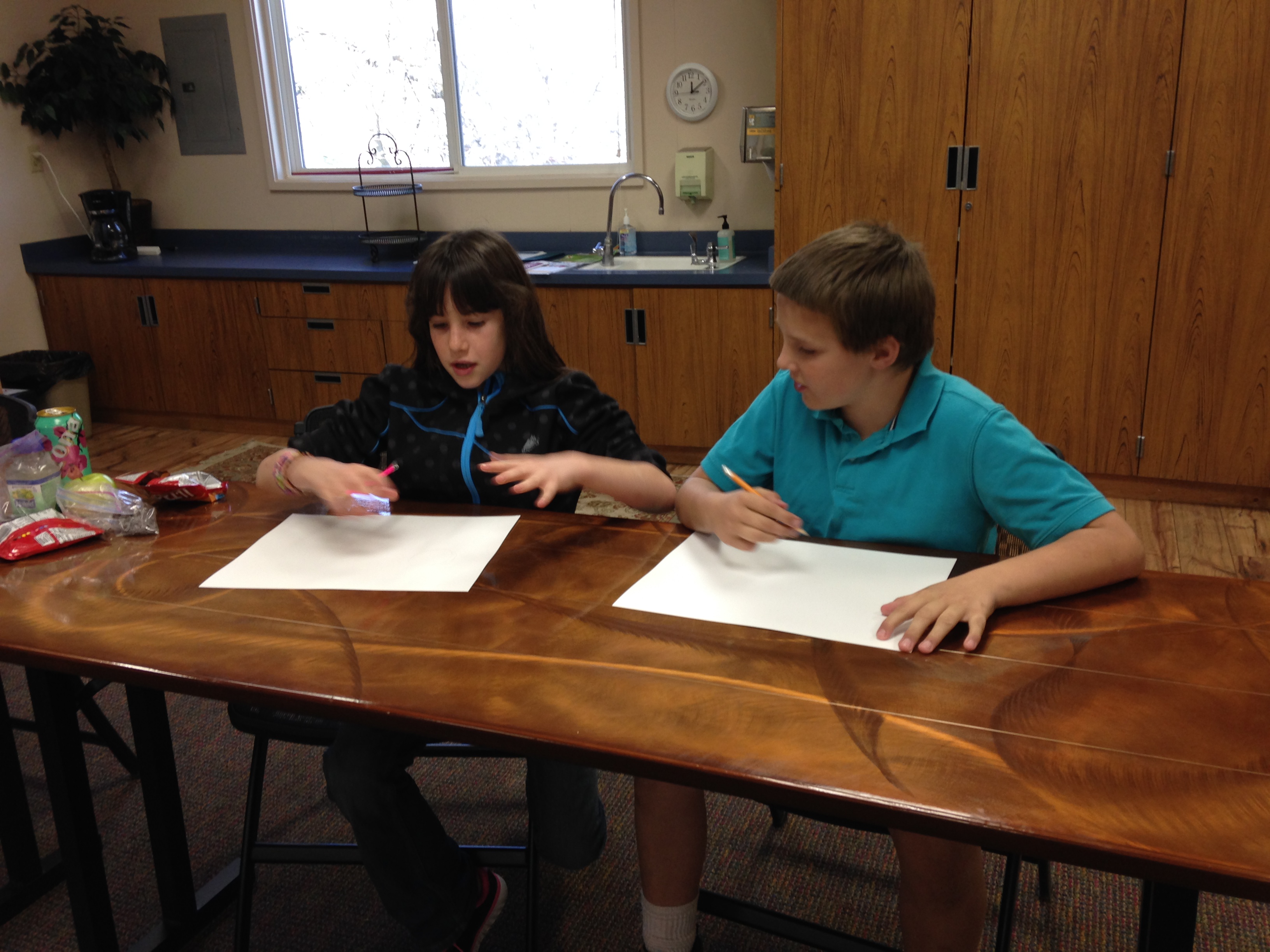
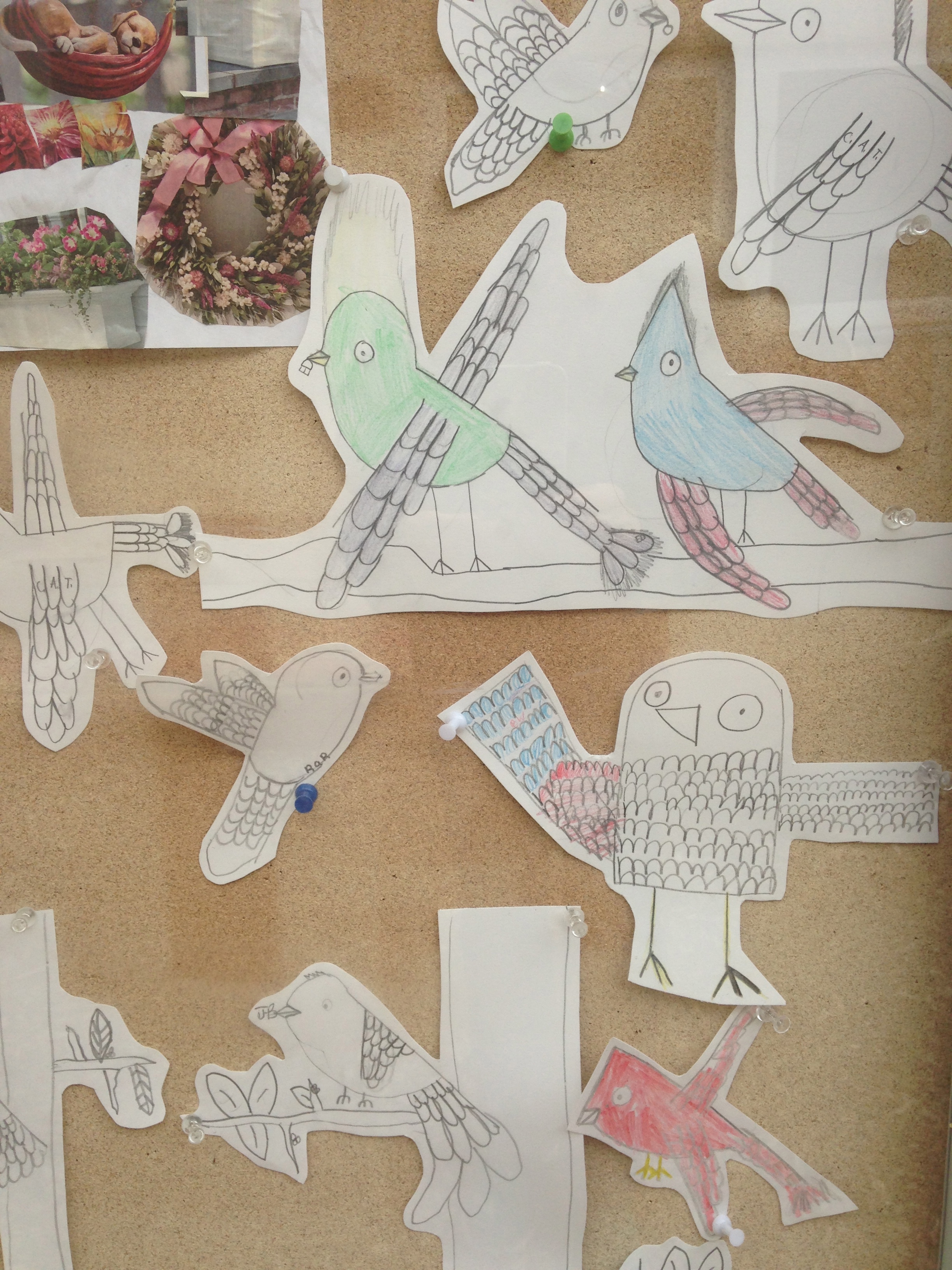
My son is taking a drawing class with two other students at the newly opened Studio Samadhi in Wynola—a wonderful new “center for the arts” in our community. 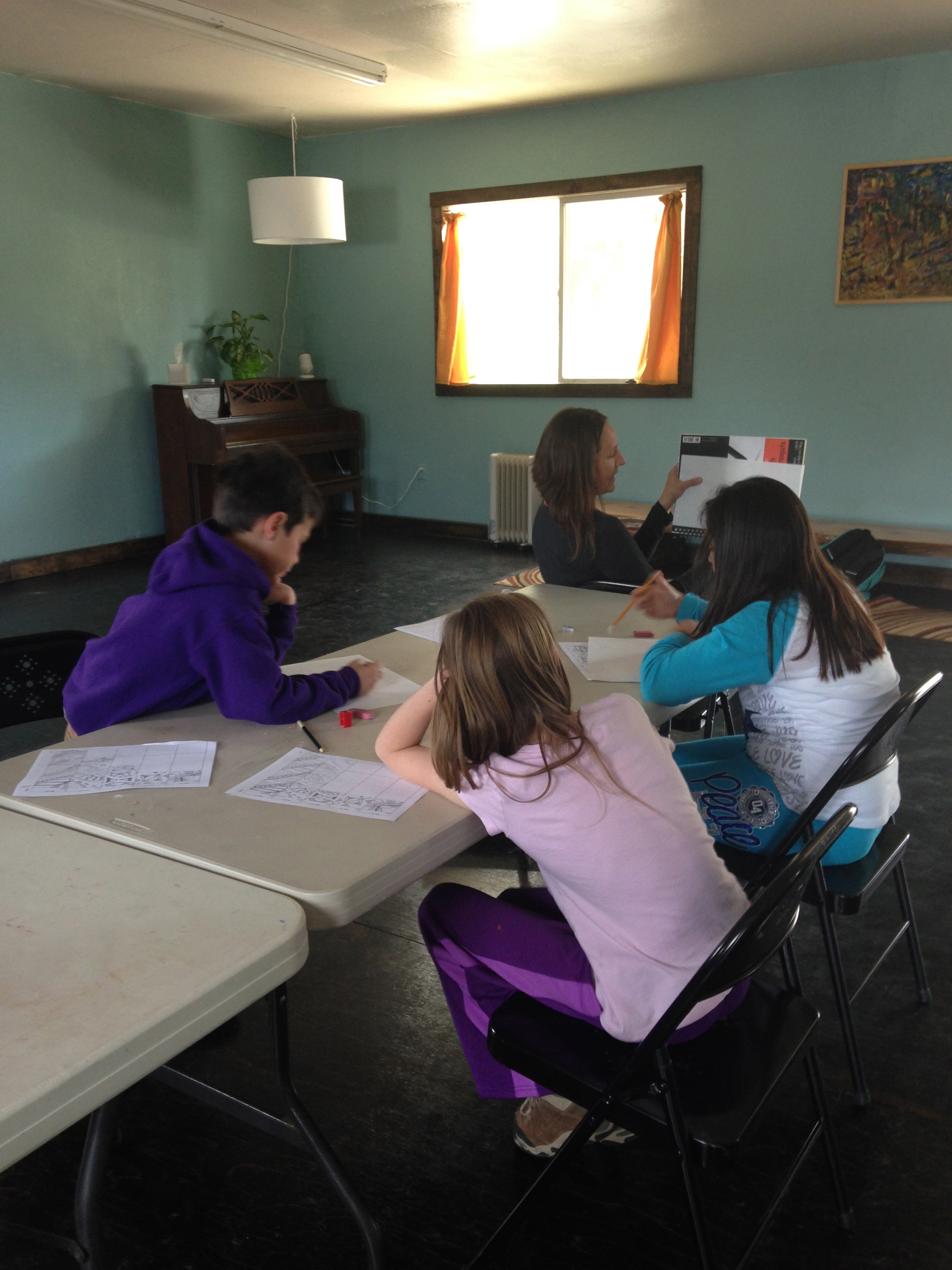 One day last month the kids drew little cartoon birds, and it was a hit. One of the students, who happens to be a Garden Ambassador, said, “We should do this again in the garden!” I am always looking for realistic student-generated garden ideas for them to run with, so I asked each student to invite a friend to lunch so that they could re-teach the lesson. It was a cold and windy day, so we ate and drew in Pathways. The kids were excellent teachers.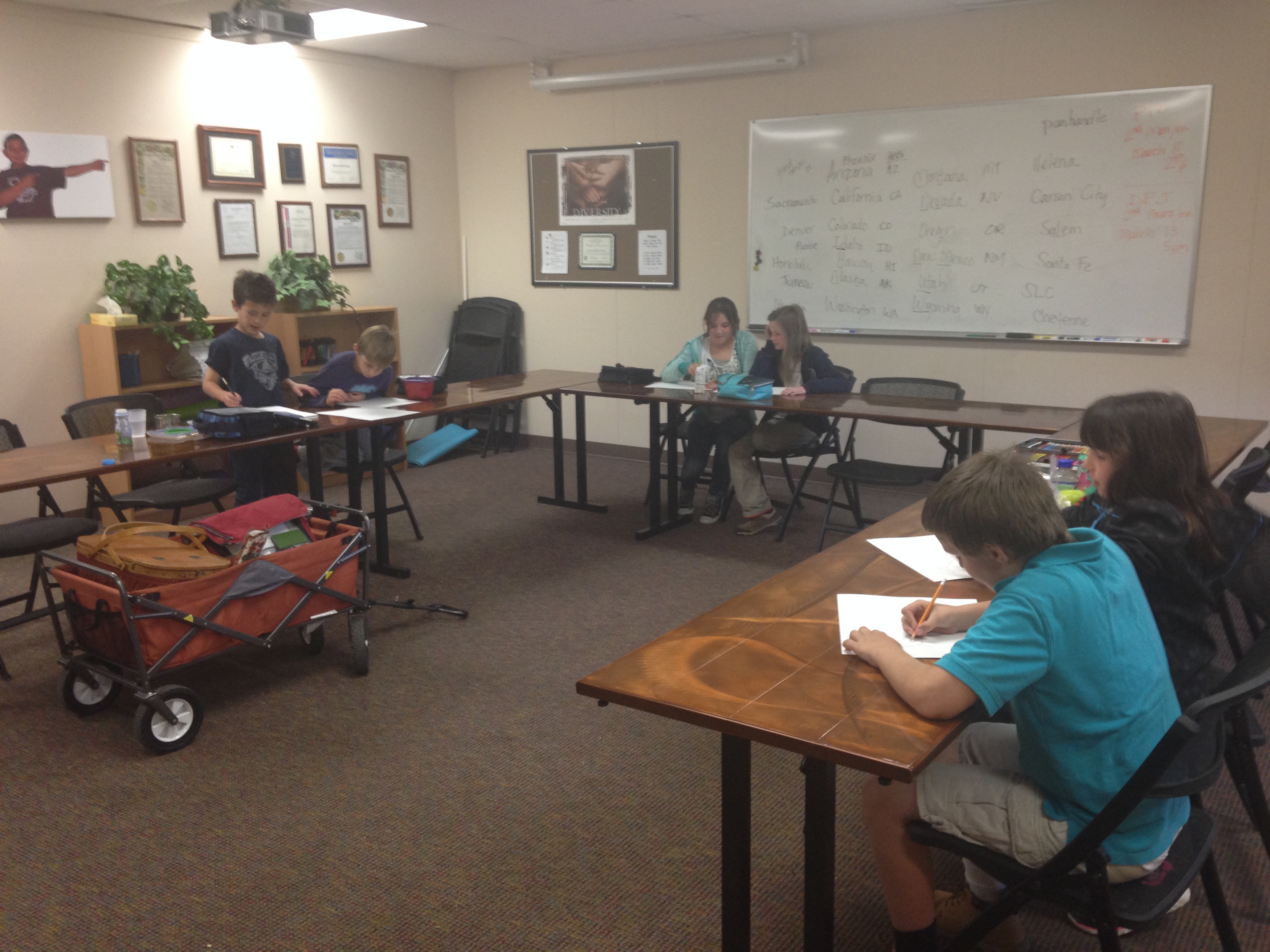
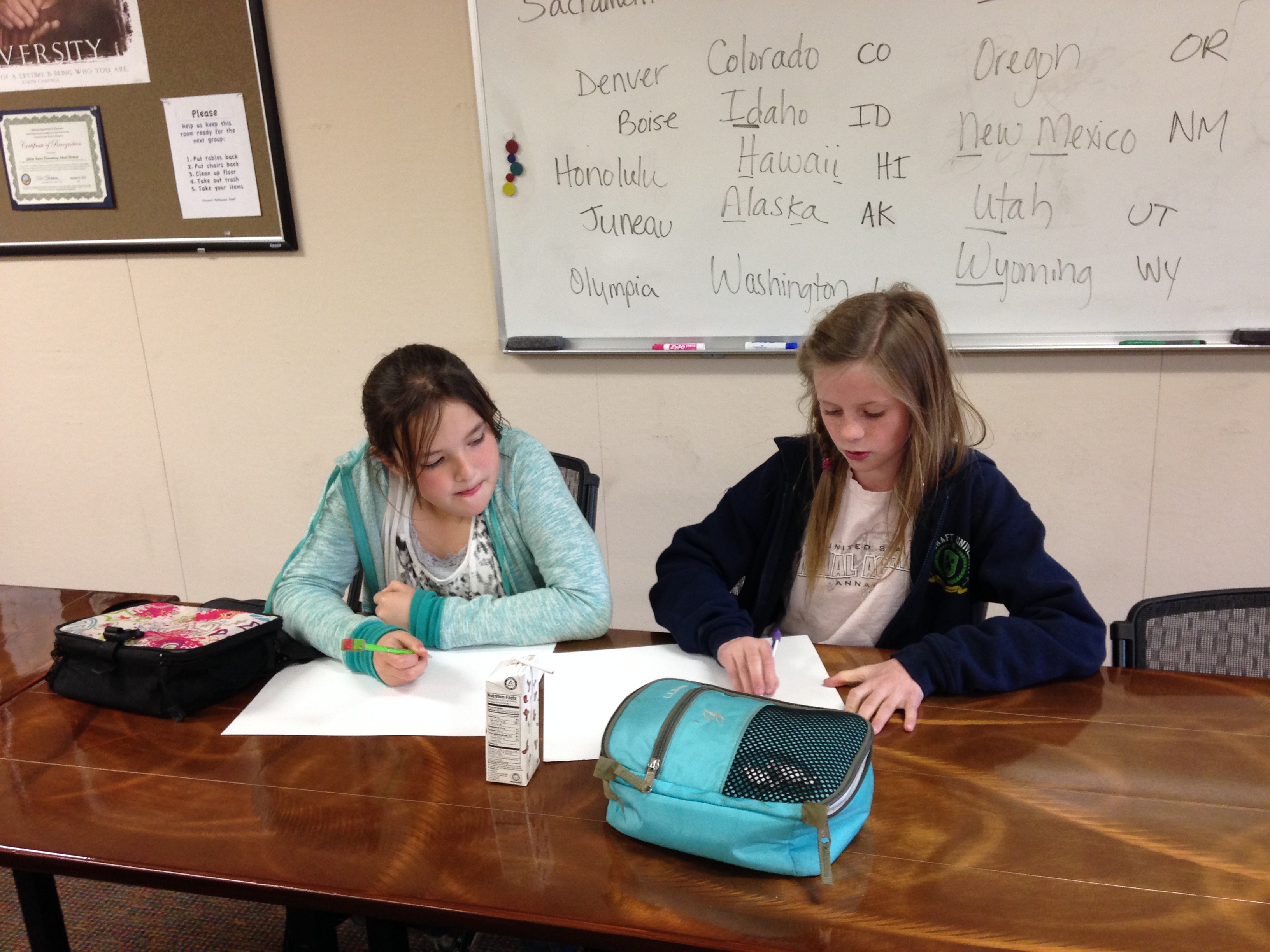
 All of the drawings were then pinned on our garden bulletin board for all to enjoy!
It’s March in the garden, and it couldn’t be prettier. Stroll with me.
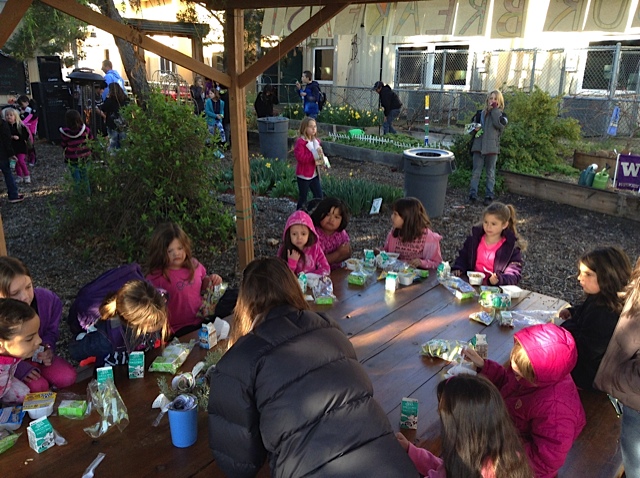
Carmen from Julian Pathways led the effort to start a monthly “have lunch with your parent in the garden” event. The first attempt was an unqualified success with over 50 students and parents sharing a meal on Friday afternoon.

Photo courtesy of Scot Copeland

Photo courtesy of Scot Copeland
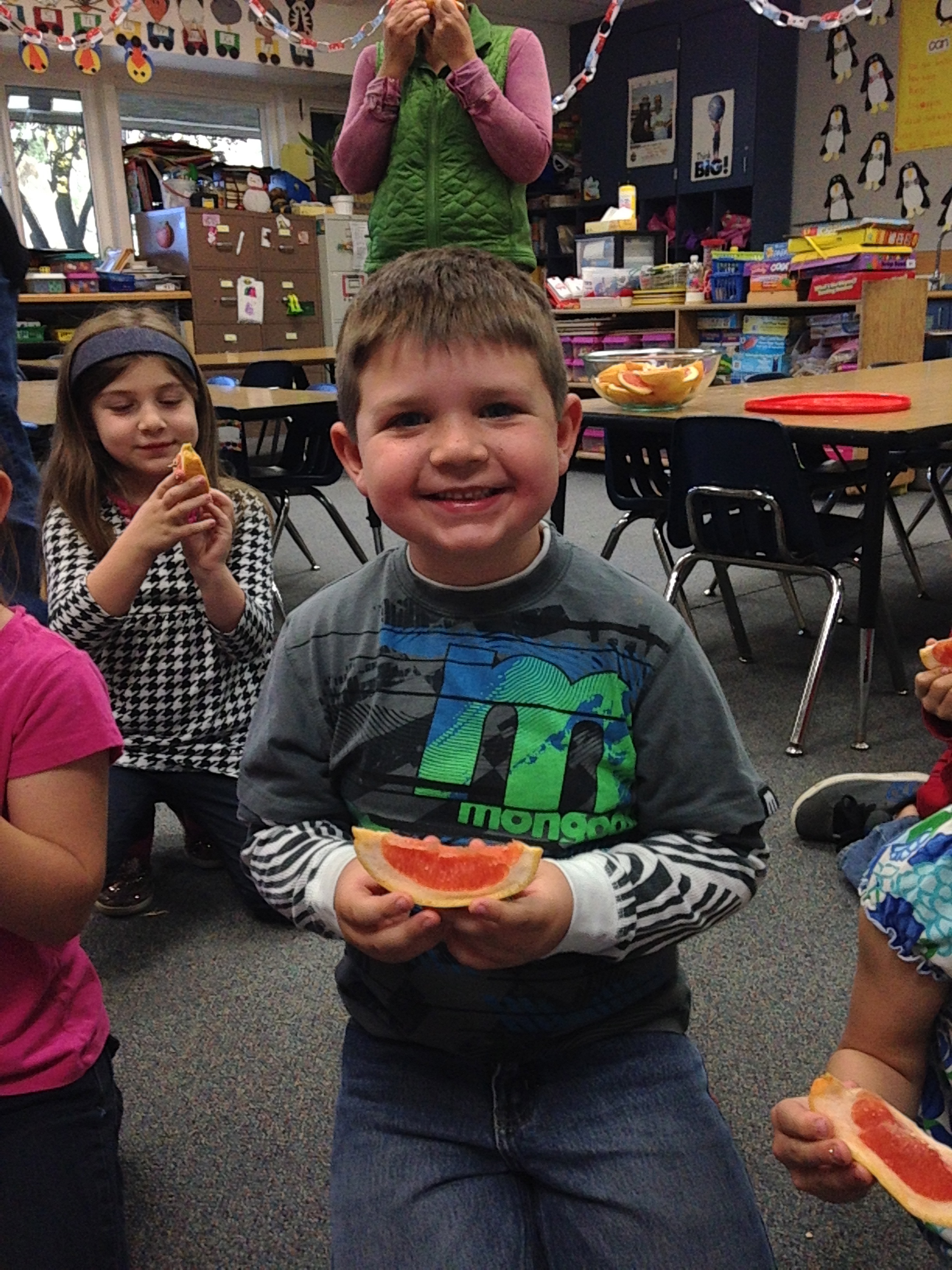
Our Harvest of the Month is citrus. Citrus doesn’t grow in Julian so we tasted delicious grapefruit from the “neighboring” town of Borrego.

The breast cancer awareness ribbon is in full bloom! Photo courtesy of 6th grade student Avery McFedries.

Miss Lynn recently spruced up the gazebo with a new “coffee table,” pillows and a thorough cleaning.

She also tucks these little things around the garden. I love discovering them.

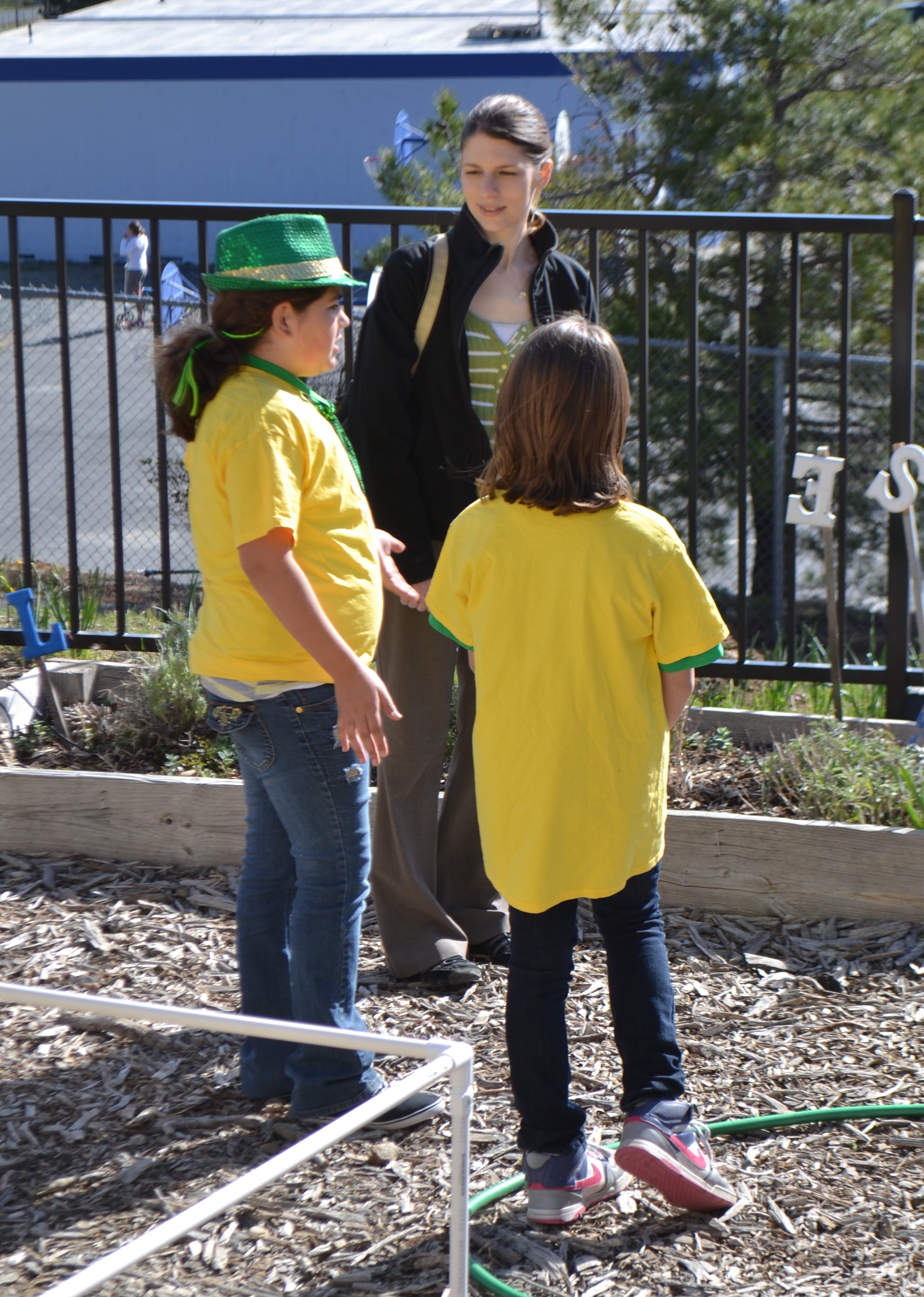
Pediatric residents from UCSD do part of their community health rotation at our district, through Pathways. Garden Ambassadors, decked out in St. Patrick’s attire, give the doc a tour.
We added a geranium to the new mailbox to match the flag.

Second grade students seeded this new circular bed and wagon with California wildflowers.

After the rains, one of the garden volunteers found this on the back slope of the garden. We’re thinking bobcat?

It was the garden’s turn to make a display for the front office.

Julian kids get to plant a lot of daffodils but they rarely get to go back and pick them. I had students make “surprise” bouquets for their teachers from flowers in the garden.

I’ll close with a link that captures our teacher “flash mob” last October on National Food Day. “We can change the world”—not just a pop song! The truth! (Right, Susi?)
One of the many purposes of our school garden is to demonstrate good gardening practices and concepts for our community. Recently we’ve built a series of 3×3 raised vegetable beds, and we’re making “how-to” flyers to put in the adjacent mailbox for parents/other visitors who might want to build some at home.
Unveiling the newly installed mailbox:
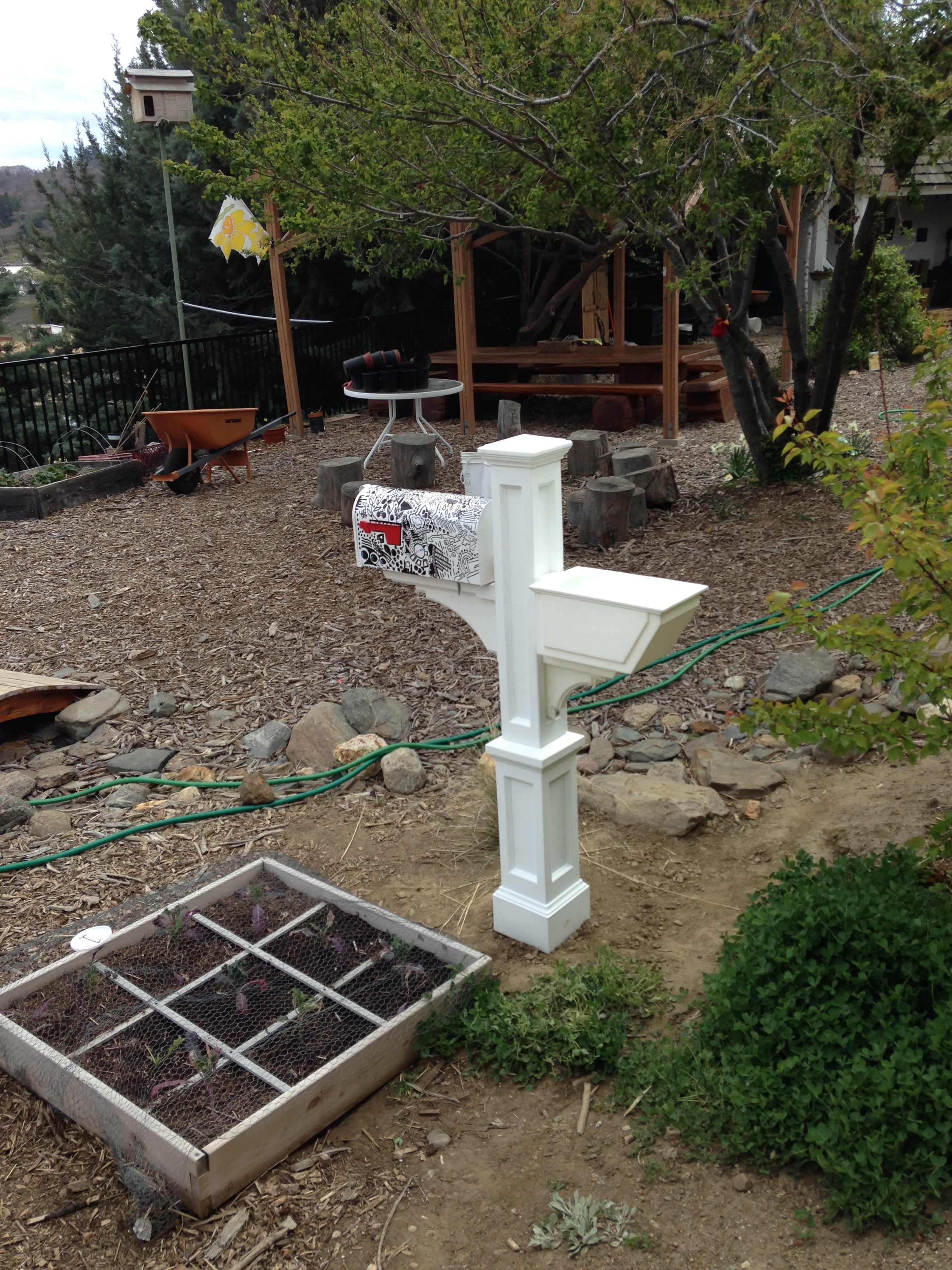
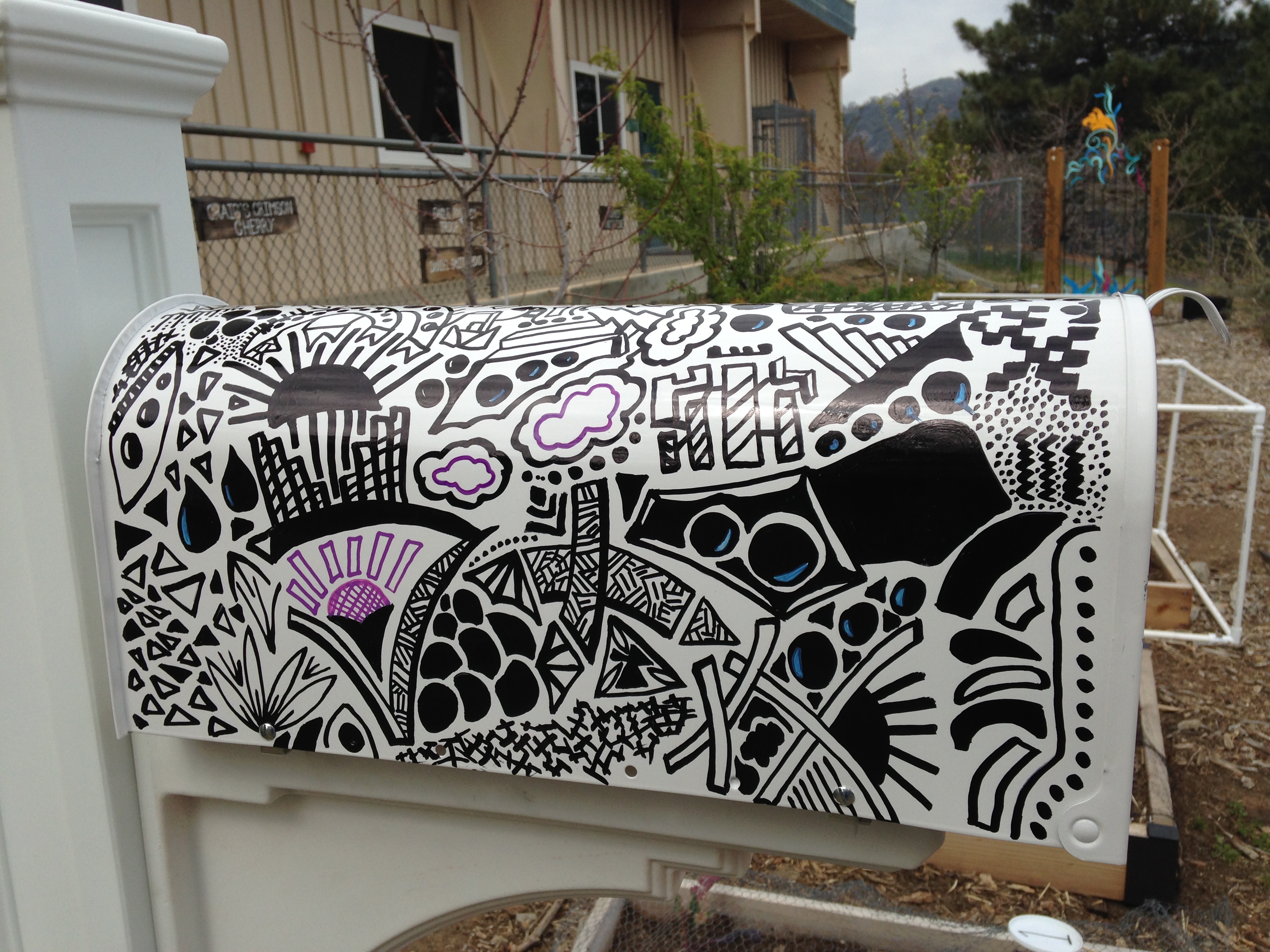
Now we need to put some colorful plants in the planter on the backside and fill it with gardening information flyers. Thanks to the artist (Ethan), the donors (Mom and Dad), and the crew that installed the whole thing (Mr. Copeland, Mr. Harvey and the 4th grade reading students!)
On Tuesday we celebrated National Breakfast Week. Julian Pathways secured a grant for the school district from Action for Healthy Kids in order to promote the eating of breakfast, and we used it to provide a free breakfast to every child at the elementary and junior high. To make it a festive event, we all ate in the garden!

The chains were made from seed catalogues by the children
Centerpieces were paper roses, made from seed catalogues, by 3rd and 4th grade students last week in garden class.


Younger student colored these messages:

Breakfast is brain food!

Eat your breakfast!
Student musicians played on the gazebo “stage”….

…and under the plum tree!

Last week during garden class, I worked with the fifth graders to write “breakfast haiku.” Students read their poems in-between the musical presentations.

Twelve lucky kids had heart stickers on their breakfast bags….

…which meant they got to return to the garden at lunch to ride the “blender bike” and enjoy their own pedal-powered smoothies!

Thanks to Pathways and Action for Healthy Kids for making this wonderful morning possible!
It’s always fun to hear from parents and teachers the different ways that students are extending their garden learning outside of our once-a-week class. One mom recently told me this story about her pre-K daughter. The week of Valentines Day we had been singing about and eating roots, as well as hunting for “C” words in the garden. Her daughter decided to make her own valentines at home for her classmates, and she incorporated concepts from that week’s class into the designs. Notice the roots, the “c”ompost bin…and the princesses! Way to go Rosemary Grev!

Parents started the elementary school garden 4.5 years ago. We started by cleaning the space up, followed by more cleaning up of the space. We built structures, renovated a gazebo, added raised beds, commissioned a table, put the compost bins in place and began fundraising and grant writing. Every year we push the project forward—adding wildlife habitat, fruit trees, a solar fountain, works of art, native plants, a rainwater harvesting system…. Three years ago we launched Garden Ambassadors..and then two years ago I began teaching a formal garden class every Wednesday afternoon during our enrichment classes. Last year we dove head first into Farm to School.
This February our garden education program took a big leap forward. Every class now goes to the garden, every week, for a 30-40 minute class which I am honored to teach. Children are in the garden all day long, doing more than we’ve ever done before–learning vocabulary, writing, singing, planting, harvesting, cooking, eating, mapping, creating, exploring. It has been thrilling. Thank you to everyone whose vision, hard work and love for “kids in gardens” has brought us to this point! Extra special thanks to Julian Pathways (our on-campus family and student support center which I will write more about soon) for making this phase of garden instruction possible!
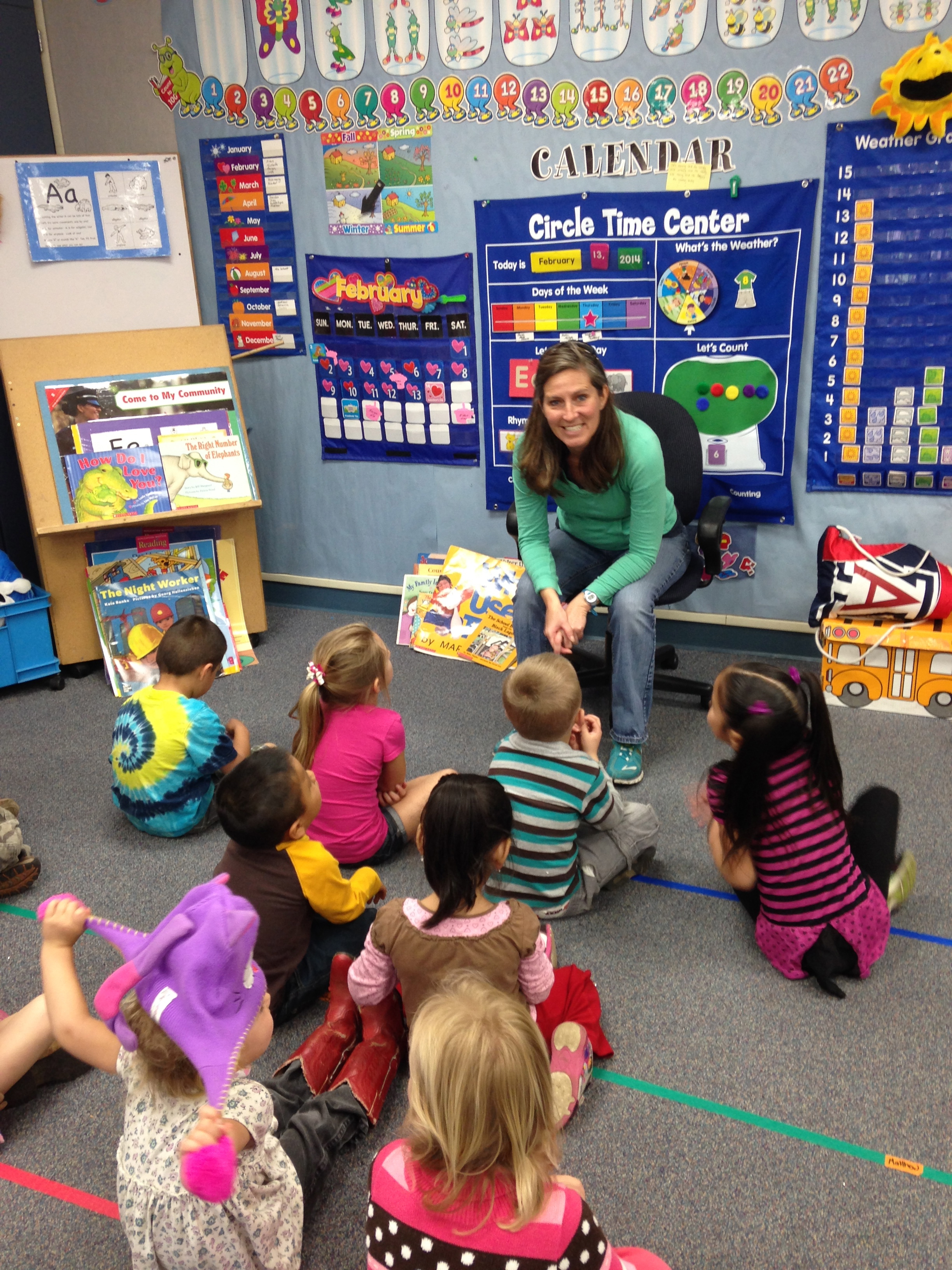
With the ESK class, ready to sing and hunt for letter of the week in the garden
Time for a walk around the garden. Leave your jackets at home—it’s 76 degrees here today in Julian.
I picked up these banners at a garage sale in my effort to add holiday touches to the garden.

Miss Lynn added these:

Valentines Day is the rule of thumb for planting peas, and peas we did plant!

Kale is our harvest of the month, and my parent helpers/Garden Beneficials cooked up kale chips at our outdoor kitchen for the fifth graders. One thing I have become convinced of during my tenure as garden teacher—-NUTRITION EDUCATION WORKS! These kids were gobbling down the kale chips, begging for more, asking for the recipe, declaring it to be one of their favorite foods….uh, kale chips!
Harvesting from our new 3×3 beds:

Cooking in our new little convection oven at our outdoor food prep station:

Munching away:

A Farm to School project recently finished! I had sets of banners made for the crops that are grown in San Diego each season. The winter set now enhances the indoor area where children pick up their lunches.

Next to the banners is one of the photographs taken by a student in our after-school photography program Kids with Cameras, identifying the chef behind the meal.

Early start kindergarten and kindergarten students focus on a “letter of the week.” I’m using these empty picture frames to teach garden vocabulary. The students hunt for them, and we learn the name of the object framed. D-d-d-d for daffodil!

Lastly, our district recently received a Live Well San Diego proclamation from our county board of supervisor for our wellness programs. Pictured left to right–County Supervisor Diane Jacob, School Board president Eileen Tellam, Superintendent Kevin Ogden, and me. Also recognized were Teresa and Jeremy Manley who were also present at the meeting.

Last Thanksgiving break found me finishing a big project at the junior high garden. We received funding to plant out the hillside adjacent to the garden with California natives. I looked around for a volunteer landscape consultant, but when there were none to be found, I buckled down and did the research myself on the question: What are the best native plants for slopes?
Visiting the “natives only” Las Pilitas nursery in Escondido (and their super informative website: http://www.laspilitas.com) told me everything I needed to know. Planting natives requires adherence to a few important principles:
Here’s another cool aspect of this project. We have four 60 gallon rain barrels hooked up to a portable classroom at the junior high. Up until a few weeks ago we used this water exclusively—-no tap water at all—-to plant 40 plus plants on the hillside. People wonder if small rainwater catchment systems make a difference. They do! Sixty gallon barrels fill very quickly catching even a modest amount of rain off a large surface, like a building’s roof. Of course, they are now empty with our (distressing) dry spell. We might get some rain tomorrow night, however, which will not only take care of the once-a-week watering they require to get established, but will also fill the barrels again to get us through the next stretch of (super distressing) drought.
I pulled students in to the planting when possible, grabbing a few volunteers at recess and taking students out during a Thursday enrichment class. Rains in November, however, dictated the planting schedule, so I found myself there alone, digging, planting and mulching. The hillside is bare and a little eroded, so putting in the plants helps to beautify one of the outdoor areas where children eat—an element in creating a Farm to School program. These plants will also stabilize the bank over time while creating appropriate habitat for birds and butterflies. So as I teetered on the hillside, digging holes and gazing down on our public school, I felt thankful for restoration work which turns out to be personally restorative as well—a good way to kick off my Thanksgiving break.
Many thanks to the Community United Methodist Church of Julian Gallo Fund for making this project possible!

The hillside is dotted with beautiful little natives, reaching deep for water.

The big vision is to have this entire hillside landscaped with California natives. We’re 40+ plants on our way.
 What's not to like?