The most beautiful broccoli…

….is (of course) the broccoli you grow yourself!

One of my Garden Ambassadors harvested the broccoli yesterday.

IMG_5880

And after thorough washing, it went back to the classroom.  From stem to mouth in the same afternoon!

IMG_5886

P.S.  Today I saw some of the fifth graders, and I asked them how they liked the broccoli, compared to other broccoli they had eaten.  One said, “More moist.”  Another said, “Fresher, sweeter.” A third summed it up: “It tasted more green.”

They also said the teacher offered seconds, and the kids rushed the bowl.  (Who says kids won’t eat vegetables?)

Outdoor food prep station? Check!

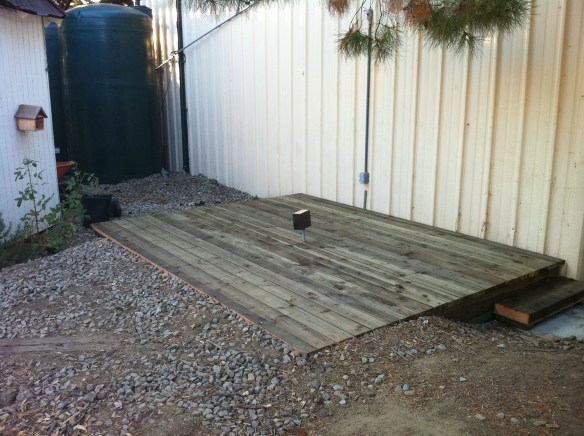
I mentioned that Whole Foods Foundation and Food Corps funded an outdoor food prep station in the garden.  To review, this is what the area looked like before:

IMG_4724

A deck was built to fit the space…

IMG_4894

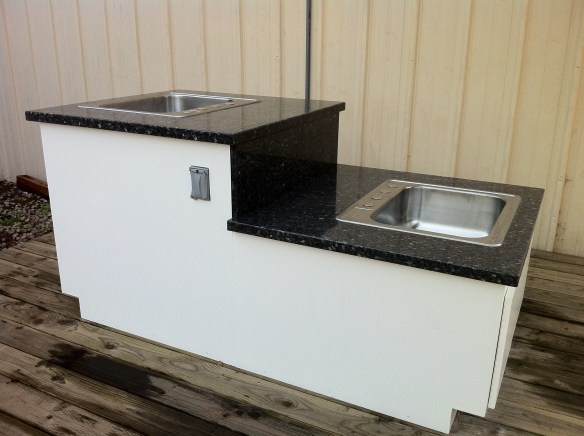
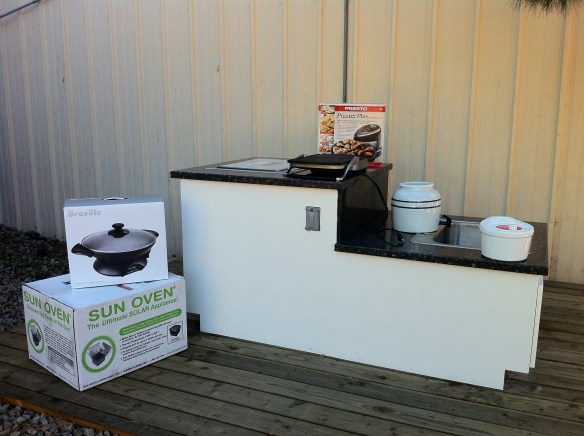
…and a split-level “food prep station” added!  (The two levels are for lower and upper grade-sized kids.)

IMG_5346

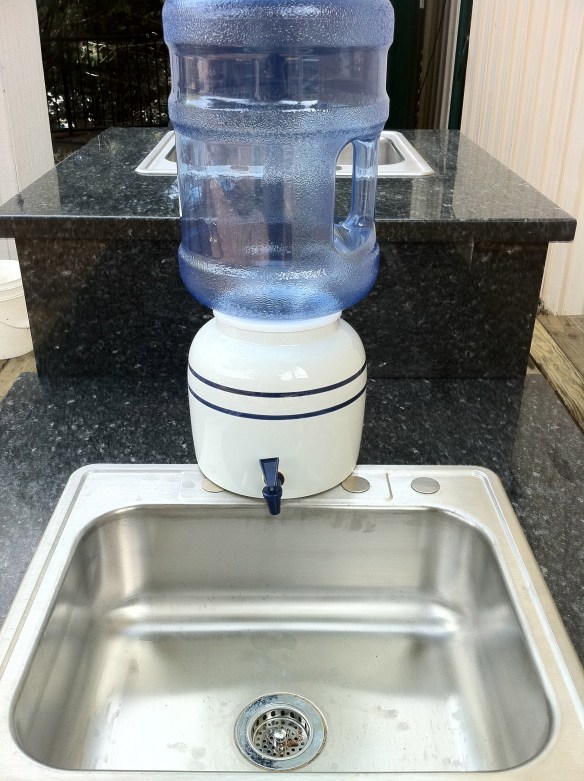
Stainless steel sinks can be used to wash produce with fresh water from dispensers.

IMG_5348

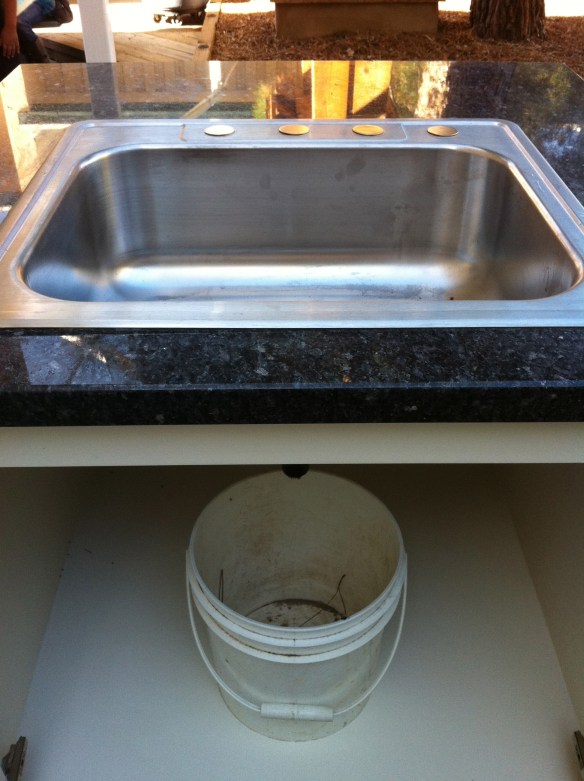
Buckets in cabinets below catch the water to reuse on plants.

IMG_5341

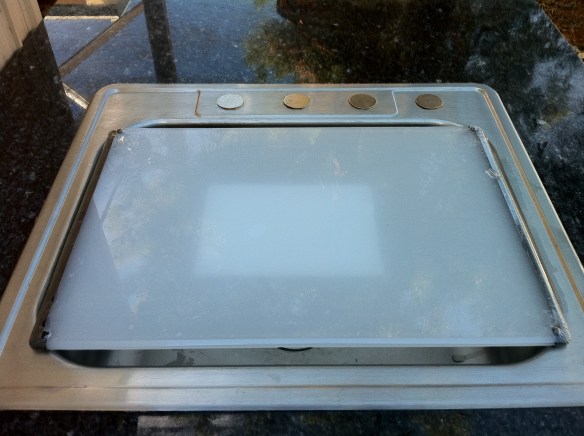
Sinks can be covered with cutting boards to increase work space.

IMG_5344

Both sides have electrical outlets for simple appliances, such as our pizza oven and wok.  We also purchased a solar over.  I’ve been keeping my eyes open at garage sales for other tools such as a salad spinner and a flat grill/panini press.

IMG_5284

The stage is set for great culinary and educational outcomes!

68 grants nationwide—and we got one!

USDA Awards First Grants to Increase Local Foods in Eligible Schools:  68 Projects Support Nearly 2 Million Students

WASHINGTON, Nov. 14, 2012 – Agriculture Deputy Secretary Kathleen Merrigan today announced more than $4.5 million in grants for 68 projects, spanning 37 states and the District of Columbia, to connect school cafeterias with local agricultural producers. 

“When schools buy food from nearby producers, their purchasing power helps create local jobs and economic benefits, particularly in rural agricultural communities,” Merrigan said. “Evidence also suggests that when kids understand more about where food comes from and how it is produced, they are more likely to make healthy eating choices.” 

The first-ever USDA Farm to School grants will help schools respond to the growing demand for locally sourced foods and increase market opportunities for producers and food businesses, including food processors, manufacturers, distributors. Grants will also be used to support agriculture and nutrition education efforts such as school gardens, field trips to local farms, and cooking classes. 

We heard last Friday that our district received one of these coveted grants in what we’re told was a very competitive grant cycle. (Thank you Susi!)  This means, among other things, that I will be the Farm to School Grant Coordinator for the next year, starting December 1st.  And you can be sure I’ll be sharing all that I learn here (and there, and everywhere).  Here’s what I’ve learned so far:  it’s very exciting to get a cutting edge federal grant in your little country school district.

Destination farm stand

Last week Kids with Cameras took a field trip to a farm stand run by a Julian family dedicated to sourcing food as locally as possible.  First our guest instructor, Bill Bevill, worked with the students on sharp focus and filling the frame, and then we drove five minutes down the road to Wynola Flats Produce.  Stacey Peyakov was a wonderful host, allowing kids to roam through the store as well as the orchard, snapping away. The indoor/outdoor space allowed for experimenting with lighting, and the produce gave us a chance to capture colors, textures, and patterns.  One of the goals of both the KWC program and the garden is to develop in kids a “sense of place”—what makes living in Julian unique and wonderful?  To do that you have to get out and look around, and what better way to do that than with a camera in hand?

Photo courtesy of Jeff Holt

The whole story in 8 minutes

Recently I made this imovie about the entire garden project for a grant proposal.  I think it tells the story quite succinctly, and I hope you’ll enjoy it!  (By the way, it has been a HUGE week in the garden with lots of great stories to tell but I’ll have to wait to recover from it all to tell them.  Good stuff coming!)

University of Wednesday

University of Wednesday is a new program at out school.  After lunch on Wednesday all of the classes go to an enrichment class: art, garden, natural history, etc.  Every week they rotate.  This is a great development for the garden as it allows me to be a true “garden educator,” creating a lesson plan tailored to each grade.

Photo courtesy of Marisa McFedries

Last week I divided the group in half.  One half played Garden Bingo with me.  I don’t simply call out the words—I give examples of them in our garden and the kids have to come up with the words.  It was windy so I had to tape down the boards.  And the plastic bingo chips were too lightweight so I finally hit upon this idea.  (Easy clean up–just flick these chips off the table.)

The other half did this scavenger hunt.  It’s an exercise in observation, with a few  academic standards thrown in.  I usually have adult volunteers with me, so they walk around the garden, helping kids who are stumped or seizing teachable moments.  This “scavenger hunt” format works really well, as kids are self-directed, working in pairs with the questions below on a clipboard. And it’s easy to adapt to the grade and the season.

Sample:

1)  How many varieties (different types) of tomatoes are currently growing in our garden?

2)   We are currently growing yellow snapdragon flowers.  Examine the flowers.  Why do you think they have this name?

3)   Draw the most beautiful thing in the garden:

4)   Cite one example of insect damage or plant disease in the garden.  (Look closely at leaves.)

5)   Write three words that come to mind when you see the Hubbell Gate.  (The new colorful one at the end of the garden).  Now use the thesaurus on the main table and fine a synonym for each of these words.

Your word                                                Word from thesaurus

__________________________                        _________________________________

__________________________                        _________________________________

__________________________                        _________________________________

6)   Smell at least three herbs in the herb garden.  Draw the leaf of the one you like most.  Do you know its name?

7)   We are a “certified wildlife habitat.”  What are the four things needed for a habitat?  (This is printed somewhere in the garden.)  Pick two elements and give an example of both.

8) Watch the 4 minute video on tendrils.  What did scientists recently learn?  Where are there tendrils in our garden?  Do you notice the phenomenon pointed out in the video?

(We couldn’t get this excellent Science Friday clip to play out in the garden, so I explained it and the kids watched it later in class.)

Then the kids switch so they both have a chance at each activity.  We end by gathering together at the table to share our answers and questions, and I try to always have something from the garden prepped to eat as we talk together.  The containers get passed around until all the food is gone!

Whole Foods Market said “yes”

Senior garden ambassadors met me before school to play with these two gadgets:

Hand-cranked apple peeler, corer and slicer

Dehydrator

We cut apples, dehydrated them all day, and served them at the Taste Test cart at lunch.

Ambassadors get off the bus and work with me until the bell rings

And soon, this whole process is going to be much, much better. You can see that we are prepping the food at the lunch tables.  Do-able but pretty inconvenient.  No table or electric outlet or sink to rinse fruit and veggies.

A while back Susi and I sent a grant proposal to Whole Foods Market, asking for an outdoor “kitchen island” to prep garden produce.  After obsessively checking their website for months we found out this past summer that we won the money!  It’s going to be built soon, so once again, I will show you the “before” shot so you can appreciate it when it goes in.  This is probably the last unimproved piece of real estate in the garden!

Let them eat apples!

Our beloved math teacher at the junior high made a new rule for his class this year:  no eating in class, except apples.  My son came home insistent he take an apple to class the next day…you know, because Mr. Copeland said he could!

This is great timing, because the elementary garden is producing a lovely crop right now.  The trees predate the character garden, but they’ve suffered neglect as long as I can remember because they were on the opposite side of the fence—no easy way to water or prune or harvest.

But with the arrival of the Hubbell gate, we peeled the fence back to make way for the eventual footpath down the hill.  And in so doing, we brought four trees into the garden’s footprint.

So this week we harvested a big bowl of these organic apples and took them to math class. I checked in after first period to see this:

Gone! All apples had vanished by second period, demonstrating two principles: One, you can sneak organic nutrition in the back door when it’s made available by a cool teacher and Two, middle schoolers will eat anything in sight, even something good for them!

Scary statistics/hopeful trends

At our backcountry collaborative meeting this week, a guest speaker from the San Diego County Office of Education talked about the growing national obesity epidemic.  Consider these frightening statistics she mentioned:

-A child born today in the U.S. is likely to have a shorter lifespan than his/her parents.

-40% of children in San Diego County are considered overweight or clincally obese.

-The Department of Defense has called the obesity epidemic an issue of national security because 75% of young people otherwise eligible for service in the armed forces cannot pass the fitness test.

The good news is that we are starting to see an increased emphasis on physical education, outdoor exposure, and healthy eating habits in school programs, community initiatives and funding opportunities.  Similarly, increasing attention is also being placed on connecting school children to local, fresh food, often through school garden programs.  One thing I hope to do more with kids at our school is to help them understand where and how food is grown in our community, starting with our neighborhood farms and reaching out into the county.

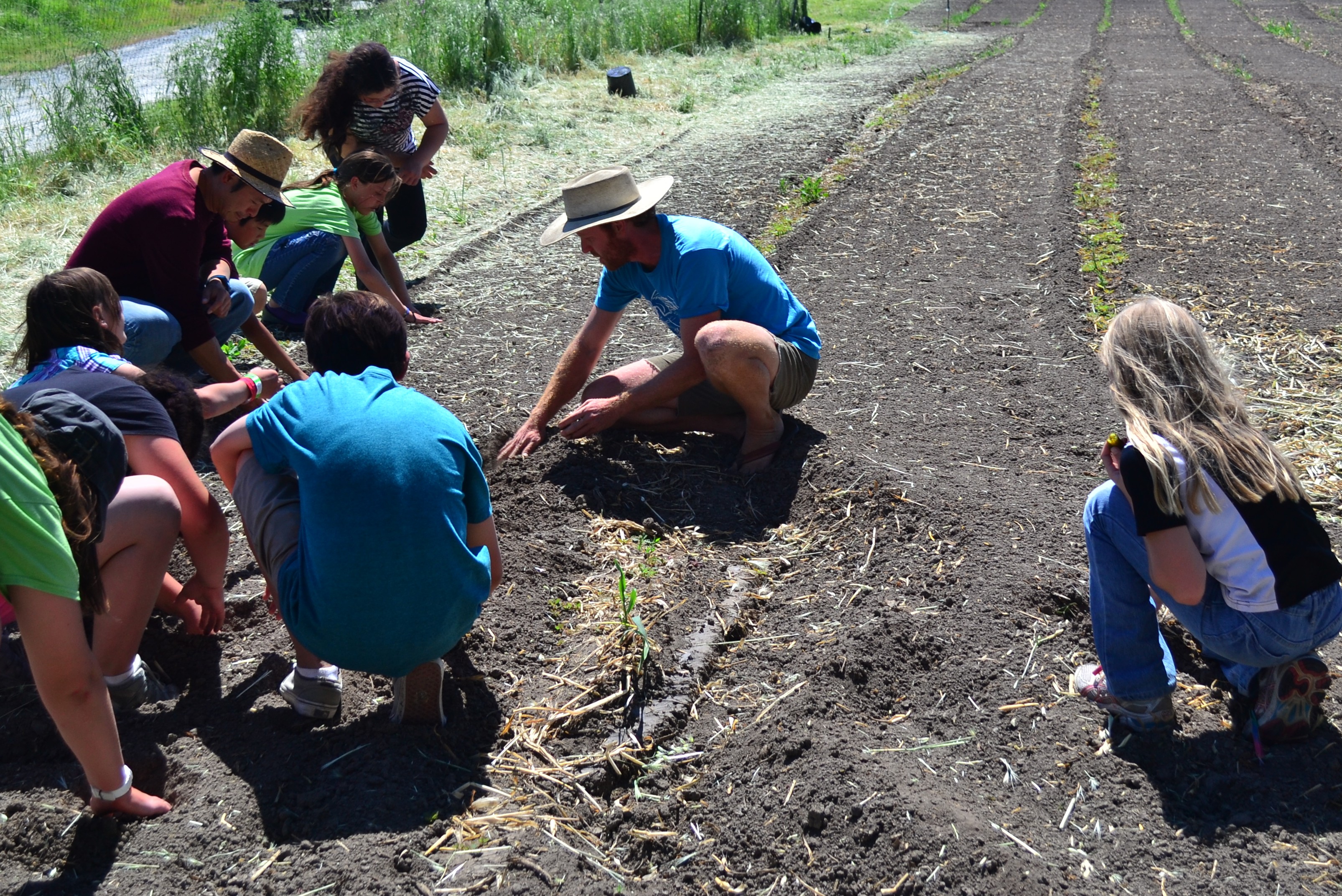
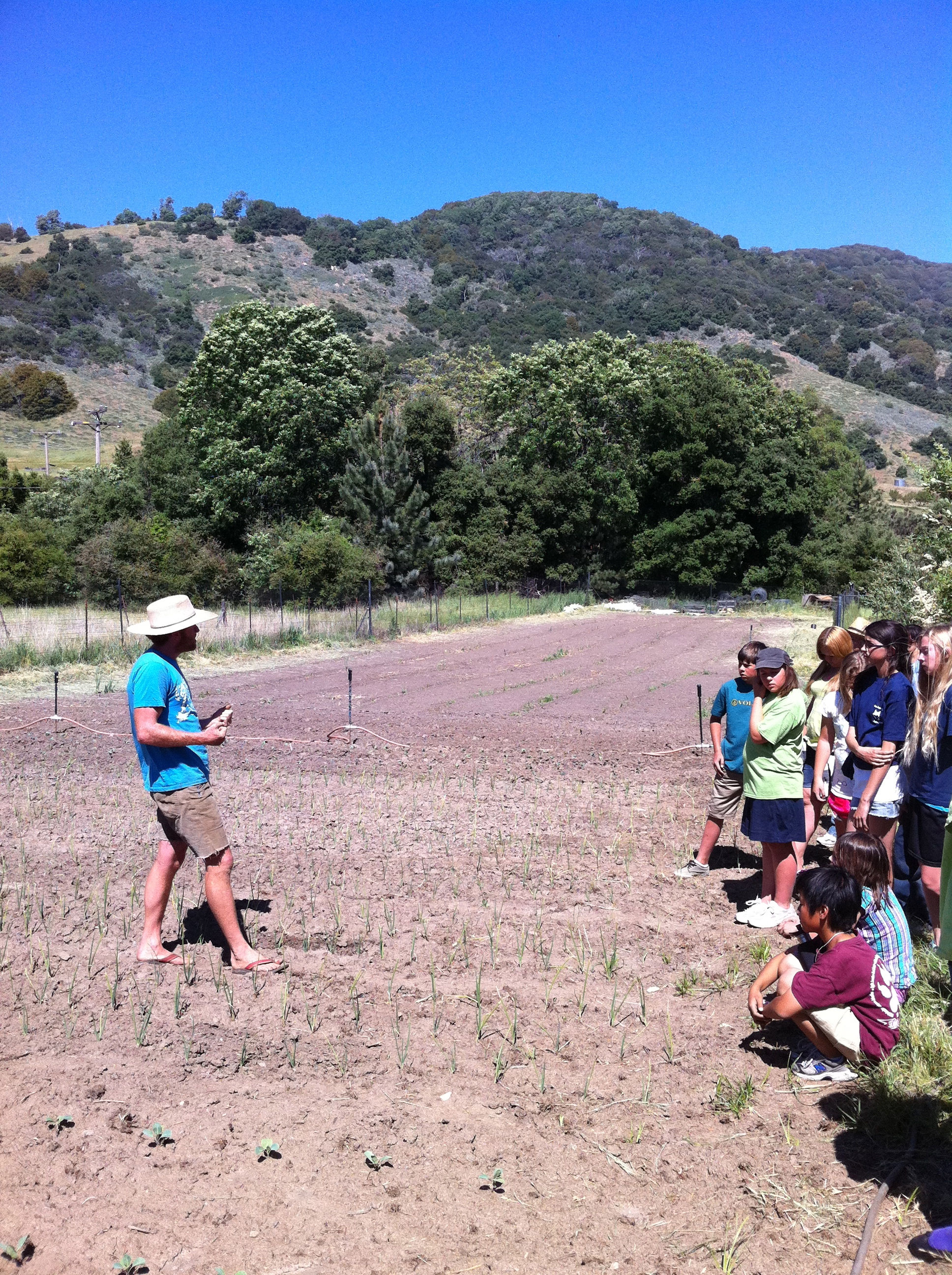
Yesterday I led an after school field trip for the GATE students to Volcan View Farms where we were given a tour by local farmer and early-friend-to-our-school-garden, Ryan Wannamaker.

Ryan showing how he “grows” soil—the rye grass and bell beens grown in this field as a cover crop and plowed under six weeks ago now make for rich and rejuvenated soil for this year’s plantings (Photo courtesy of Marisa McFedries)

Up close with what’s growing now in Julian (Photo courtesy of Marisa McFedries)

Talking about 3,000 onion transplants in the shadow of Mount Volcan


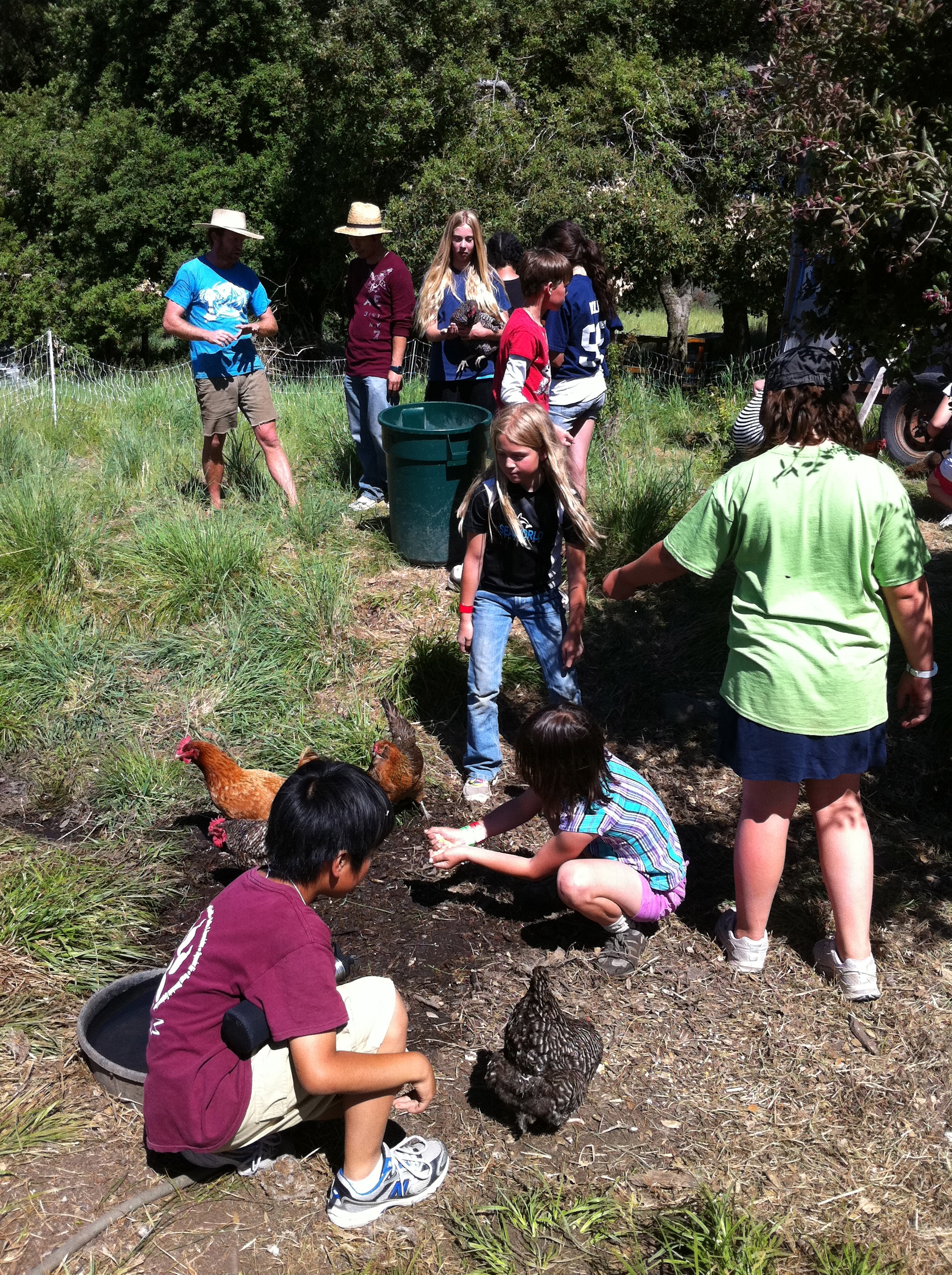
Hanging with the chickens

95% of students report “yum” on kale

Our garden ambassadors periodically cook/prepare garden produce and host a “taste test” during the 10:15 recess at this adorable cart:

Thank you Kymm for repurposing this old AV cart we found in the storage barn!

Today we tackled kale—considered by many to be the most nutritious vegetable to eat.  It also seems to grow effortlessly and abundantly—here’s some plants grown from seed by our PLUS team (junior high leadership).

Kale framed by yellow snapdragons

Kale can also be perceived as hard to eat.  To introduce it to our kids in a positive way, the ambassadors met before school to blend up smoothies with kale, apple juice, bananas, celery and fresh lemon juice.  Kids lined up for a taste, and the girls recorded a “yum” or “yuck” rating.

I love this idea because it introduces kids to new foods and flavors, all in the fun of a recess “taste test.”  One girl lingered for a few minutes before getting up the nerve to down her ounce of green smoothie—once she did, she asked for the recipe so her grandmother could make her more.  Some kids got back in line and begged for seconds.  Another little girl said she wished we had it every snack recess.  Teachers came out to taste test too!

Mrs. Younce gives kale smoothie an enthusiastic “thumbs up”!