Unknown's avatar

About kidsingardens

Interested in everything that can happen in children's garden

Something remarkable, part 3

Enough teasing—I will show you a picture of the Hubbell gate.

But first you must hear the story of how it came to be planted in our garden because at the end of the day, our garden is all about the stories.

It matters to me very much that gardens have a sense of place, by which I mean they sprout up in such a way that is specific to the place where they are sown.  I think this is the “special sauce” of our garden.  Yes, we have veggies, fruit, herbs, flowers and natives.  But we also have layers upon layers of meaning every which way you turn—projects and structures and art pieces that tell stories about who we are. 

From the beginning of our project, the idea of a Hubbell piece was thrown around.  One obvious reason is that his work his ridiculously wonderful.  But the other equally important reason is that he is our neighbor.  When kids see the Hubbell gate, I want them to learn about shape and proportion and color and design.  But I also want them to recognize Jim, our friend and fellow community member, who lives and works in our little town and gave our garden a big vote of confidence by choosing to place an original piece of art in it.

So all of us Garden Club folks threw the idea around for three years.  Until one day Jeff Holt visited the garden on Global Youth Service Day and upon surveying the big gains the garden had recently made, casually tossed the question to me: So, what’s one of your next big dreams for the garden?

Hubbell, I blurted right out.  I would love to have a Hubbell piece out here.

And in a very old-fashioned gesture, Jeff said he would “make the introduction.”  He did, and I gave Jim a tour.  He smiled a lot, and I think he liked what he saw.  At the end of our time together, he looked at me with smiling eyes and said he’d like to contribute something.  I can’t remember if I cried right then and there, but I’ll tell you I was crying on the inside.  He told me to think about what the garden needed, and a few things were mentioned, like a small water feature or a sundial.

We met again a couple months later with Marisa.  We got to telling stories, again.  I was explaining that the junior high kids had been clamoring for a garden, having grown accustomed to having one.  I mentioned the junior high kid who asked what he should do with his banana peel—after years of routinely composting his food scraps at the elementary, it seemed bizarre to start throwing it in the trash can at the junior high.  So now a garden project at the junior high was getting off the ground.  Jim lit up.  His eyes sparkled, and he gently suggested, “Why don’t we build a gate to connect the two schools?”

See, the two schools are adjacent but are totally separated by a long, long line of chain fence on our side, and then a service road and another line of chain link.  Jim suggested we connect the gardens, we connect the schools, we connect students’ learning.  Then the talk turned magically philosophical—about how gates are portals to the next thing, the entrances to new beginnings, thresholds to fresh life chapters that may seem scary but are really just unknown—-much like the transition from elementary school to junior high, and of course, so much more.

Jim left, and Marisa and I cried.

And then a Julian resident, Mike Gallo, extravagantly stepped up and funded the entire project in a single swoop, in loving memory of his late wife.  Jim drew a sketch and got to work with artist colleagues Bill Porter and John Wheelock.  We started to tell people with excited little giggles, and they marveled with us.

The gate was on its way.

I began to write curriculum about garden gates which you can read about here.  We also had students start to document the whole process, and I’ll show you their step-by-step photographs later when we celebrate the ribbon cutting.

But enough talking….take a look at this:

Photo of courtesy of Chris Elisara

Check out the two “owl” details—Photo courtesy of Chris Elisara

The long view of the garden—Mrs. Cirillo’s class walking by and seeing it for the first time (I was spying from under the plum tree!)

Looking the other direction, into the garden (Photo courtesy of Avery McFedries)

Photo courtesy of Marisa McFedries

Something remarkable, part 2

From the beginning of our partnership with artist James Hubbell we had the idea of student photographers capturing the development of the gate.  At important moments in the gate’s creation, I’ve grabbed kids at recess, lunch or after school to come snap away.   When we have the official ribbon cutting in October, we will have student photography displayed to tell this extraordinary story.   So here’s another layer of totally cool:  student artists from our Kids with Cameras class documenting this historic moment in the garden.

Last Spring Avery took this picture of Ethan capturing the moment when I met Bill Porter for the first time.  (He is a fellow artist and friend of Hubbell’s who worked on the gate.)  More pictures to follow!

Something remarkable is about to happen

Julian has a few famous people.  One of these local/global treasures is the artist James Hubbell, who lives and works in our little town.  Mr. Hubbell has buildings, sculptures and paintings all over the globe.  People find his work wildly creative and soaringly beautiful, and he’s known the world over for his visionary spirit, wide artistic range and kind heart.

Guess what?  He’s making a piece for our school garden.

Not just any piece—an original gate, inspired by our little garden.  This work of art is going to be installed on a section of our school garden that was once a no account piece of broken asphalt in a weedy corner of campus that no one ever visited.  This, I believe, is redemption writ large, and it’s all happening in the next two weeks.

I’ll be telling the story in the next couple posts.  For now, just know that something remarkable is on its way, and this is the “before.”

Adopt-the-garden for the summer

A big question in school gardens is:  what happens in the summer?  Who takes care of the garden?  What happens to the produce?

At our school, I begin recruiting families in May to adopt the garden for one week each over the summer.  The main job is watering.  If they have spare time, we wouldn’t complain if they pulled a few weeds.  I write up “summer watering notes” and mail them to each family, also posting a copy on our bulletin board.  Families are welcome to harvest anything they’d like during their week.  I think it builds owernship to come on campus during the summer and do the important work of keeping the garden thriving.  Through their work, families provide an important service and get a more intimate look at our program, hopefully building every broader support for coming years.

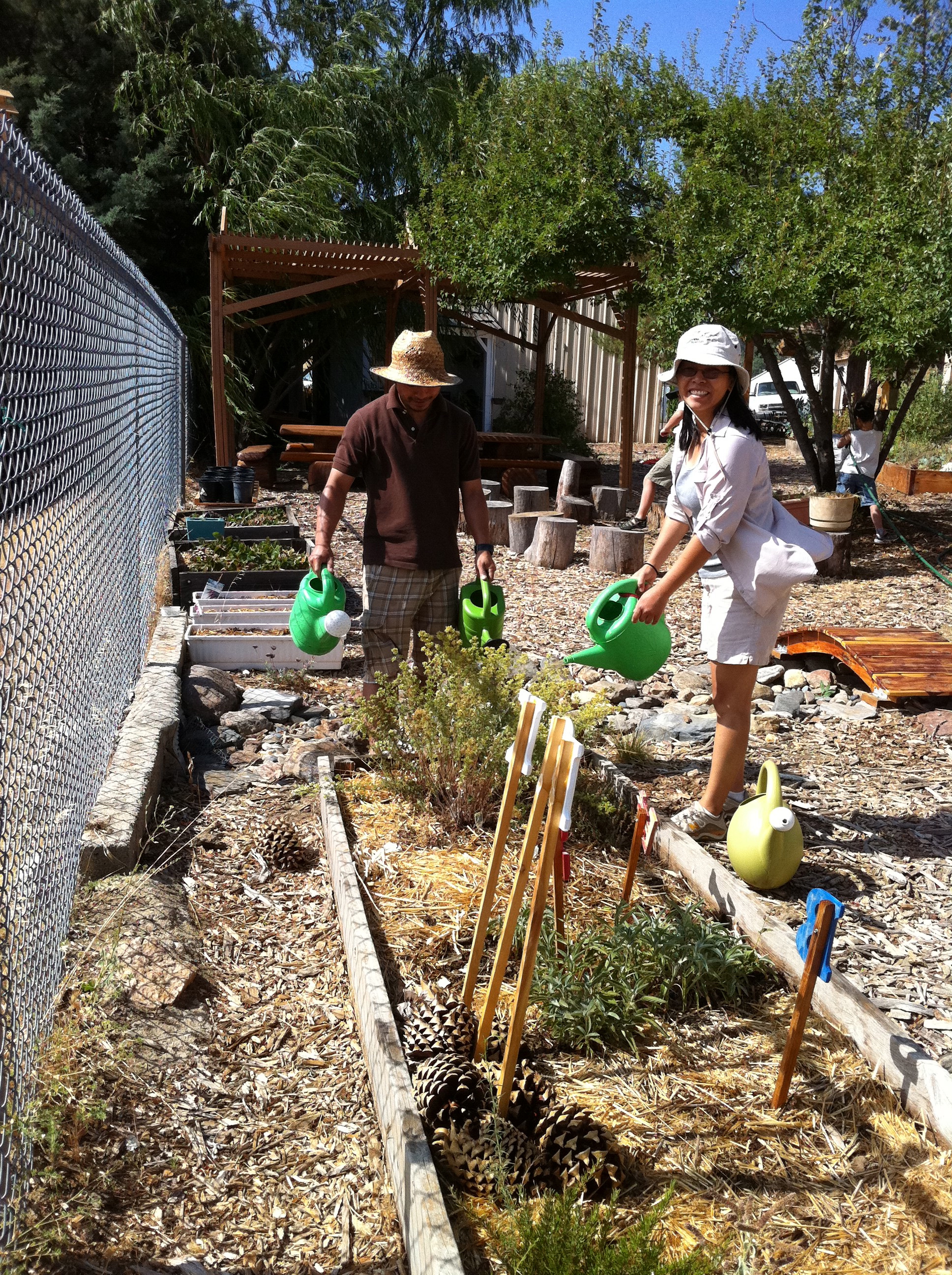
Here’s the Lay family, last week’s volunteer family.

Harvesting ideas

Often when we stumble upon a good idea that we’d like to use we say we’re “stealing it.”  But someone once suggested we say “harvest,” an appropriate word for the borrowing of good ideas in school gardens.  I love to share our ideas—that’s one of the reasons I write this blog.  If someone finds inspiration or encouragement or how-to….well, I’m thrilled.

Today I got to see a wonderful school garden in Santee.  One of the main reasons I joined Master Gardeners program was to serve as a school garden consultant.  Today I attended my first committee meeting, which was held at Cajon Park Elementary.  Here are some cuttings I took away….

At some point I want to make a permanent sign with garden rules, so I’m always interested in what others have chosen to focus on:

They planted a clump of sugar cane in conjunction with a social studies unit on the triangular trade:

One of the best things I saw.  Do you recognize these trellises?  Repurposed playground equipment from back in the day.

In this garden each teacher has a named plot.  Whether a garden goes this route or not, ownership is always important.

One of the garden coordinators was working during the meeting.  She asked if she could include my kids who were with me for the day.  They planted, watered, measured a plot, harvested….  Garden coordinators are good at this—recruiting kids that are hanging around and giving them a job and teaching them something too.

Harvesting this!  Recycled juice jugs protect baby plants and keep them moist like a terrarium.

It’s so cool to walk across a school campus–mostly pavement and institutional buildings—and come upon an island of color and life.  It always makes me happy.

Me at my first meeting!  So much to learn, so much to ask!

Gardening as a community

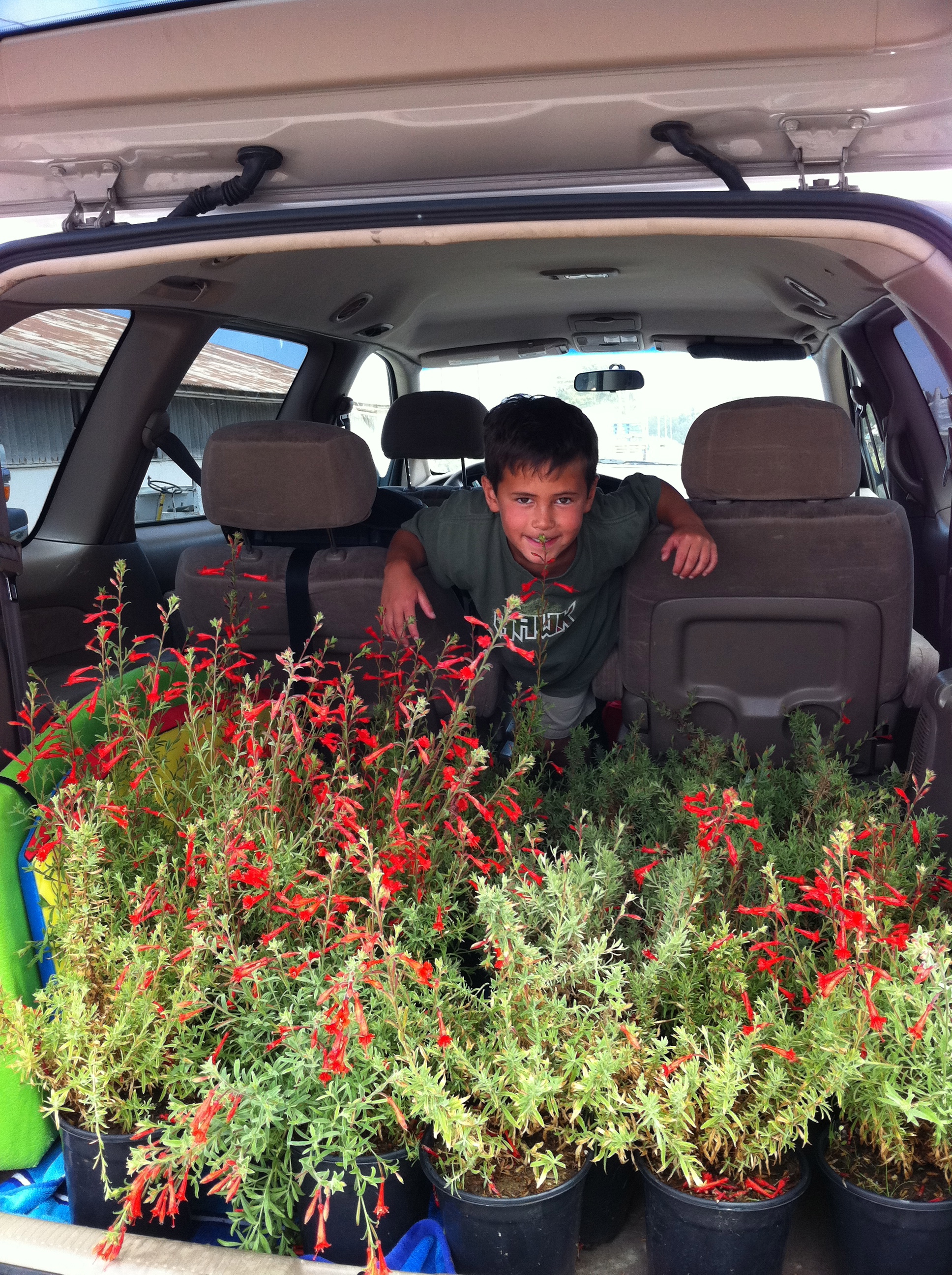
One of my favorite things about Master Gardeners is that I’m now part of a gardening community that stretches across the county.  Through this network, I recently read about a sale of a native plant in a San Diego wholesale nursery.  A large-scale landscaping project recently fell through for them, and the nursery ended up with 1,000 California fuschia which they are selling for cheap to the public.  I decided to pick up a few for my house, a couple more for the elementary school garden, and yet a few more for the garden at the junior high.  I put the word out, and one neighbor asked me to pick up 7..another asked for 10….one more asked for 3…..  And so today Elliot and I happily loaded up the van with 35 epilobium canum.

It’s a cool plant because 1) it’s a California native that requires minimal water once established,  2) it’s good for hillsides which are features at both my house and the school garden, and 3)  its beautiful orange flowers attract hummingbirds.  I had fun driving around my town tonight, making my plant deliveries, chatting with friends in the dwindling light of a perfect summer evening, and savoring this sweet example of gardening in community.

Indoor garden nook

An indoor space has become available on our elementary school campus for the garden project.  It’s a long hallway of sorts.  In the back, a door leads to a storage room.  This summer an exterior door to this room was installed which leads to the garden.

We are building a “garden library” with items to check out: microscopes, garden games, soil thermometers, curriculum books, etc.  A tabletop “grow-lab” to start seeds has been assembled for use in the late winter.  We’ve also begun hanging up educational posters and childrens’ artwork.  The “nook” is right next to an empty, multi-purpose room so we’re hoping to do garden-related activities there, in winter, with supplies from this room.

Do you have an indoor space for your school or community garden?  How do you use it?  Or have you ever seen an educational indoor garden space in use?  Please share!

Our love for Mrs. B will never retire!

Mrs. B—an absolute legend of a kindergarten teacher at Julian Elementary.  After 28 years at our school alone (and six more before that), Mrs. B decided this year would be her last in the classroom, and my youngest son was fortunate to be one of the last little people under her expert instruction and unparalleled care.

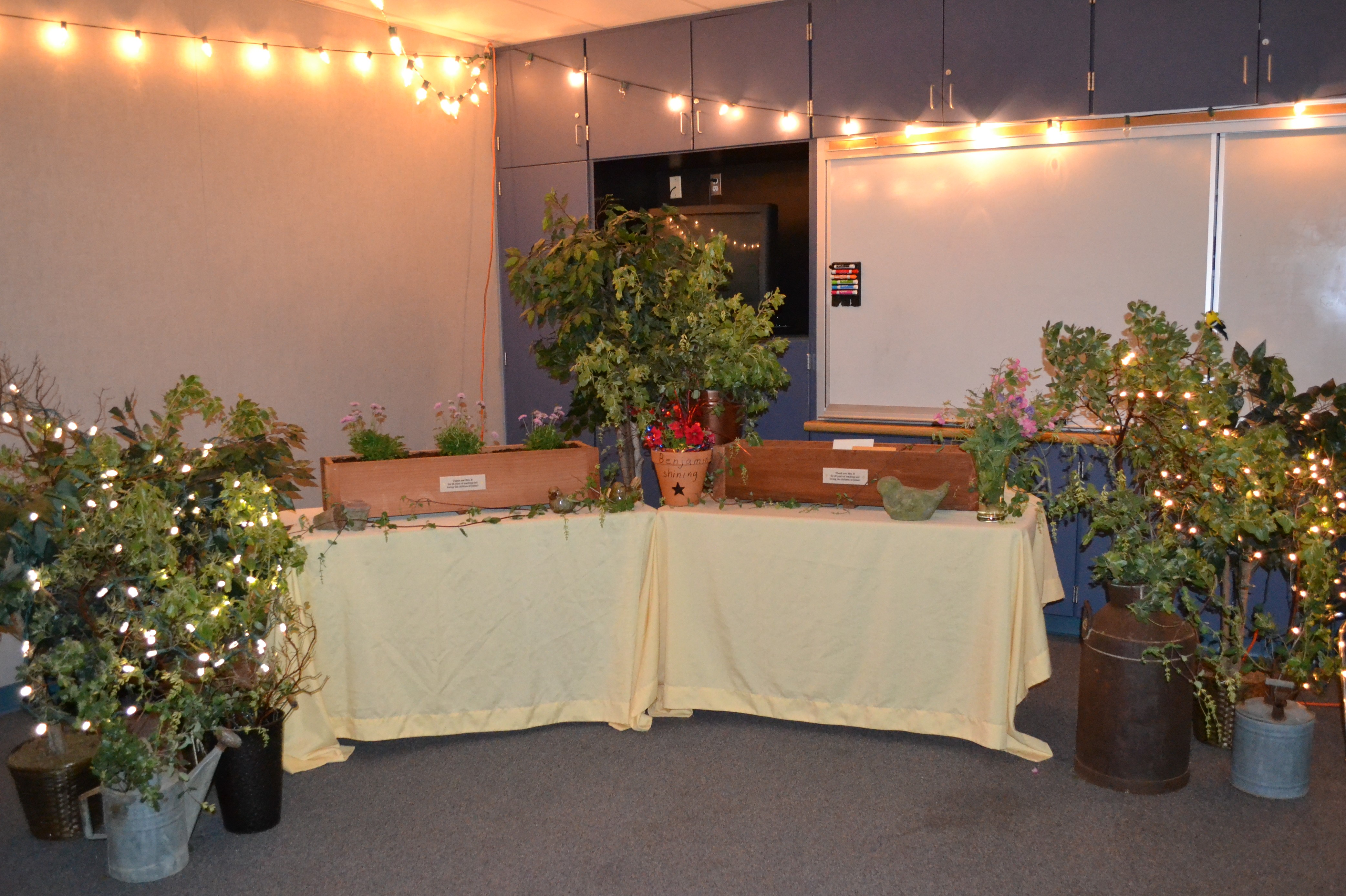
As such, we planned a surprise thank-you from Julian parents.  Naturally, it was meant to be in the garden (Mrs. B was one of the earliest and most enthusiastic participants in the school garden program, growing  a plot of winter vegetables each year and having her students regularly visit to pick up trash as part of their service learning.) The weather forecast, however, would have none of it.  And so we moved the garden inside!  Allison started hauling in the manzanita branches, I got the Christmas lights out of the attic, and we filled vases with fresh flowers.

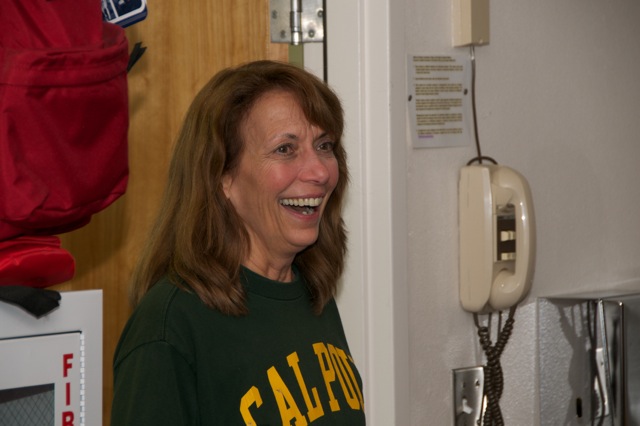
Then at 1:30 our principal visited her classroom, told her that a substitute would be finishing out the day, and escorted her to the room where we were waiting.

Mrs. B is famous for giving the children a question and then making packets of their written responses and drawings.  Before she arrived we asked parents to write something they wanted to thank her for.  We read these aloud to her, and then we made her a packet!

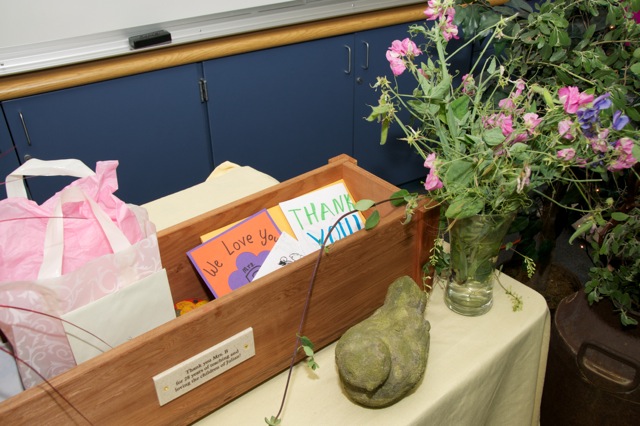
We had two redwood planters. I explained that one was planted out, with a plaque that reads: Thank you Mrs. B for 28 years of teaching and loving the children of Julian.  It will stay in the garden.

Another identical planter was filled with gifts and went home with Mrs. B.  In years to come, our planter will make us think of her; her planter will make her think of us.

Mrs. B gave a beautiful (impromptu) speech, and there were tears all around.  And then we ate goodies. (Allison made shortbread cookies in the shape of little B’s.)

Mr. and Mrs. B!

Who’s got a new owl box? We do, that’s hoooo….

Couldn’t resist.  🙂

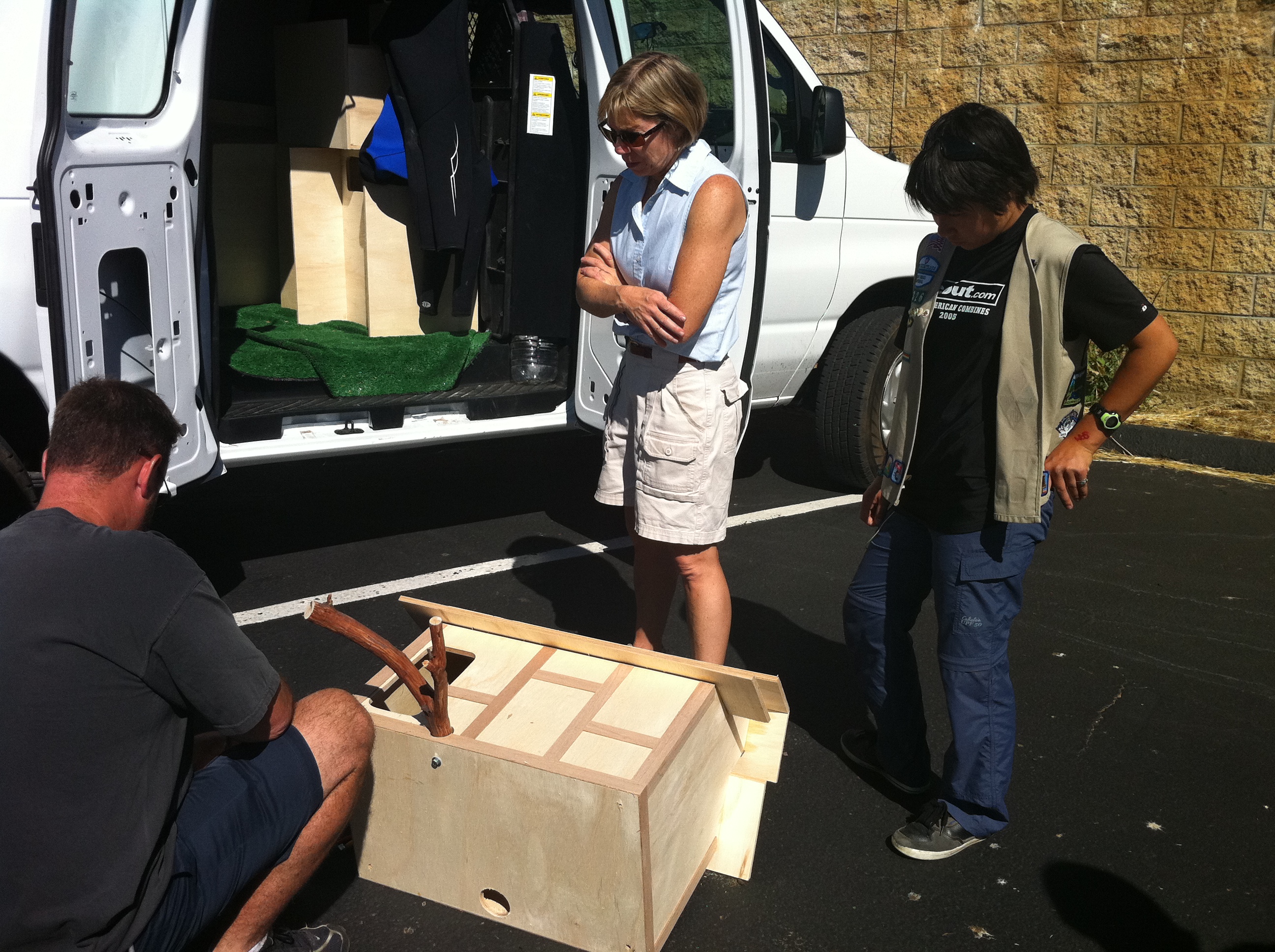
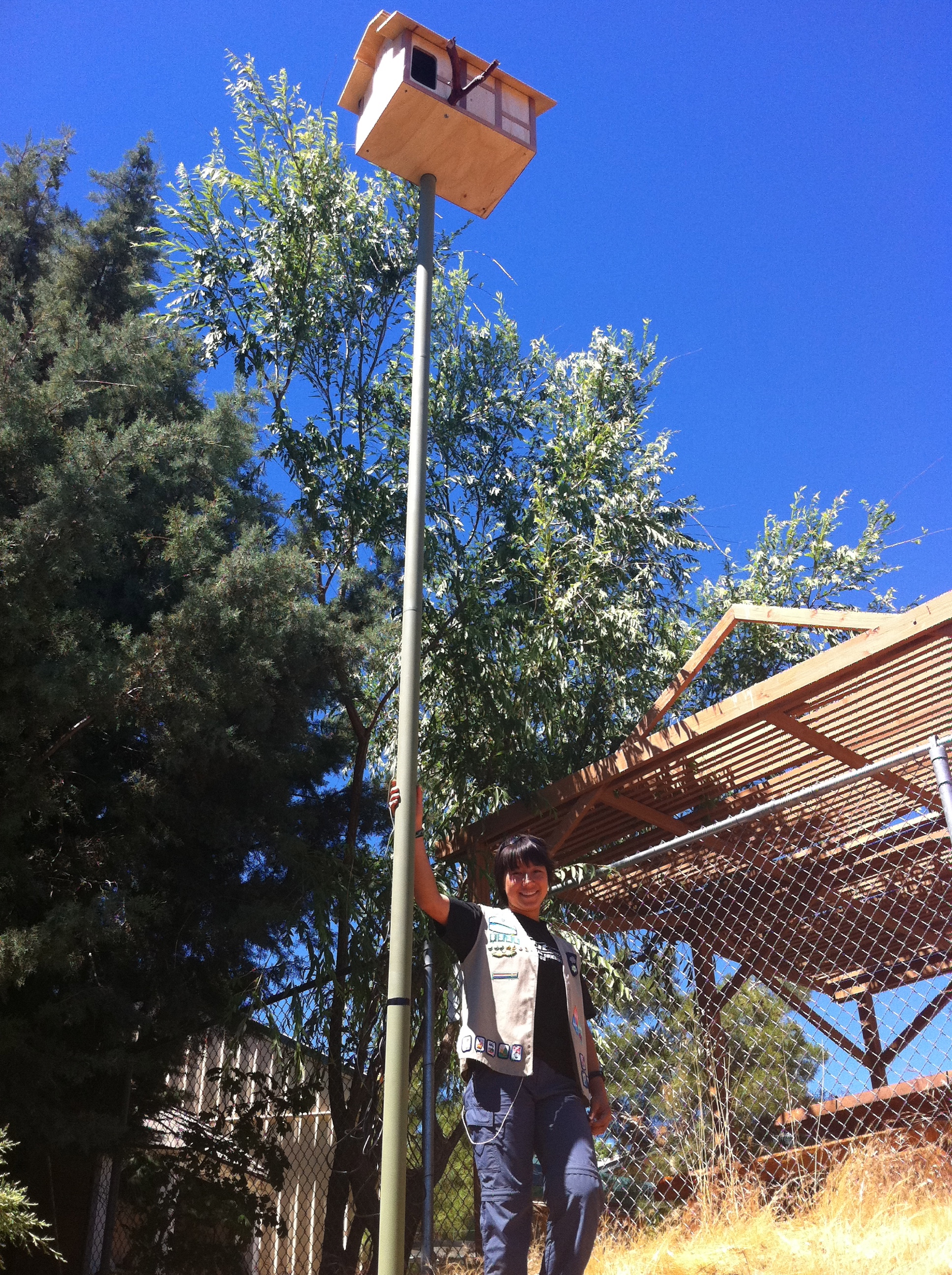
Sara Itogawa, a local girl scout, decided to do her Silver Award on a natural rodent control project by researching, funding and managing the installation of an owl box on our school campus.  The Garden Club partnered with her by helping to upgrade the box to a model with an installed camera, so the school can get live video feed when a owl takes up residence and lays eggs.  Sara wants to educate other kids about the dangers of poisoning pests such as rats and gophers.  One serious problem is that when pests consume toxic bait, the animals are sometimes then eaten by owls, and the poision moves up the food chain, ultimately killing birds.  Creating habitat for natural predators is one alternative to traditional poisons.

The box went in this week!

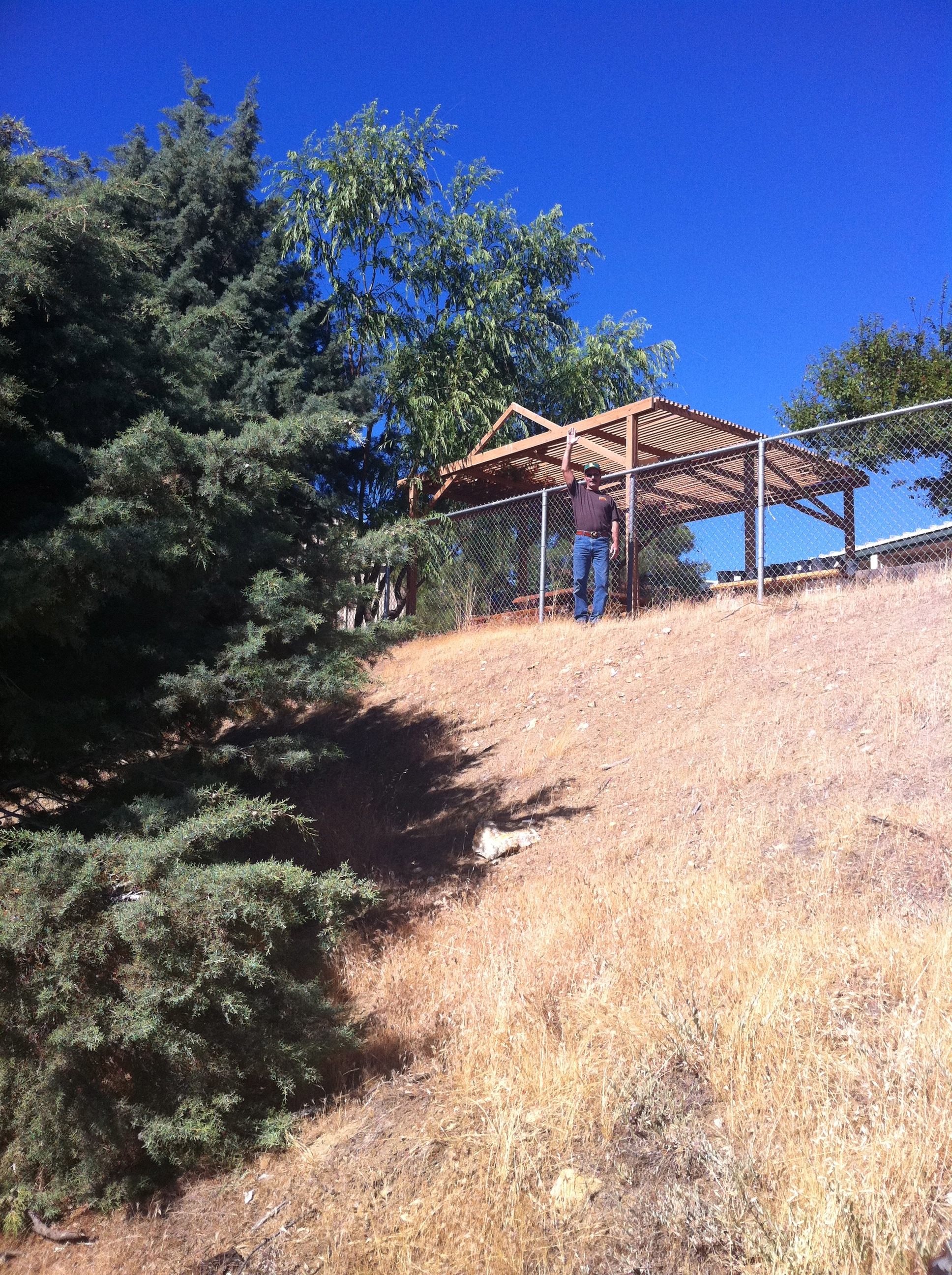
Tom Stephens from Air Superiority in Ramona below, scoping out the best place for the box.  This spot was chosen because it’s north-facing, overlooks a flat “hunting” area (the junior high fields), and is protected on the backside by a stand of trees.  This is the slope that edges the garden (you can see the pergola in the background.)

The camera is mounted inside. The box is erected on a 16 ft. pole.

Sara, me and Mr. Duffy, who along with Mr. Pierce, was a great help in helping Sara figure out logistics for running the electric/video wiring.

We’re proud of you Sara.  Can’t wait for owls!

Circle of knowledge, circumference of ignorance

Two weeks ago I took my Master Gardener final. Well, I attempted to take it.  God bless the working/studying/multi-tasking moms of the world.

I sent Chris to the zoo with the kids.

The last day of class we corrected the exams and took our first class picture.

And then today we had a fabulous party and received our certificates.

Upon completion, I must say that this is an OUTSTANDING program.  Thorough, well-organized, hands-on, professional—there wasn’t a lecture or a homework assignment or a lab activity that was a dud.  I feel honored to have participated, and I vow to make good on the “public service” end of the agreement that is at the heart of the Master Gardener program.

Just one small suggestion I’d make based on Pascal’s words about the larger the circle of knowledge, the greater the circumference of ignorance.  (Or when we know more things, we also have more cognitive surface area touching the edges of what we don’t know.)  We got a t-shirt to wear at volunteer activities that looks like this:

And I’d like to suggest that it be amended to read:

Ask a Master Gardener

but please go easy on me because really, there is a ridiculous amount to know about gardening, and I can be an absolute genius in one thing and still be an idiot in another and this program has laid the foundation for me to be a lifelong garden learner, eager to share what I learn with you…so just realize that I may know an answer but then again I may not and then I will do my best to find it….”Master” is a big word, I know, but I didn’t come up with the title. Thank you and have a nice day.

It would be a little wordy, but at least it would provide full disclosure.