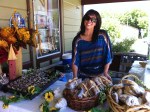
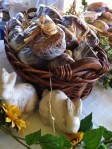
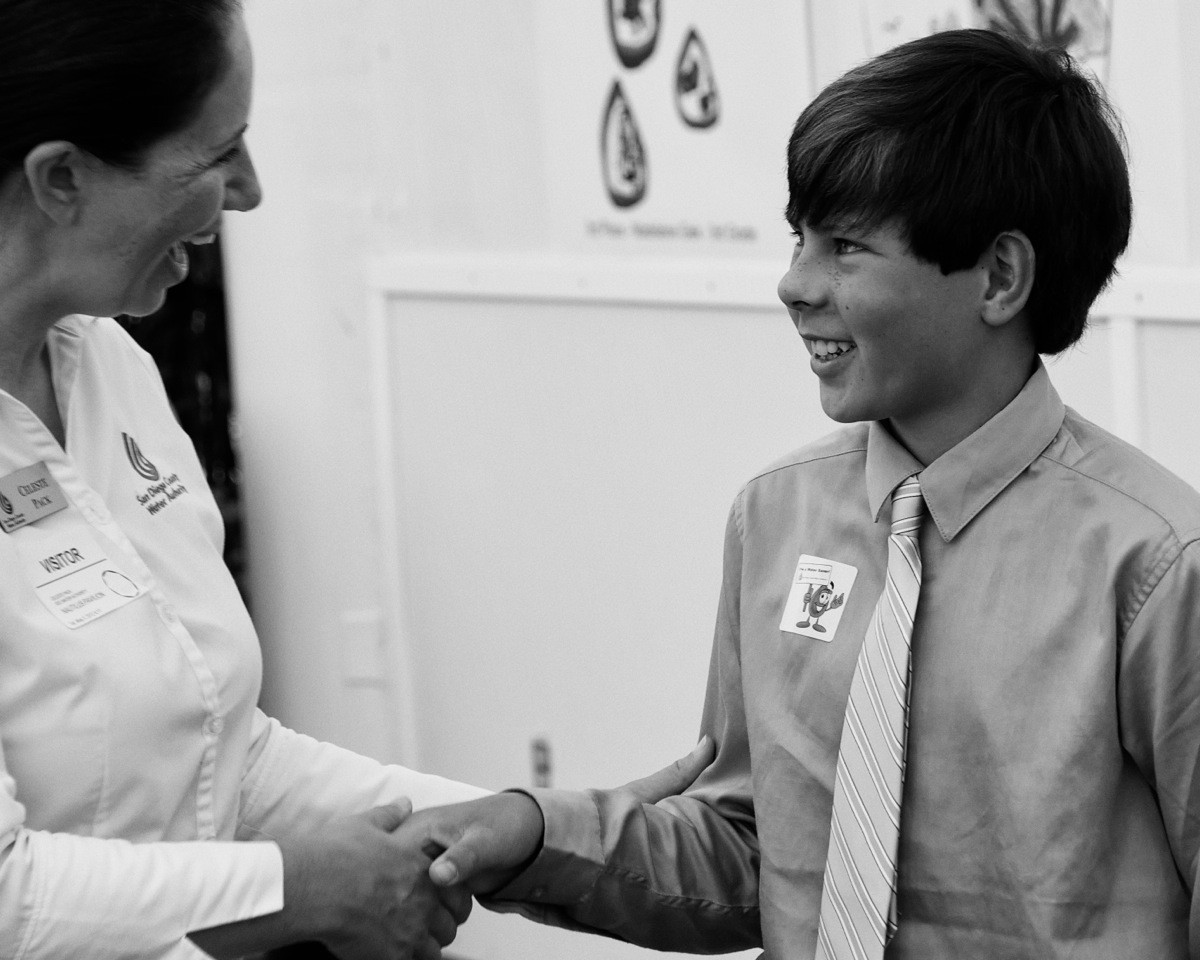
Last week Kids with Cameras took a field trip to a farm stand run by a Julian family dedicated to sourcing food as locally as possible. First our guest instructor, Bill Bevill, worked with the students on sharp focus and filling the frame, and then we drove five minutes down the road to Wynola Flats Produce. Stacey Peyakov was a wonderful host, allowing kids to roam through the store as well as the orchard, snapping away. The indoor/outdoor space allowed for experimenting with lighting, and the produce gave us a chance to capture colors, textures, and patterns. One of the goals of both the KWC program and the garden is to develop in kids a “sense of place”—what makes living in Julian unique and wonderful? To do that you have to get out and look around, and what better way to do that than with a camera in hand?
Tag Archives: children
Family Fun (work)Day
Once a quarter Mr. Pierce plans a weekend “Family Fun Day.” This past weekend the event was held in the garden, for a workday and BBQ. Simply amazing what many hands can accomplish!
Rangers at Heise Park dumped off a load of woodchips (seen in the background) which were loaded into wheelbarrows…
…and spread around the entire garden by kids and adults all afternoon.
We removed an old raised bed, with rotting wood and gopher-punctured lining:
We built a brand-new, gopher-lined box: (Redwood and 1/2 inch hardware cloth)
Moving it into place took a small team:
Putting the dirt back in, plus buckets of compost we harvested earlier:
Finished with peas planted and mulched (the prickly pinecones are supposed to deter creatures):
Turning bins and sifting finished compost:
Whole lot of weeding goin’ on:
Marisa leading a heroic effort with the kids to remove rocks from a future planting area:
A new family to Julian joined us for the day, and we all got to know each other a little bit more:
Finishing up with a BBQ:
And very last: spontaneous music at the end of the day, just as we were losing light!
Take it outside!
“Taking learning outside”—a phrase I’ve heard from those in the environmental education/school garden world. The idea is this: if you can teach it in the classroom, you can teach it outside. (Agree? Disagree? Discuss.)
Here are some ways non-garden activities have moved into the garden in the last year:
On Science Day, students met in the garden with the amazing naturalist/teacher Kat to pound and braid yucca fibers into rope:
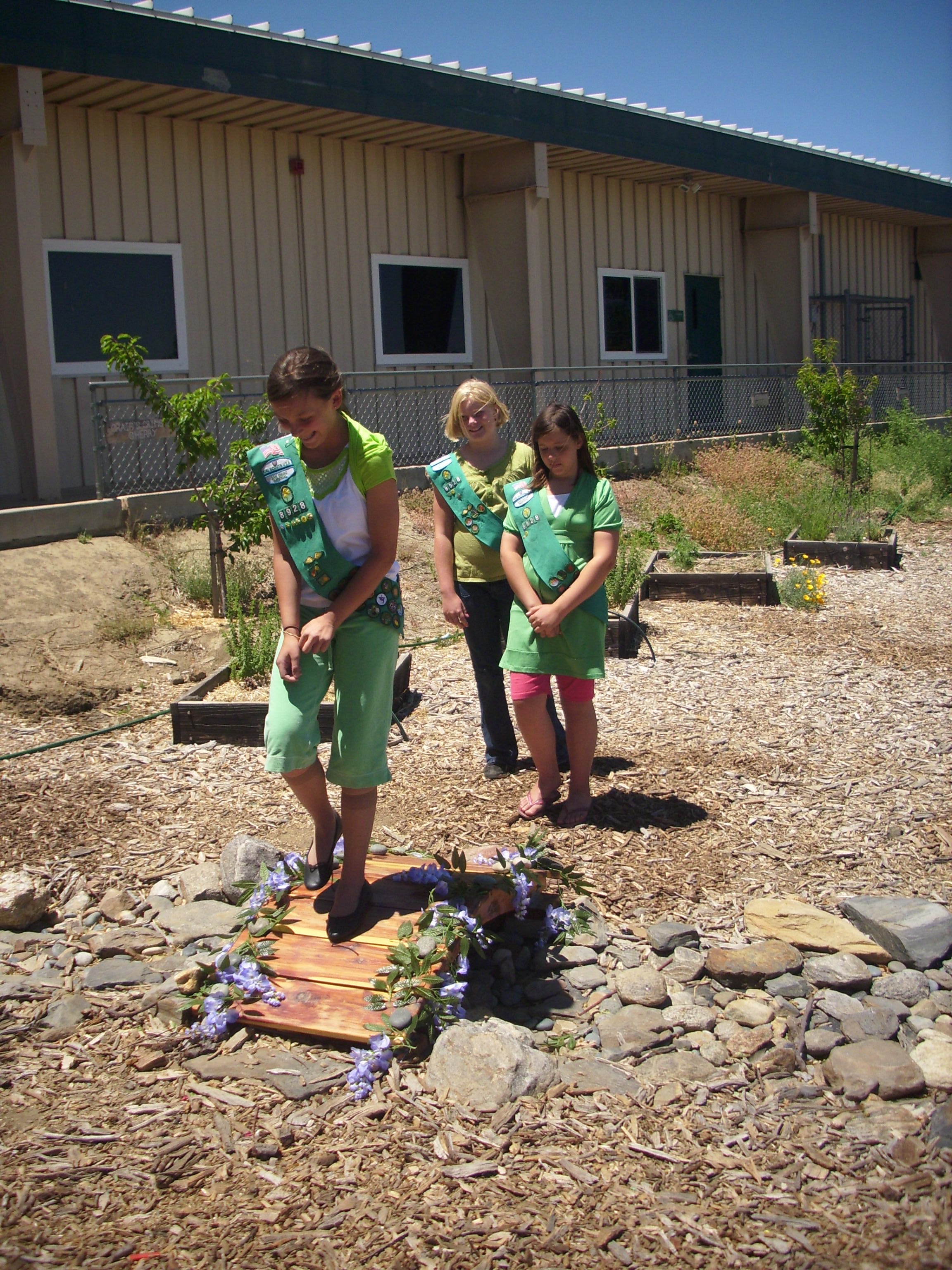
Girl Scouts held their “bridging ceremony” during which they pass to the next level of scouting:
An Easter Egg hunt last April:
Yoga class:
A kindergarten teacher uses the garden with a yearly unit on the gingerbread man!
And finally, “reading buddies” (third graders paired with first graders) and SSR (“silent sustained reading”). Do they still use that term? I remember reading at my desk, but I would have loved to have read in a silent, sustained way in a gazebo!
Let them eat apples!
Our beloved math teacher at the junior high made a new rule for his class this year: no eating in class, except apples. My son came home insistent he take an apple to class the next day…you know, because Mr. Copeland said he could!
This is great timing, because the elementary garden is producing a lovely crop right now. The trees predate the character garden, but they’ve suffered neglect as long as I can remember because they were on the opposite side of the fence—no easy way to water or prune or harvest.
But with the arrival of the Hubbell gate, we peeled the fence back to make way for the eventual footpath down the hill. And in so doing, we brought four trees into the garden’s footprint.
So this week we harvested a big bowl of these organic apples and took them to math class. I checked in after first period to see this:
Creating wildlife habitat on the school campus
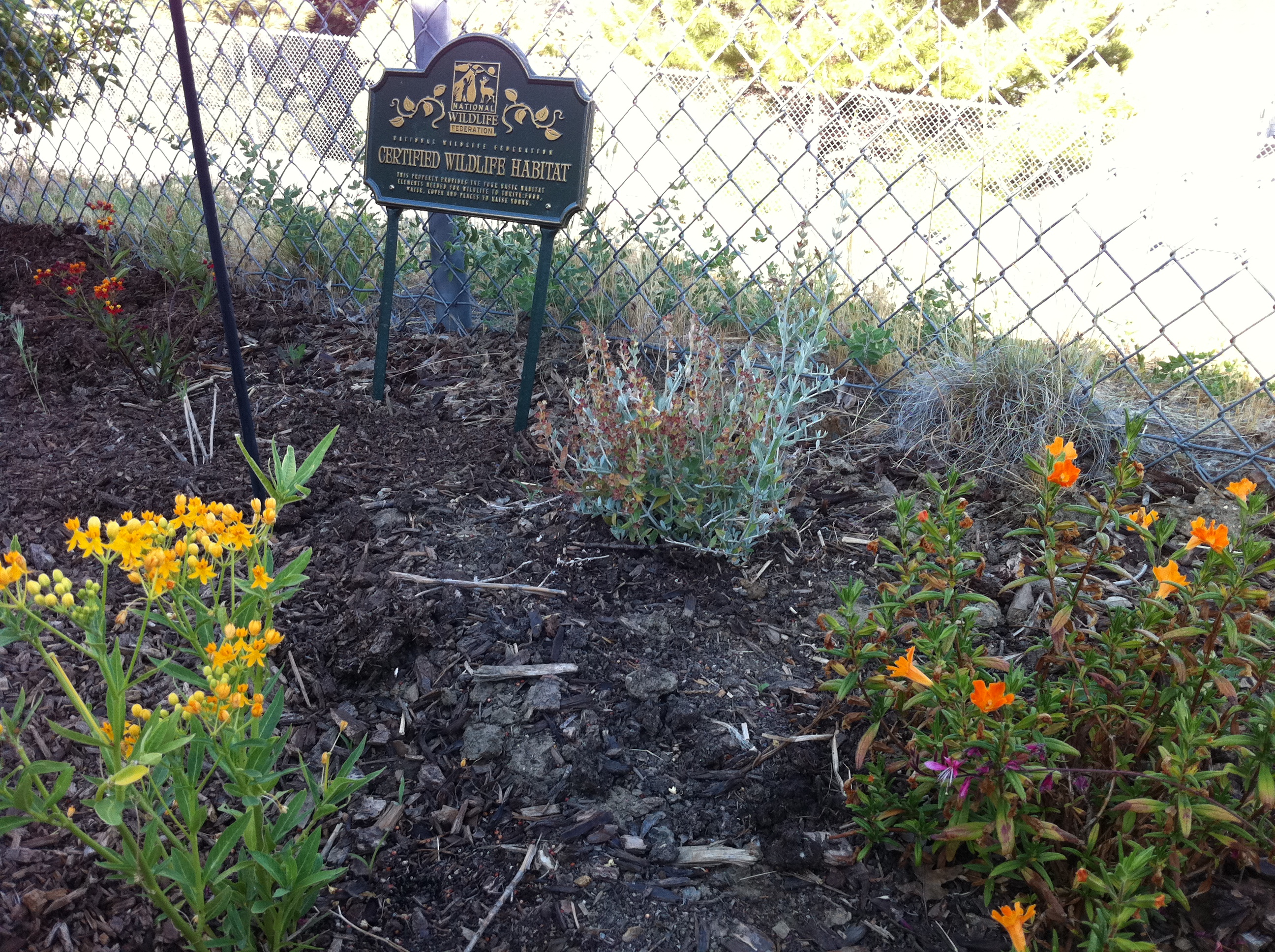
Did you know you can register your backyard as a “certified wildlife habitat” through the National Wildlife Foundation? Or your schoolyard? If you have the four elements of habitat, and can show that you garden in an environmentally friendly way, you can earn this distinction. You can then display a NWF sign, which can help educate others about the elements of habitat that people can provide for wildlife in our own backyards (no matter how small) and school grounds.
Our school garden has met these requirements (both in a butterfly/hummingbird habitat bed and also throughout the larger garden), and we recently did the paperwork and received our sign. After the photos below, read more about the habitat elements and go here for more information.

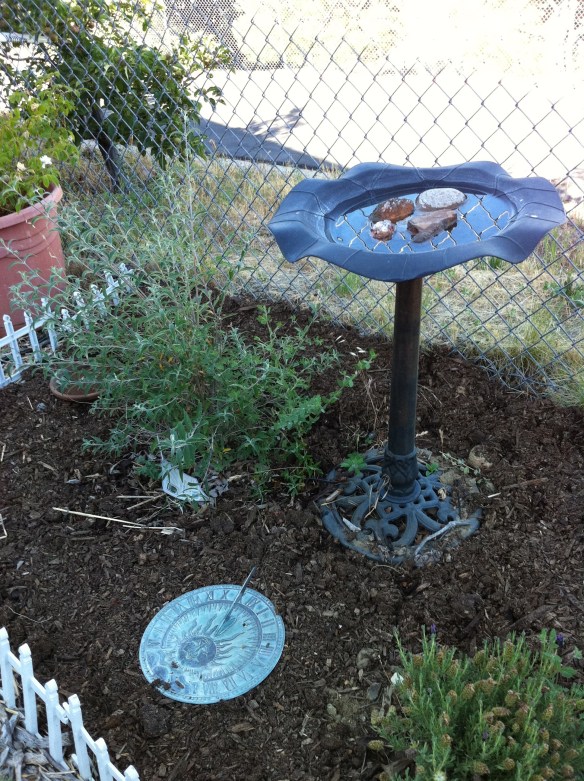
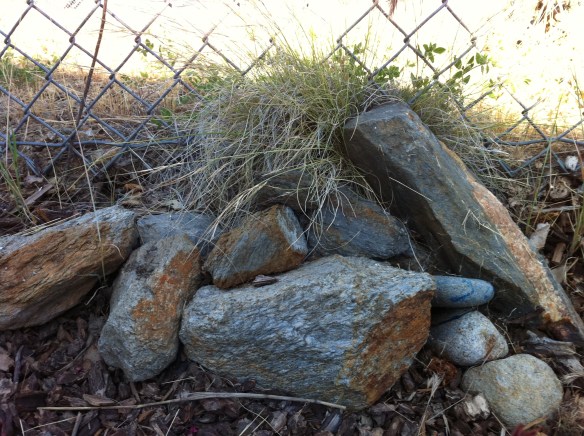
All habitats need a water source, even as simple as a bird bath. Rocks placed inside give birds a place to perch. Our water evaporates quickly, but if yours doesn’t, be sure to empty every few days for good mosquito control. Also pictured are lavender and buddleia (butterfly bush)
Provide Food for Wildlife
Everyone needs to eat! Planting native forbs, shrubs and trees is the easiest way to provide the foliage, nectar, pollen, berries, seeds and nuts that many species of wildlife require to survive and thrive. You can also incorporate supplemental feeders and food sources.
Supply Water for Wildlife
Wildlife need clean water sources for many purposes, including drinking, bathing and reproduction. Water sources may include natural features such as ponds, lakes, rivers, springs, oceans and wetlands; or human-made features such as bird baths, puddling areas for butterflies, installed ponds or rain gardens.
Create Cover for Wildlife
Wildlife require places to hide in order to feel safe from people, predators and inclement weather. Use things like native vegetation, shrubs, thickets and brush piles or even dead trees.
Give Wildlife a Place to Raise Their Young
Wildlife need a sheltered place to raise their offspring. Many places for cover can double as locations where wildlife can raise young, from wildflower meadows and bushes where many butterflies and moths lay their eggs, or caves where bats roost and form colonies.
And finally….
What sustainable gardening practices do I need to certify?
You should be doing two things to help manage your habitat in a sustainable way.
Soil and Water Conservation: Riparian Buffer • Capture Rain Water from Roof • Xeriscape (water-wise landscaping) • Drip or Soaker Hose for Irrigation • Limit Water Use • Reduce Erosion (i.e. ground cover, terraces) • Use Mulch • Rain Garden
Controlling Exotic Species: Practice Integrated Pest Management • Remove Non-Native Plants and Animals • Use Native Plants • Reduce Lawn Areas
Organic Practices: Eliminate Chemical Pesticides • Eliminate Chemical Fertilizers • Compost

Kids with Cameras 2.0
On Wednesday evening we wrapped Kids with Cameras 2.0 (an afterschool photography program I’ve written about here and here.) Program partners (Garden Club, Volcan Mountain Foundation, Club Live and volunteer instructors) held a reception at the public library with brief remarks, a celebratory presentation of some of the kids’ best shots, and delicious refreshments. The collection will remain on display for the next couple weeks at the Julian Library, and photo gift cards are on sale at the front office of the elementary school.
The photos we chose for the show represent all of the topics we covered (sports photography, composition, environmental portraiture, using manual settings, etc.) as well as fieldtrips (shooting in the school garden, at our historic cemetery and on Volcan Mountain.)
Representing Volcan Mountain and the volunteer photographers/instructors, Jeff Holt did a brilliant job of sneaking an art lesson into the remarks as he went over why we chose each photograph. Each kid was individually affirmed, and it was totally cool.
Below: a few of the students whose “show” picture happened to be taken during the school garden session. (Glares are from the room lighting and not in the original photographs.)
And of course, it was beautifully, extravagantly catered by my dear Rita.
Thank you to Bill Benson, Bill Bevill, Anne Garcia, Dana Pettersen, Jeff Holt and David Pierce for making Kids with Cameras a simply outstanding program. 3.0—-here we come!
Spring Garden Market
Twice a year we hold a “Garden Market” on Julian’s Main Street to raise money for the garden. Here are highlights from this Spring’s effort.
- Rita—master baker, relentless saleswoman, unfailing supporter of the garden
- Rita’s carrot cakes–simply incredible!
- Rita’s brownies—words fail me!
- The ever faithful Kathy working the sale
- Gift cards and pancake mixes
- A new set of student garden photography on gift cards
- Taylor, another Girl Scout, donated handmade rose water to our sale
- Native strawberries we grew from our California native edible bed
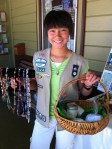
- Sara is working on her Silver Award for Girl Scouts. She plans to install an owl box on campus, close to the garden, for natural predator control. To finance the project, she joined us to sell homemade jewelry and bath salts.
12-year old, on rainwater harvesting
95% of students report “yum” on kale
Our garden ambassadors periodically cook/prepare garden produce and host a “taste test” during the 10:15 recess at this adorable cart:
Today we tackled kale—considered by many to be the most nutritious vegetable to eat. It also seems to grow effortlessly and abundantly—here’s some plants grown from seed by our PLUS team (junior high leadership).
Kale can also be perceived as hard to eat. To introduce it to our kids in a positive way, the ambassadors met before school to blend up smoothies with kale, apple juice, bananas, celery and fresh lemon juice. Kids lined up for a taste, and the girls recorded a “yum” or “yuck” rating.
I love this idea because it introduces kids to new foods and flavors, all in the fun of a recess “taste test.” One girl lingered for a few minutes before getting up the nerve to down her ounce of green smoothie—once she did, she asked for the recipe so her grandmother could make her more. Some kids got back in line and begged for seconds. Another little girl said she wished we had it every snack recess. Teachers came out to taste test too!
Children’s garden at the San Diego Botanic Gardens
The San Diego Botanic Garden bills itself as having “largest interactive children’s garden on the West Coast,” so naturally I’ve been itching to go. On Sunday, my family and I finally made it to Encinitas, and we were not disappointed.