April-February Garden Tour, 2015

We’re overdue for a seasonal look around the garden.  Join me.

Golden Yarrow doing its thing, on the sides of the Kandu Gate.  This native installation was put in last year, with Art Cole, and so this is the first year we’re seeing the plants bloom.  Gorgeous.IMG_5913

Fourth grade students gathered daffodils to enter in the annual show at Town Hall.  (See here for more information.)  Another year, another fistful of blue and red ribbons.

IMG_5472

Prepping beds for spring plantings on a blustery day…

IMG_5474 IMG_5473

Afterschool Club Jaguar students create a spring-inspired bulletin board of veggie facts, garden jokes and announcements.

IMG_5782

Finally, fourth grade students had a blast “decorating” the garden with annuals in all of our containers, window boxes and this cute Radio Flyer wagon.

IMG_5951 IMG_5950 IMG_5949 IMG_5948 IMG_5947 IMG_5953

Things I’ve learned about teaching… and beetles

One thing I’ve learned about garden education is that there are many tasks that just do not lend themselves to large classes of students.  There simply isn’t enough space for 25 or more kids to stand around a raised bed, or have his/her own tool, or put a transplant each in the ground.  As such, I’ve stumbled upon the idea of having a large group activity that I explain and start with the entire class, often at the table in the garden (or on windy days, in the main classroom with the classroom teacher or garden volunteer supervising) and then take smaller groups to the garden to do an activity.

I’ve also learned that ladybugs are not bugs, but beetles.

Last week I combined these two bits of knowledge with the following activity with the younger elementary set.

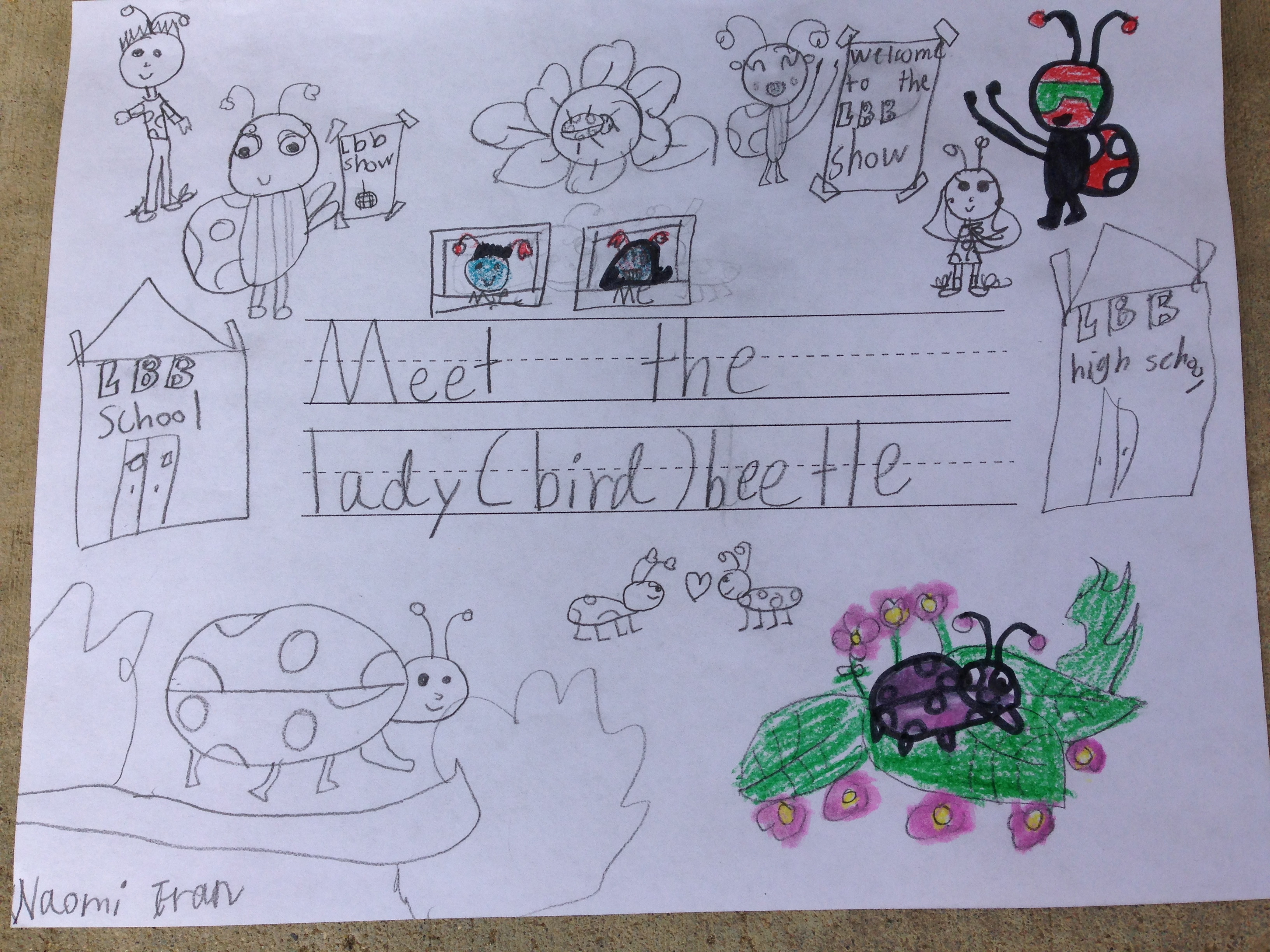
I began with a mini-lesson on the difference between true bugs and beetles, followed by all of the astonishing facts and figures about the volume and diversity of beetles on earth.  Then I passed out a blank sheet and a template of cartoons, and the kids copied this sentence and had fun embellishing their papers with either their own designs or copies of the cartoons.

IMG_5916

IMG_5921 IMG_5922

I took smaller groups of six out to the garden for five minutes at a time to paint little lady beetles on our circle of tree stumps.  (I love whimsy in children’s gardens.)

IMG_5904

IMG_5909

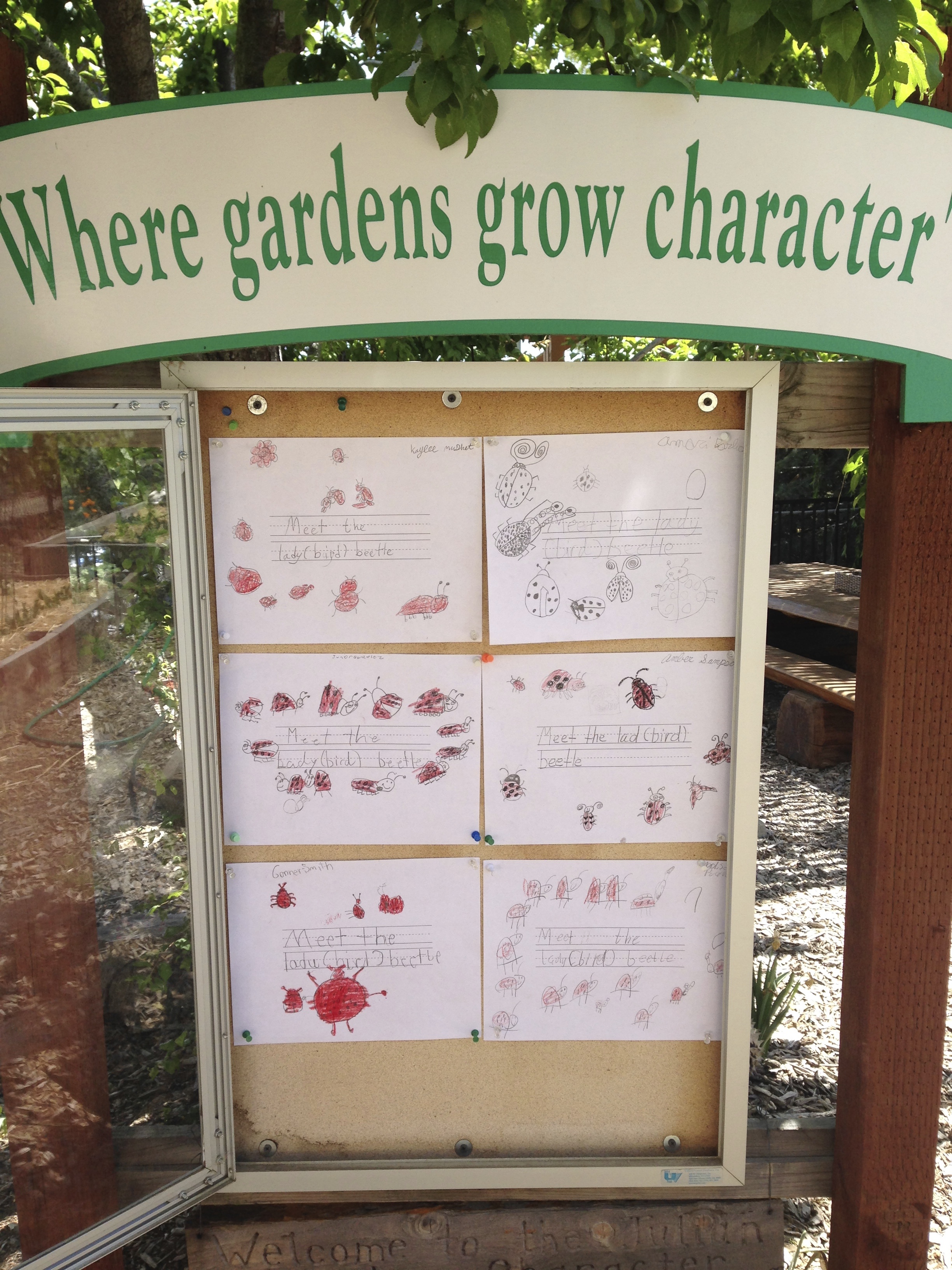
It was a hit!  Over the next month I will be switching out kids’ work on our garden bulletin board.  They get so excited to see their drawings on display!

IMG_5920


Live Well San Diego

Welcome to a new school year!  After a too-short summer, we are back at school and in the garden.  To kick off the new school year, please enjoy this article just published by our district’s partner Live Well San Diego about our school programs and Julian Pathways.

I look forward to another year in the garden with you!


Garden etiquette

This past year Mr. Copeland made quick little movies to be shown in all classes in order to teach school norms.  This one explains school-wide expectations for behavior in the garden.

Start with the ending

In addition to being one of my favorite David Wilcox songs, this is also how I feel about any big project.  Mission statements are important because they serve as a roadmap to where you want to go.  Our school garden has had one for a long time, and I return to it all the time, but just yesterday we finished a project to have it printed on a sign and hung in the garden for all to see.

IMG_4043

IMG_4044


IMG_4045

And just in time for this Saturday’s 2nd Annual Julian Garden Tour!  If you’re in Southern California, consider coming up for the day.  Seven gardens are on display, including the school garden, from 10-4.  Tickets, which are the maps to and the descriptions of the gardens, are $20 and can be bought at Town Hall on Main Street or Julian Elementary on the day of the event.  All proceeds benefit the district’s Farm to School efforts.

Thank you to Leslie and Brian at Wet Duck Design for creating and installing our sign!


Strawberry lesson, sweet and juicy

Our “harvest of the month” is strawberries, and I tried out a new idea this year that worked well.  Fifth grade students were split in groups that switched halfway through the lesson.  One group worked on potting strawberry runners; the other transferred 30 strawberry facts on to paper cutouts, which I later laminated and attached to skewers. We also feasted on local strawberries, since ours aren’t quite ready.

Later the kindergarten students hid the strawberries as part of their lesson (which included finger plays, watering, observing strawberry plants and of course eating!)

IMG_3784

Still later, second grade students went on a strawberry scavenger hunt to fill in the missing blanks on this “quiz” pasted into their journals.

1. It takes about_____days for a flower to turn into a fruit.

2. Strawberries are delicate and must be picked__________.

3. The Spanish word for strawberries is _________.

4. Strawberries are in the__________ family.

5. There are about ______species of strawberry plants.

6. Strawberries produce “runners” or __________ that produce new “daughter” plants.

7. Strawberries like ____________days and ____________ nights.

8. Strawberries are usually the first fruit to ripen in the________.

9. On average, there are ____________ tiny seeds on every strawberry.

10. Strawberries are the only fruit that wears seeds on the ____________.

11. Strawberries have lots of vitamin _________.

 12. Strawberries are perennials. This means they live more than ________________.

Afterward, I “planted” all of the signs in one of the strawberry beds for an ongoing educational display.  I think it’s a sweet touch!

IMG_3782

March Garden Tour

It’s March in the garden, and it couldn’t be prettier.  Stroll with me.

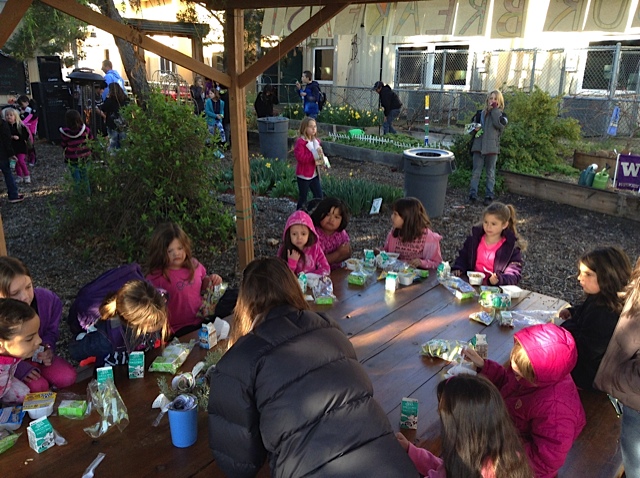
Carmen from Julian Pathways led the effort to start a monthly “have lunch with your parent in the garden” event.  The first attempt was an unqualified success with over 50 students and parents sharing a meal on Friday afternoon.

Image 4

Photo courtesy of Scot Copeland

Image 3

Photo courtesy of Scot Copeland

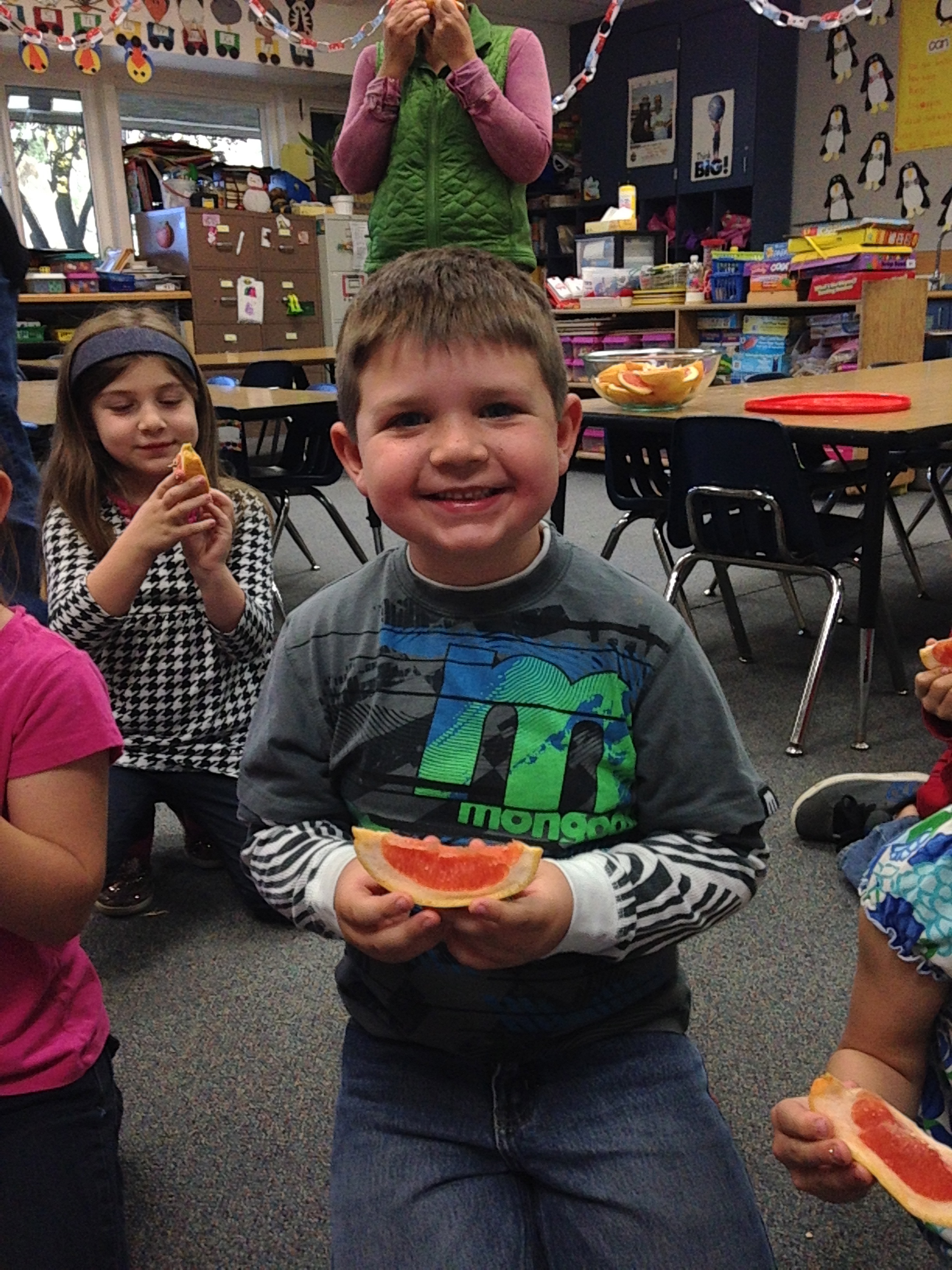
Our Harvest of the Month is citrus.  Citrus doesn’t grow in Julian so we tasted delicious grapefruit from the “neighboring” town of Borrego.

IMG_2836

IMG_2837

The breast cancer awareness ribbon is in full bloom!  Photo courtesy of 6th grade student Avery McFedries.

Image 11

Miss Lynn recently spruced up the gazebo with a new “coffee table,” pillows and a thorough cleaning.

IMG_2884

She also tucks these little things around the garden.  I love discovering them.

IMG_2885

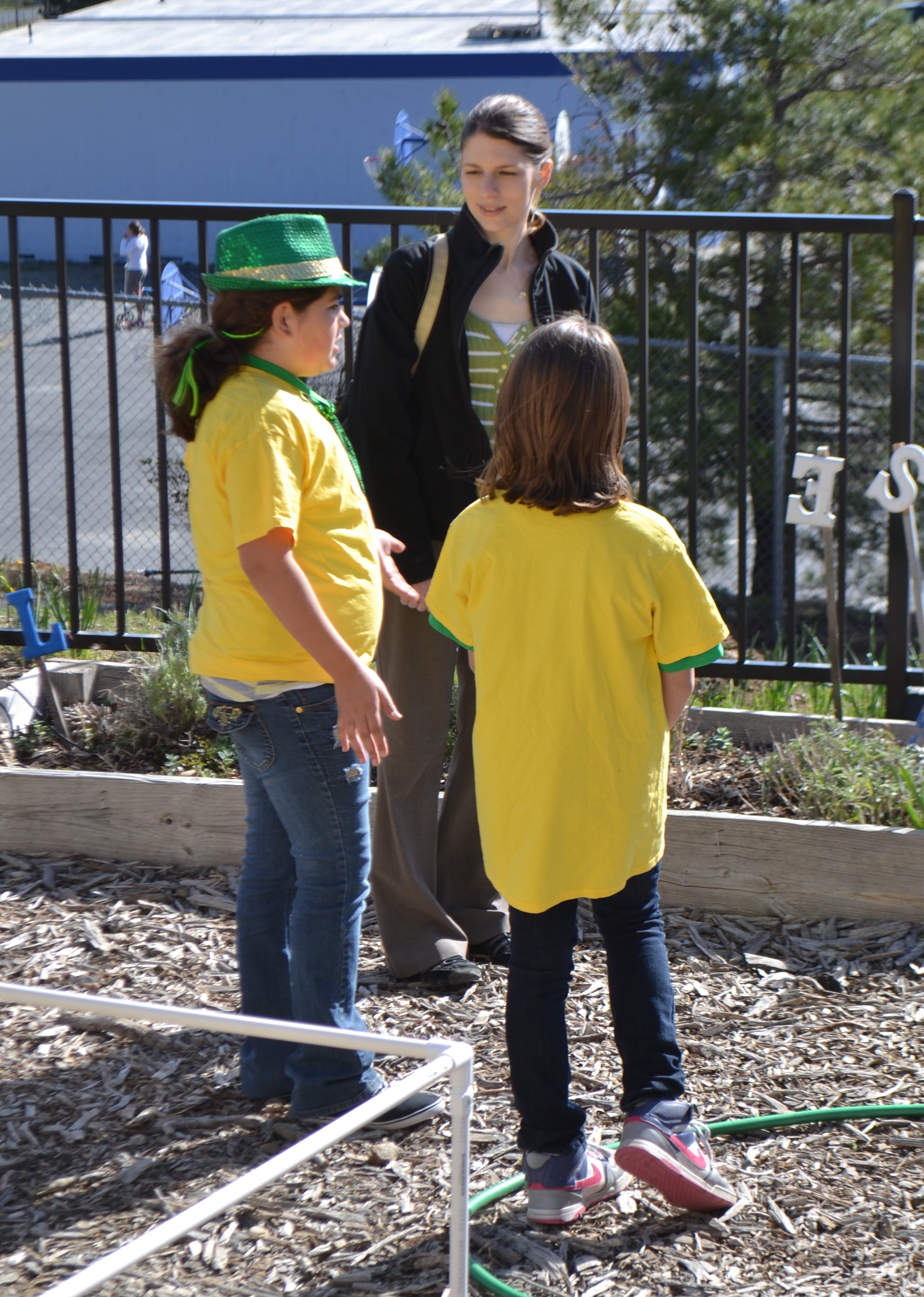
Pediatric residents from UCSD do part of their community health rotation at our district, through Pathways.  Garden Ambassadors, decked out in St. Patrick’s attire, give the doc a tour.

Image 8

We added a geranium to the new mailbox to match the flag.

IMG_2881

Second grade students seeded this new circular bed and wagon with California wildflowers.

IMG_2882

After the rains, one of the garden volunteers found this on the back slope of the garden.  We’re thinking bobcat?

IMG_2827

It was the garden’s turn to make a display for the front office.

IMG_2626

Julian kids get to plant a lot of daffodils but they rarely get to go back and pick them.  I had students make “surprise” bouquets for their teachers from flowers in the garden.

IMG_2774

I’ll close with a link that captures our teacher “flash mob” last October on National Food Day.  “We can change the world”—not just a pop song!  The truth!  (Right, Susi?)
http://www.youtube.com/watch?v=Y2ZZmOzmFqQ

You’ve got mail(box)!
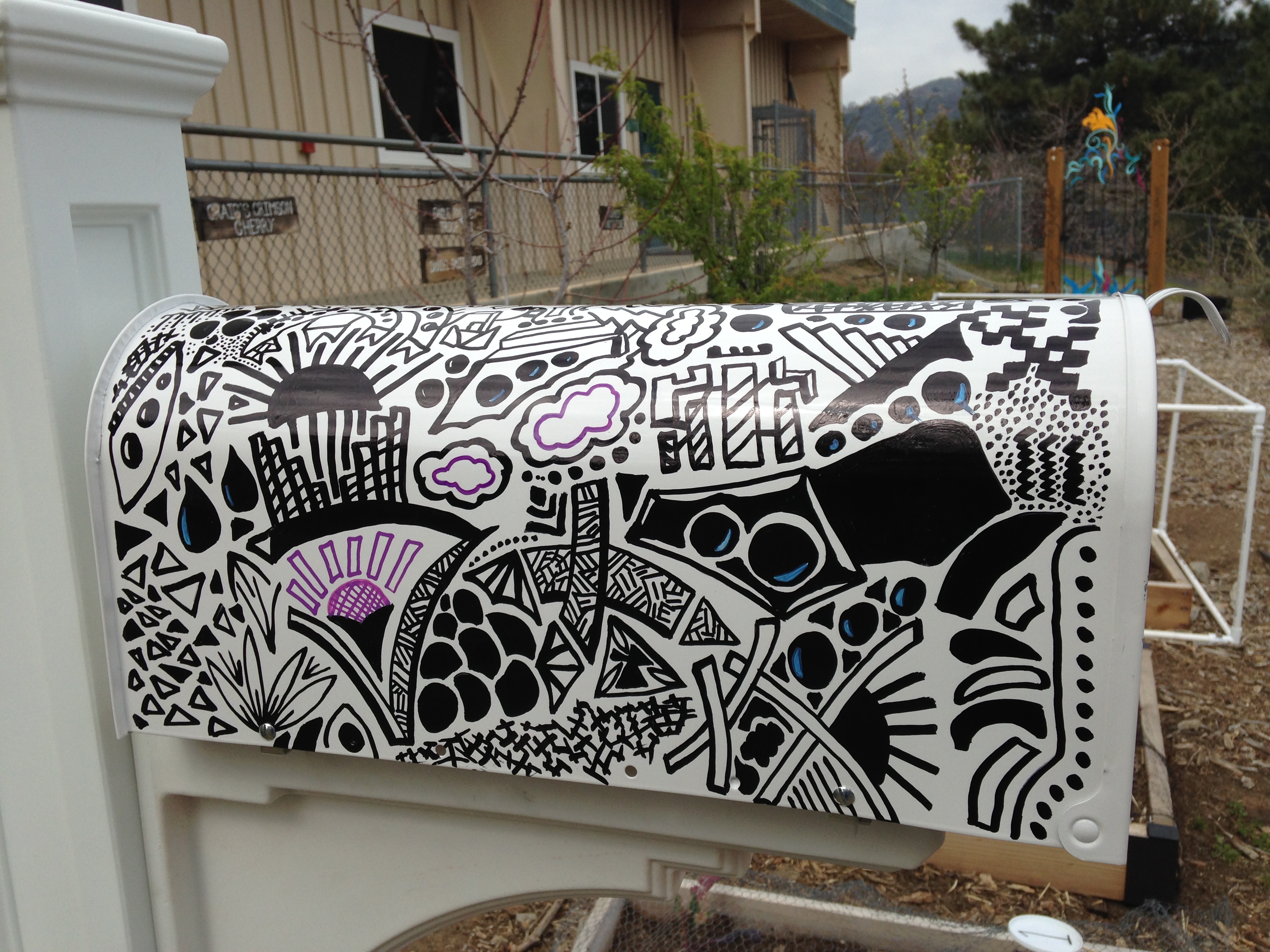
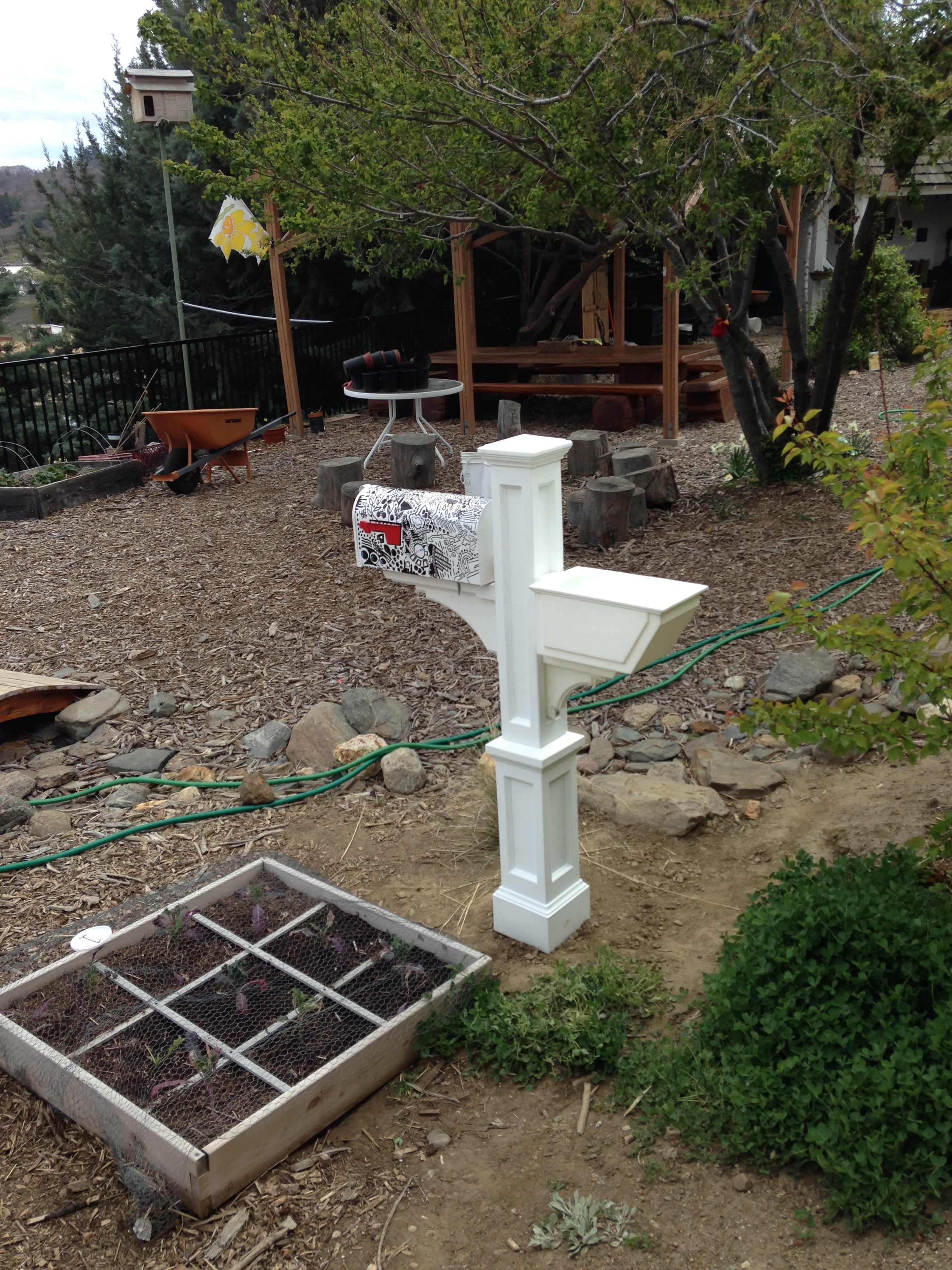
One of the many purposes of our school garden is to demonstrate good gardening practices and concepts for our community.  Recently we’ve built a series of 3×3 raised vegetable beds, and we’re making “how-to” flyers to put in the adjacent mailbox for parents/other visitors who might want to build some at home.

Unveiling the newly installed mailbox:

IMG_2852

IMG_2855

Now we need to put some colorful plants in the planter on the backside and fill it with gardening information flyers. Thanks to the artist (Ethan), the donors (Mom and Dad), and the crew that installed the whole thing (Mr. Copeland, Mr. Harvey and the 4th grade reading students!)

National Breakfast Week

On Tuesday we celebrated National Breakfast Week.  Julian Pathways secured a grant for the school district from Action for Healthy Kids in order to promote the eating of breakfast, and we used it to provide a free breakfast to every child at the elementary and junior high. To make it a festive event, we all ate in the garden!

IMG_2756

The chains were made from seed catalogues by the children

Centerpieces were paper roses, made from seed catalogues, by 3rd and 4th grade students last week in garden class.

IMG_2734

IMG_2766

Younger student colored these messages:

IMG_2768

Breakfast is brain food!

IMG_2772

Eat your breakfast!

Student musicians played on the gazebo “stage”….

IMG_2744

…and under the plum tree!

IMG_2730

Last week during garden class, I worked with the fifth graders to write “breakfast haiku.” Students read their poems in-between the musical presentations.

IMG_2758

Twelve lucky kids had heart stickers on their breakfast bags….

photo 1

…which meant they got to return to the garden at lunch to ride the “blender bike” and enjoy their own pedal-powered smoothies!

IMG_2770

Thanks to Pathways and Action for Healthy Kids for making this wonderful morning possible!

IMG_0885

I heart garden education

It’s always fun to hear from parents and teachers the different ways that students are extending their garden learning outside of our once-a-week class.  One mom recently told me this story about her pre-K daughter.  The week of Valentines Day we had been singing about and eating roots, as well as hunting for “C” words in the garden.  Her daughter decided to make her own valentines at home for her classmates, and she incorporated concepts from that week’s class into the designs.  Notice the roots, the “c”ompost bin…and the princesses!  Way to go Rosemary Grev!

20140213_123038