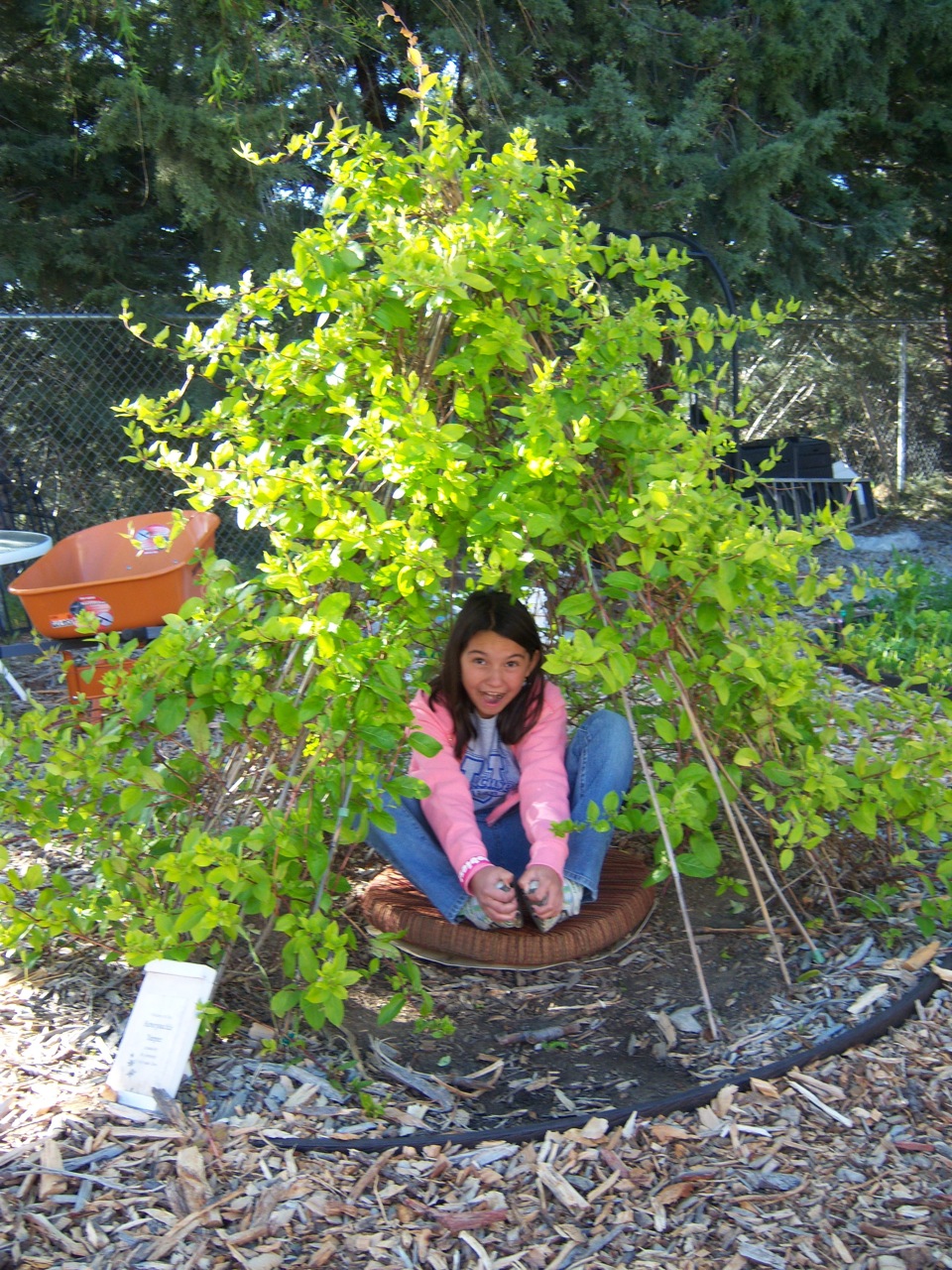
Honeysuckle teepee

With its little cushion, our honeysuckle teepee beckons children to come and sit.  Many days there is a child inside, absorbed in a book.  I believe childrens’ gardens should have elements of whimsy and beauty that invite little people to crawl in, relax and imagine.


Thank you Heather for creating this beloved teepee in the early days of the garden.

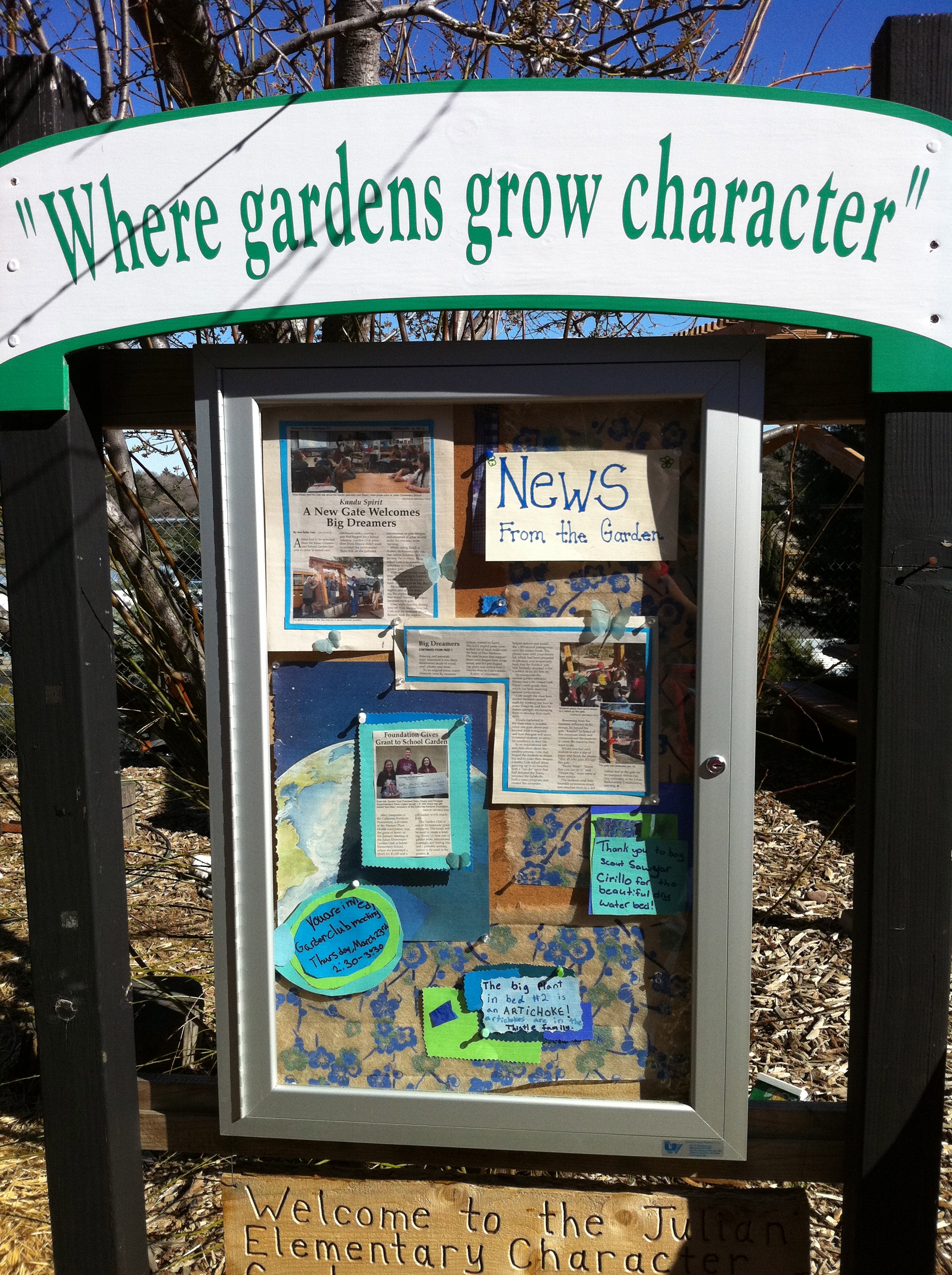
Garden bulletin board, by kids

I once heard a garden coordinator say that she tried to never work in the garden alone–she always invited someone to join her.  In that way, she was always building the knowledge and skill base of other volunteers—and she always had company!

Sometimes it takes me a while to remember that most every garden job can be used to teach something.  All month I’ve been passing our garden bulletin board and thinking, “Oh dear, that really needs updated!”  And then it occurred to me to offer a bulletin board making activity for NEAT day, an hour of enrichment on Friday afternoon.

I gave the four students the information that needed to go on the board: newspaper clippings and information I wrote on cards.  Then we talked about palette–about choosing a color scheme that guides what colors you choose for a project. (Thank you artist friends for helping me to think like this!)  We pawed through big boxes of handmade and recycled papers, talking about mixing in texture.  We discussed accents and surprises and splashes of whimsy to make something more interesting. I told stories about the scraps of paper in the box (like the remnant of marbled paper I brought from Italy, the handmade pieces I had picked up at fair trade stores and the scraps I had collected from Christmas cards and wrapping paper.)

Then the kids went for it.  The result was sweet and colorful, and they were very proud of it.  We’ll change it next month, with another group of students, and learn some more.

The Table: A little tale of reinvesting, rebuilding and reimagining

 Once upon a time there was a school nestled high up in pines and oaks of the San Diego mountains.  It was a small, rural, public elementary school, and the children and parents of this little school loved it very much.

Every year the children and parents of the school did fundraisers.  They sold wrapping paper.  They held spelling bees.  They hosted a used book sale.  The money they raised went to everything from scholarships to assemblies.

Each year the PTO gave a special, year-end gift to the school from the money they had raised.  One year they decided that the gift would be a table for the beautiful school garden.  But not just any table.

Not long ago, a wildfire had torn through their community.  One out of every four families in their school had lost a home in this terrible tragedy—the worst fire in California history. And there were many other fires that had turned their community upside down.

They thought about how their town had slowly and bravely rebuilt.  The big losses and small recoveries became part of their story as a community.   Then they thought about Don Madison, a local craftsman.

Don had a special gift.  He liked to take wood from trees killed in wildfires, mill it by hand and then make beautiful pieces of furniture.

Families from the school met Don and forged a friendship.  The children went to see the trees on the mountain and watch Don mill.  Don began to make the table.  Anticipation grew for its arrival at the school.

One day Don called the school and said the table was ready.  “It’s beautiful!” “It’s unique!”  “It’s HEAVY!” he said.  “It’s going to be a huge job to transport this table to the school and place it in the middle of the garden.  BUT I have an idea….”

Two weeks later a group of local firefighters slowly and carefully carried the table piece by piece on to the school campus with Don.

A celebration took place. The story was told.  Speeches were made. A ribbon was cut.  Cookies and lemonade were served.  And there were many “ooohs” and “aaahs” and very few dry eyes.

The table sits there today.  Sometimes it is ringed with students eating lunch.  Or reading.  Or learning science or art.

It is a gathering place.  A thing of beauty. A reminder of renewal.  A legacy table planted in a school garden in a small town, high up on a hill.

The garden, in the (adorable) words of a child

At the end of the school day, a third grade teacher sent her students to the garden with the class set of ipods, asking them to take photographs and add narration.  So here’s the garden from another angle–the most important one—the angle of a child.

Thank you to Kerrigan for the video and Mrs. Cirillo for the cool assignment!

The upside of zone 7

Although I live in San Diego County, I live in the mountains at 4,200 feet.  I wouldn’t trade life in our little town, but I admit that I am prone to other zone envy.  Thinking about my gardening brethren “down the hill” growing lemons…and avocados…and year-round vegetables…and those gorgeous ornamentals that love the coastal fog……well, it sometime makes me a little jealous.

But here is one of the advantages of zone 7:

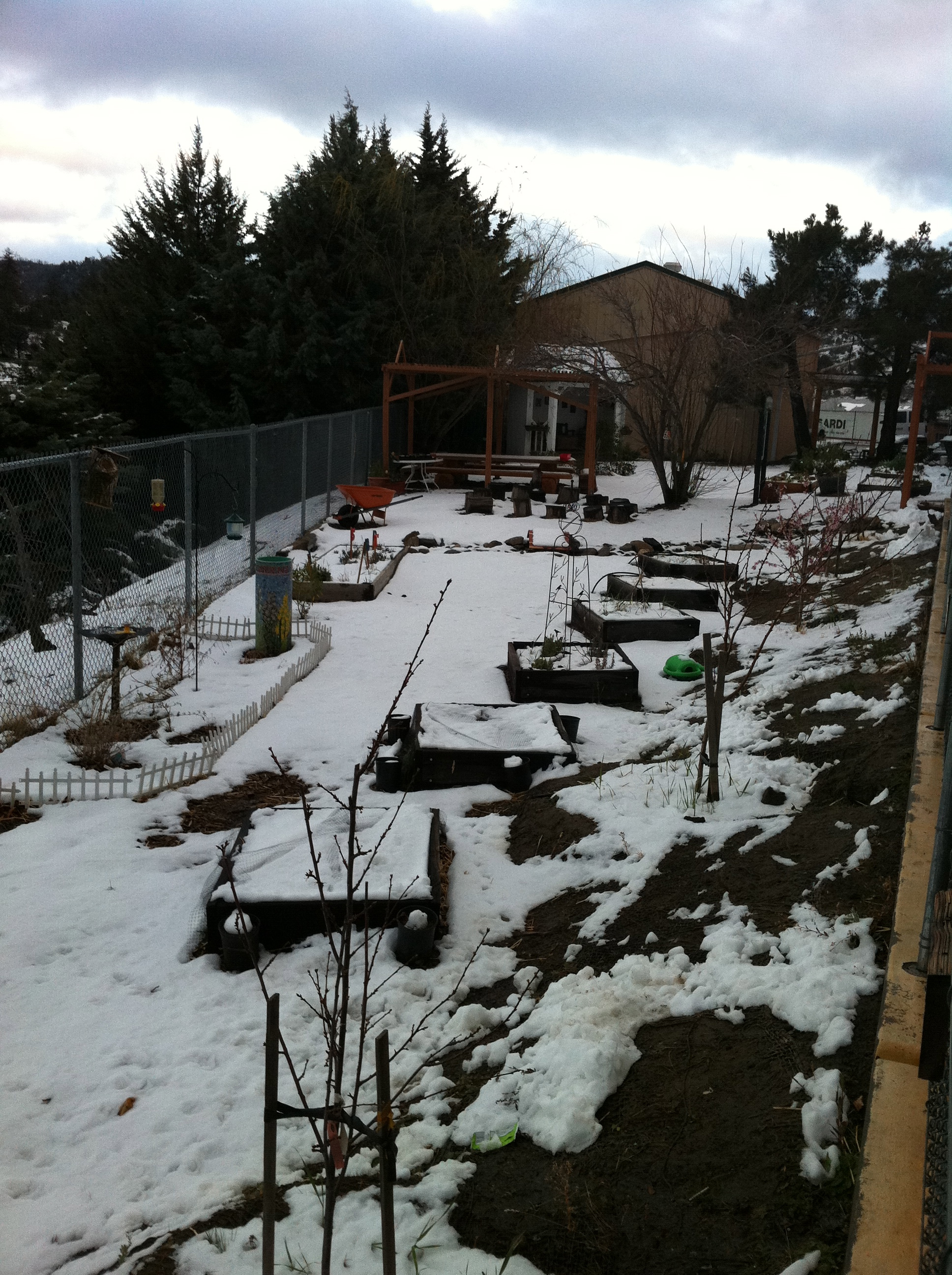
Winter!  And winter in gardens generally means there’s nothing to do for a while.  Last week we had unseasonably warm weather.  And much like the apricot tree which broke dormancy because the weird high temperatures seemed to tell it to do so, I too was fighting the irrational feeling that it wasn’t really winter and I should be gardening now.  

Snow settles it, telling me:  rest for a little bit.  Spring will be here soon enough.

That is, if it weren’t for….

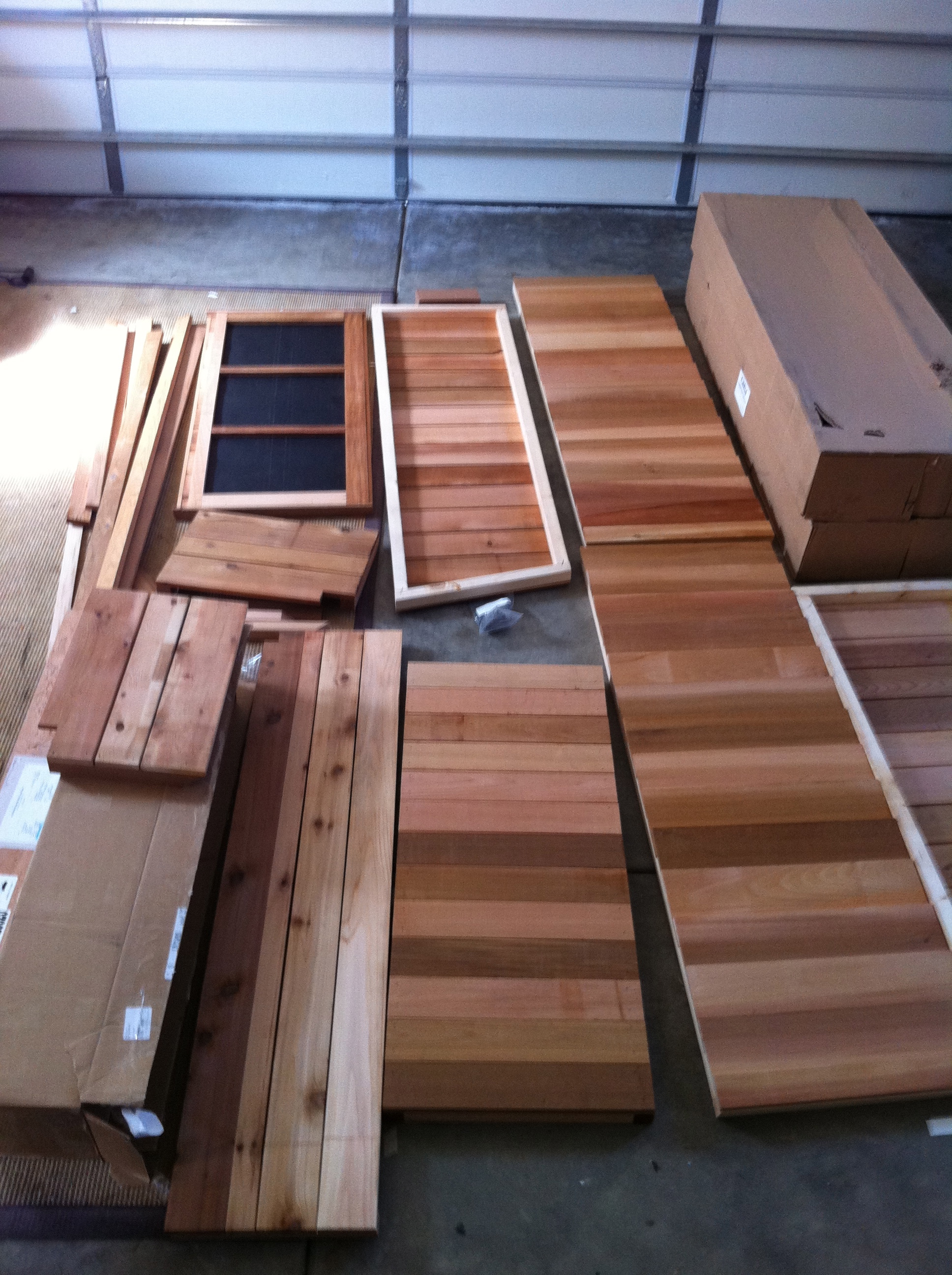
Indoor projects! (Cedar garden hutch awaiting assembly in my garage!)

From the garden to the cafeteria

Last month I attended the “Garden to Cafeteria Food Service Workshop” held in a conference room at the San Diego Zoo.  Recognizing the need for school gardens, and their recent surge in popularity, this one-day seminar was about establishing good protocols for harvesting garden produce for school lunch programs.  Here’s a sampling of my notes from the day:

  • Ventura School District buys 80% of their produce locally and has moved to scratch cooking—and this is serving 2 million meals a year!  Farewell Mystery Meat!  We heard about their innovative program, which included the district purchasing vegetables from one of their high school garden clubs.  Sandy Curwood, the district’s Food Services director, said that in preparing fresh, local food she has seen her budget remain the same but with an important shift.  What she has saved in processed food has been spent on hiring more people to prepare food.  A great trade-off, I think!
  • Sandy emphasized the importance of nutrition education in conjunction with the introduction of new foods.  Kids may not like new fruits or vegetables at first, but much like teaching math, we don’t eliminate teaching something because kids have initial resistance to it!
  • Great quote from Sandy Curwood:  “The famer/gardener is the frontline health practitioner.”
  • Interestingly enough, one of the organizers of the event was the San Diego Childhood Obesity Initiative.  With 30% of kids considered “clincally obese,” this group has an interest in school gardens and nutrition, maintaining that kids who have a hand in growing their food are more likely to form good eating habits.
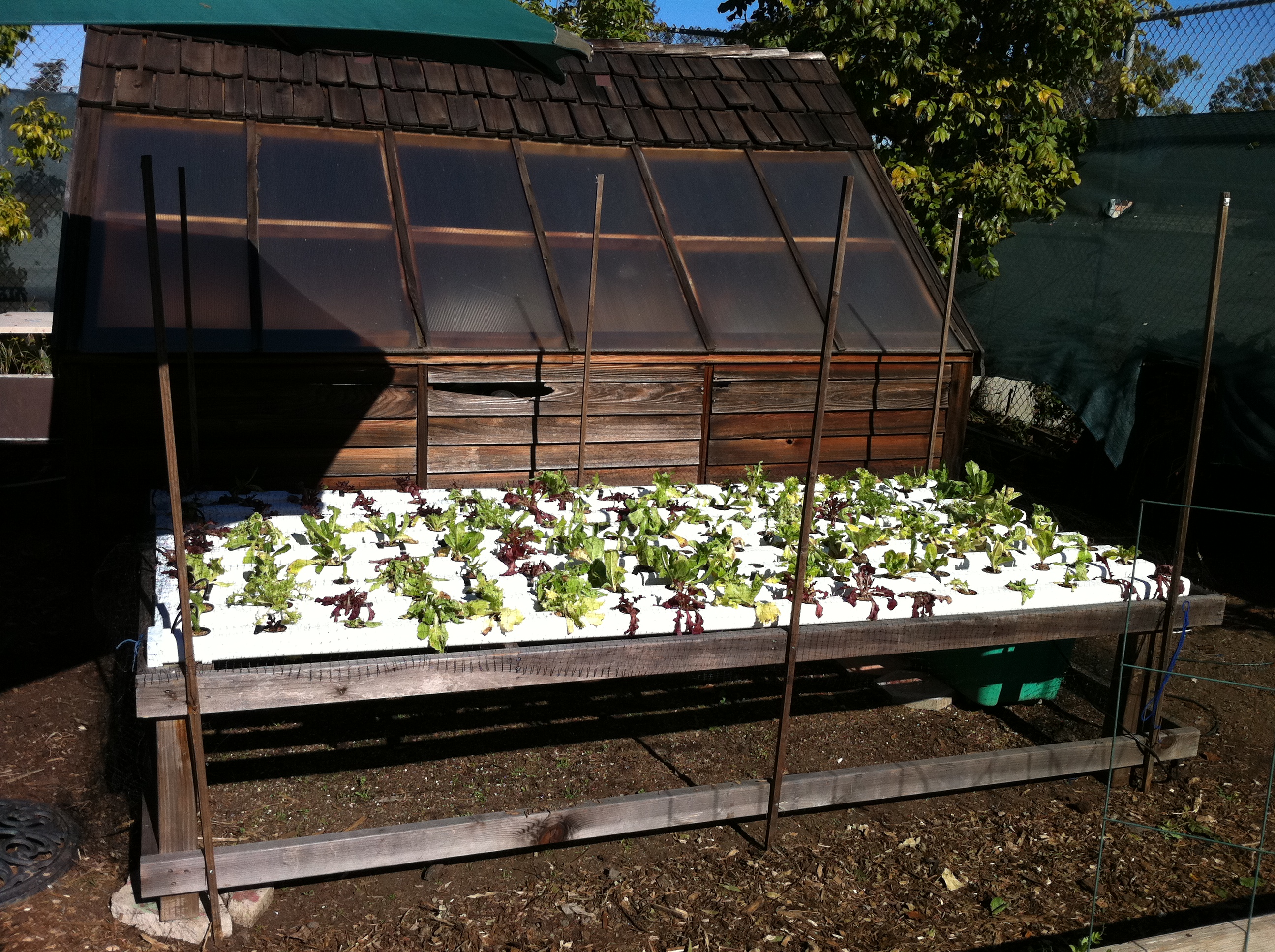
  • Another presenter was San Diego Unified.  This district has recently written up a set of protocols for maintaining school gardens and safely harvesting food.  We walked to Roosevelt Middle School, an adjacent campus to the zoo that has a garden.  From their hydroponic garden, we harvested, rinsed and prepared lettuce, practicing the new SDUSD rules and regulations.
  • The workshop had a waiting list of people wanting to attend.  Hopefully this interest signals the fact that school gardens are slowly becoming more incorporated into the central life of schools.

The hydroponic system (and potting shed) at Roosevelt Middle School

To-do lists and garden bon bons

If I unscrolled my garden “to-do list,” I am certain it would roll out my front door and down my street.  In any garden—especially a school garden as ambitious as ours—there is simply a massive amount of things to do.

Last week, I received two little gifts (I call them “bon bons”) in the midst of all the garden work.  One is that I took my son’s kindergarten on a sensory tour of the garden.  No fancy lesson plan or exciting activity—I simply asked the kids to quietly walk through the garden. Then I asked them to name something they “saw, smelled or heard” that was 1)new, 2)beautiful or 3) interesting.  The kids were coming out of their skin in excitement as we took time out for sheer discovery.  I came back to class, after three rounds of little people, just a little bit exhilirated.

Another story:  On this blog I can check my “site stats.”  Every day I can see how many views I’ve had, what posts folks are reading and even what specific “search engine terms” people typed in that led them to my blog.  Readers, apparently, have found me by googling “mosaic art” and “photography and placemaking” and of course “school gardens.”

Last week I saw that someone arrived at my blog because he/she typed in the phrase:

“positive things that happen to people going to school.”

Bon bon.

I am reminded that the cure for feeling overwhelmed by– many things really— is often immersing yourself in the reasons you are doing all the little tasks in the first place. Remembering the vision at the core of your work, you then let that joy propel you into the next day and the next task.

First grade's sunflowers from last season, growing in a space that was formerly overlooked and neglected (photo courtesy of Marisa McFedries)

Whimsical touches: hand painted garden signs

There are certain things in a school garden that make it sing.  One thing, I believe, is hand painted signage.

Thanks to Marisa, Mrs. B and Mrs. Dawson for these beauties! (Also to Mr. Younce who made the custom redwood signs and holders for the whole garden.)

This slideshow requires JavaScript.

Grant Writing: Don’t Be Scared

Occasionally I meet people that have both a great idea and a hazy notion that there might be a grant out there to fund it.  Yet they are intimidated because they have never written a grant proposal.  That was me!  It’s true that fundraising is an art and skill, and I’m sure there are good workshops to learn how to do it well (especially when going after the big ones). Nonetheless…..here’s how I got involved in grant writing:

I wrote one, and I got it.

Suddenly I had $20,000 to run with my little idea, and I became convinced that ordinary people with good ideas sometimes get them funded.  (If you don’t know the story of Green Party Kits, you can read it here.)

Once I had this confidence in hand, the whole process was demystified, and I kept trying for others.  Getting one is ridiculously empowering.

From my limited experience, I think the keys to “grant writing for the average person” are as follows:

-Know what you want.  Always ask for funding based out of a deep sense of vision.

-Be specific in what you want.  Do your homework.

-Read the application, and be clear about what the organization wants to fund.

-Assure the grantors that it is absolutely do-able.

-Write well.  There is no substitute for clear, decent writing.

-Remember that the first one is the hardest.  I’ve learned that once I’ve written up a few proposals, I’ve already done the hard work of cataloguing the important information I’ll need for others.  Every application is different, but you’d be surprised how much you can cut and paste!

-Don’t give up!  The $1,200 grant we received this week was rejected on the first cycle, but accepted on the second.

-Go for it!

Me, Principal Kevin Ogden and Mary Junqueiro, Director of Programs for the Western Plant Health Association from whom we received $1,200 and a gift basket with an additional $250 gift certificate from Home Depot

Garden As Reward Destination

Kids are given lots of different types of incentives in school, and our school has hit upon a cool one.  Children receive a “Friday note” if they complete all of the week’s homework–this is something the school has done for years.  This year they have added a component: twice a quarter all of the kids with all of their Friday notes are allowed to sign up for a variety of enrichment activities on a given Friday afternoon. Choices include cooking, hiking, art, etc. Kids without all of their Friday notes attend a study skills and academic habits workshop in order to bring up their game for the next round.

Often the Garden Club provides an engaging activity as one of the choices. We like that kids view extra time in the garden as a reward! In October our small group made scarecrows, and although their quirky creations have presided over the garden all fall and early winter, it is now time for them to return to the straw bed and thrift store from whence they came.  Goodbye scarecrows!

This slideshow requires JavaScript.