Creating wildlife habitat on the school campus

Did you know you can register your backyard as a “certified wildlife habitat” through the National Wildlife Foundation?  Or your schoolyard?  If you have the four elements of habitat, and can show that you garden in an environmentally friendly way, you can earn this distinction.  You can then display a NWF sign, which can help educate others about the elements of habitat that people can provide for wildlife in our own backyards (no matter how small) and school grounds.

Our school garden has met these requirements (both in a butterfly/hummingbird habitat bed and also throughout the larger garden), and we recently did the paperwork and received our sign.  After the photos below, read more about the habitat elements and go here for more information.

We got the fancy yard sign, so the total cost with registration was $119
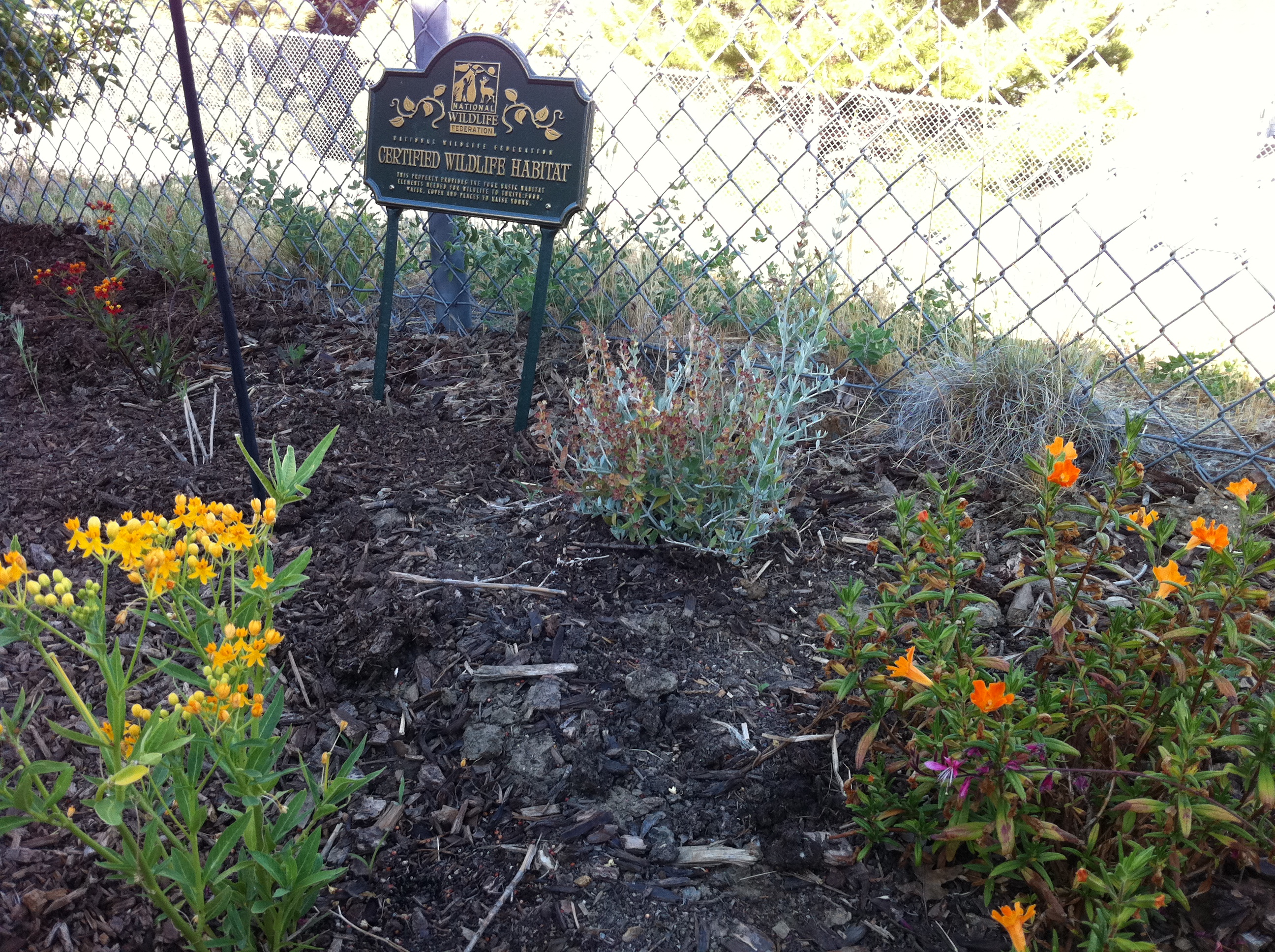
Asclepsias (host for larval monarch butterfly), monkey flower and germander to attract hummingbirds

All habitats need a water source, even as simple as a bird bath. Rocks placed inside give birds a place to perch. Our water evaporates quickly, but if yours doesn’t, be sure to empty every few days for good mosquito control. Also pictured are lavender and buddleia (butterfly bush)

Even a pile of rocks can be a habitat element for lizards

Extra feeders and a birdhouse

 From the National Wildlife Foundation website:
bee on coneflower

Provide Food for Wildlife

Everyone needs to eat! Planting native forbs, shrubs and trees is the easiest way to provide the foliage, nectar, pollen, berries, seeds and nuts that many species of wildlife require to survive and thrive. You can also incorporate supplemental feeders and food sources.

bird drinking water

Supply Water for Wildlife

Wildlife need clean water sources for many purposes, including drinking, bathing and reproduction. Water sources may include natural features such as ponds, lakes, rivers, springs, oceans and wetlands; or human-made features such as bird baths, puddling areas for butterflies, installed ponds or rain gardens.

rabbit

Create Cover for Wildlife

Wildlife require places to hide in order to feel safe from people, predators and inclement weather. Use things like native vegetation, shrubs, thickets and brush piles or even dead trees.

blue bird at nesting box

Give Wildlife a Place to Raise Their Young

Wildlife need a sheltered place to raise their offspring. Many places for cover can double as locations where wildlife can raise young, from wildflower meadows and bushes where many butterflies and moths lay their eggs, or caves where bats roost and form colonies.

And finally….

What sustainable gardening practices do I need to certify?

You should be doing two things to help manage your habitat in a sustainable way.
Soil and Water Conservation: Riparian Buffer • Capture Rain Water from Roof • Xeriscape (water-wise landscaping) • Drip or Soaker Hose for Irrigation • Limit Water Use • Reduce Erosion (i.e. ground cover, terraces) • Use Mulch • Rain Garden
Controlling Exotic Species: Practice Integrated Pest Management • Remove Non-Native Plants and Animals • Use Native Plants • Reduce Lawn Areas
Organic Practices: Eliminate Chemical Pesticides • Eliminate Chemical Fertilizers • Compost

Gardening: so complicated, so easy

Two weeks ago the topic in Master Gardeners was temperate fruit trees.  As we reviewed all of the things that can negatively affect fruit set, I had this overwhelming thought:

How does anything grow at all when there are so many things that can go wrong?

Really, a gardener could get freaked out looking into all of the variables that allow a healthy plant to grow.  Consider the odds against fruiting—abscission of bud and flowers, weather, competition, disease, insect pests, shade, improper pruning…..

But then this is also true:  you can buy a tomato plant, put it in soil, water it regularly and you will probably get a tomato.  And you will most likely be blind to all of the things that conspired together to make things go right.

I find that a lot of gardening—life itself?—is about holding these two things in tension.

1)  It’s complicated.  Lots of things can go wrong, and lots of things can go right.  As we meet hard stuff with courage and persistence and faith, we ought to meet the good stuff with some deep gratitude. I will truly never look at fruits and vegetables the same way again because everything I have learned has taught me that they are nothing short of miracles.

2) It’s simple.  I think it’s important to slow down and demystify things so that we don’t get overwhelmed and paralyzed by them—things like gardening and scratch cooking and raising children and car maintenance.  We ought not to overcomplicate things.  We try, learn, experiment, fail, succeed, and ultimately, make progress.  At the end of the day, we’ll probably have grown something good.

Exhibit A: a wisteria vine growing up our pergola:

And here’s the wisteria vine we planted six feet away, same soil, same orientation, same watering and care.

Yep, nothing there.  It died, and I have no idea why. See? Complicated.

But then there’s this: artichokes.

Photo courtesy of Marisa McFedries

Photo courtesy of Marisa McFedries


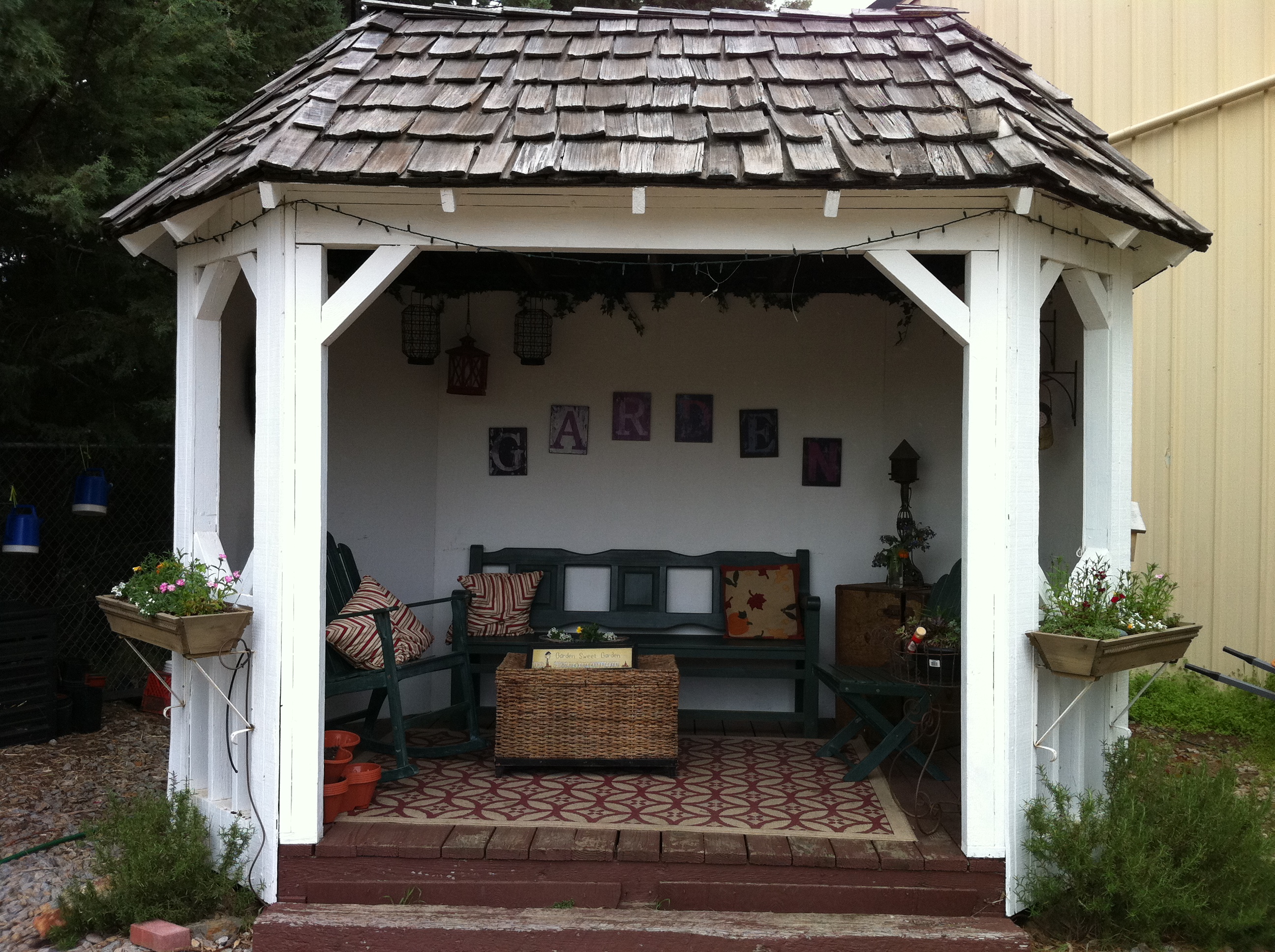
Our multi-purpose gazebo

It has been in the background of many posts, but now I’m putting it front and center.  Our gazebo! Renovated by Garden Club members, this old, battered, brown storage unit became a delightful focal point and meeting place. For decades the structure had been sitting there, nearly invisible, until fresh eyes reimagined it.

How is our dear gazebo used?  Let me count the ways.  The gazebo is where…

  • students eat lunch
  • families hang out after school while siblings do extracurricular activities
  • reading buddies sit together to pore over books
  • counselors meet with students
  • staff hold meetings
  • parents snack on garden treats at Open House
  • events are held such as our annual tea party for Administrative Professionals Day
  • Garden Club members survey the work of the last three years!

Monday morning garden report

Two years ago I started a program called Garden Ambassadors.  Fifth grade and sixth grade students apply at the beginning of the school year, with a written application and interview, to be garden representatives.  All year long they receive special training from me as they assume certain leadership responsibilities related to the school garden.

One of their jobs is giving the “Monday Morning Garden Report.” Every Monday morning one of our principals welcomes children back to school on the school-wide intercom and goes over relevant information for the week.  Then the garden ambassador takes the mic (phone):

Here is this week’s report:

Good morning!  My name is Ethan, and I am a sixth grade garden ambassador.

Spring has come to the garden.  The table has a fresh coat of stain, the tulips are blooming and new plantings are going in.  In the habitat garden, there is newly planted lavender, monkey flower, butterfly weed and germander—all plants that attract butterflies.  Along the riverbed are also three new, native plants:  deer grass, mountain savory and “blue pozo” sage.  You might also notice the wildflowers are starting to come up in Mrs. Dawson’s bed too.  Finally, some strawberries were transplanted to the left of the pergola.

Thank you for observing the “caution tape” at the far end of the garden.  This space is being readied for a beautiful gate being created by the world-renowned artist James Hubbell. 

That’s all for now!  See you in the garden!

To my friends, the early garden dreamers

Believe it or not, this post ends with photos of two very dear friends, one in an Elvis suit, both in a small plane, doing something that demonstrates the depth of their commitment to projects we dream up.

But first….let me say that there are dozens and dozens of people who are responsible for making the school garden what it is today.  You can’t scroll through these posts and not know that a small army of people, doing both small and large things, built this little slice of heaven.  (Thank you, every single one of you–parents, teachers, administration, staff, garden club, students, family, neighbors.)

And yet there are three women in particular who with me gave birth to this idea in the Spring of 2009. Without these friends/fellow parents, the area that is our garden would still possibly be an asphalt-cracked, weed-infested, graveyard for broken equipment.  They are Allison, Marisa, and Kathy.

Together we caught the vision for a school-wide garden program. We whispered the idea to each other, and our eyes grew big.  Over and over we would walk that corner of campus, starting every sentence with “What if?”  We took notes, sent each other e-mails, and hunched over notebooks filled with garden magazine clippings at the coffee house.  Hands gesturing, arms flying, we would talk over each other in excitement, and then a big idea would come and we would lift our sleeves and say “I’ve got goosebumps.”  Then we’d head out and walk the space again.

We pounded out a proposal and presented it to our PTO.  We asked for money to launch the project, and our parent community and school administration gave us the green light.  We started breaking ground (or rather, leveling it) that very week.

All of my local friends are amazing.  They live their lives with creativity, whole-heartedness, love, possibility and commitment to things that matter.  I feel lucky to be carving out a rich life with them in this town, striving to offer up our best gifts to enhance the lives of kids growing up here—our own as well as others.

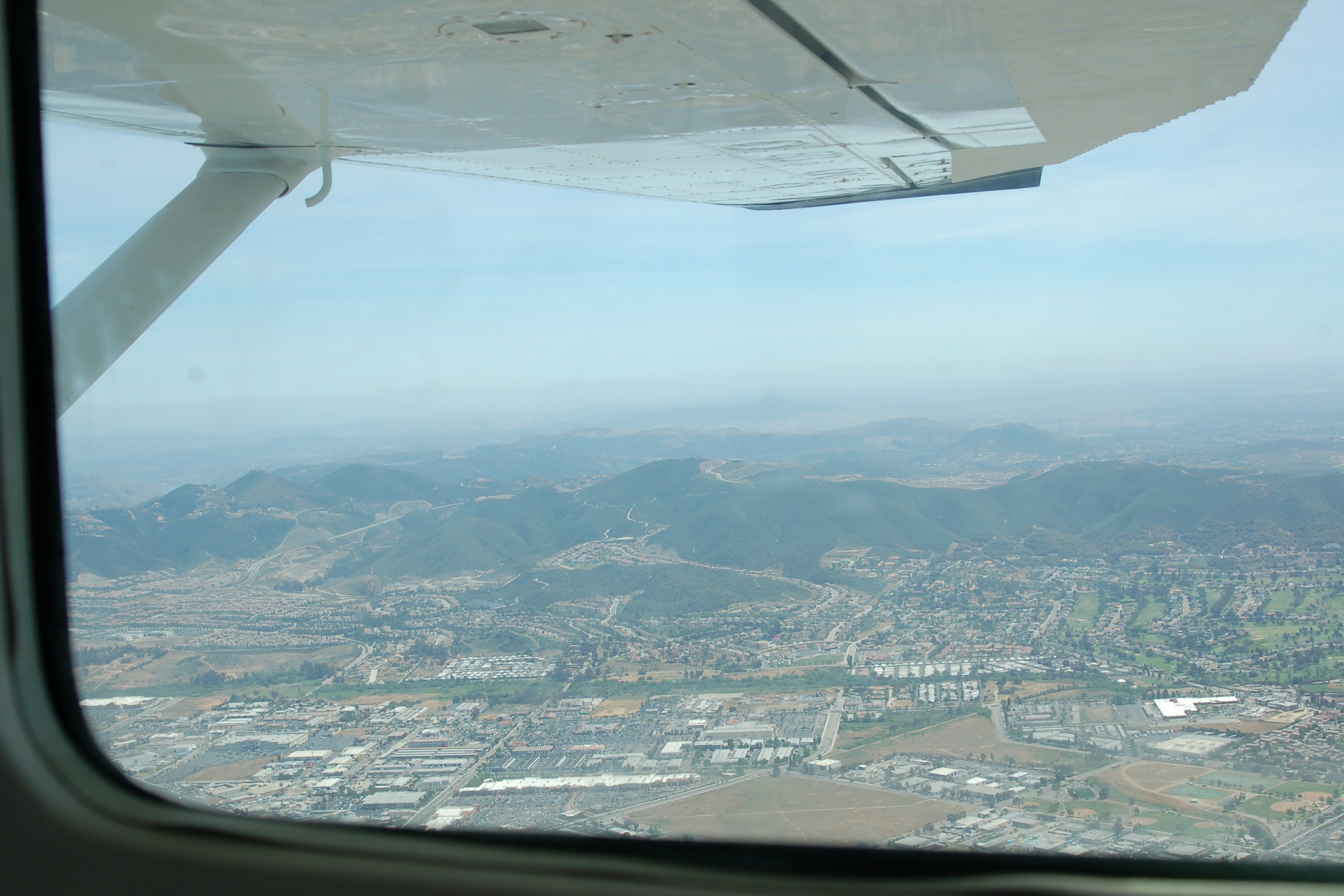
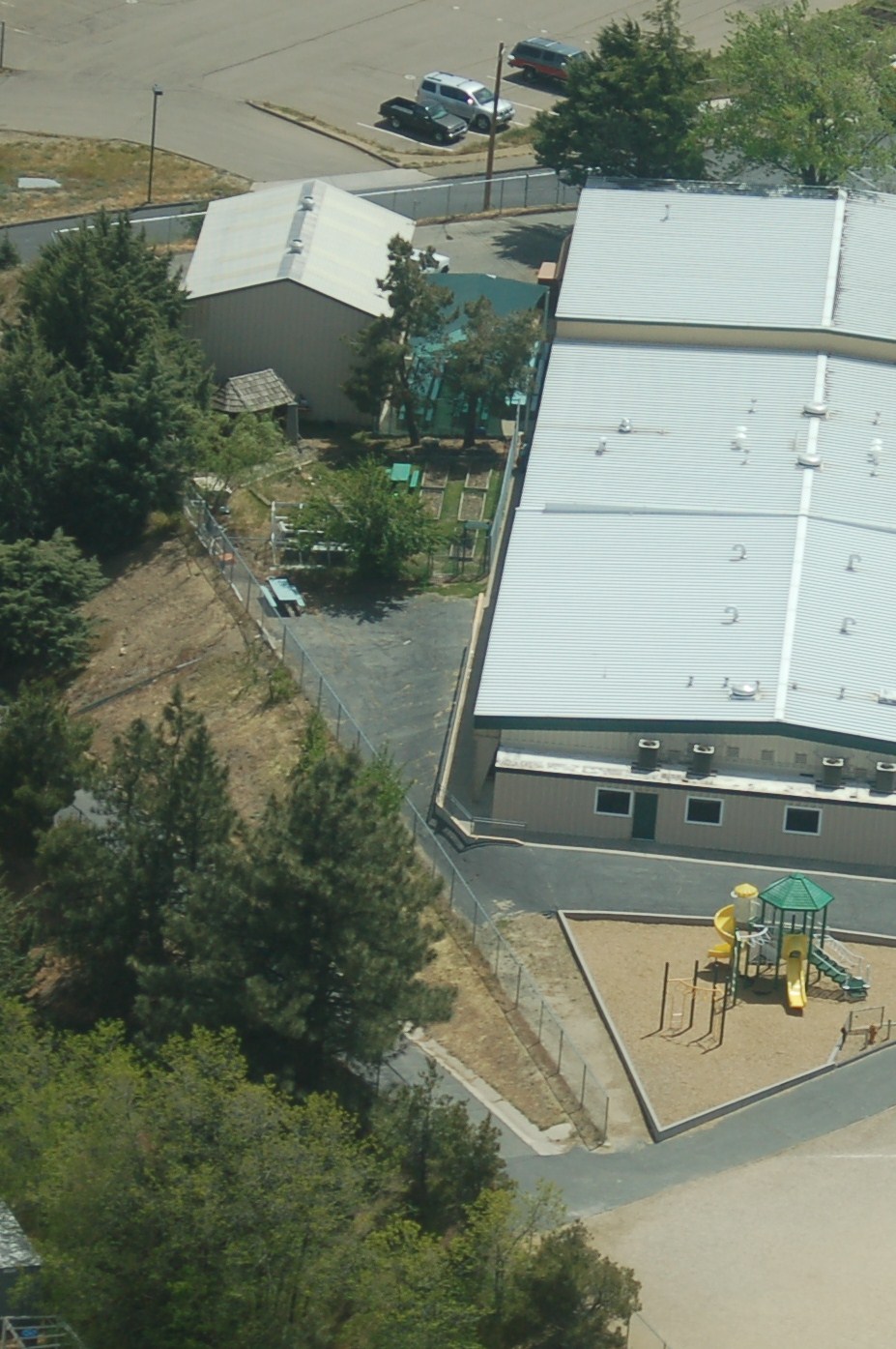
Here’s proof of the kind of fun, vibrant and “sky’s the limit” women they are.  Two of them decided it would be great to get an “aerial photograph” of the garden as we were in the planning stages…you know, for good artistic renderings and archival documentation.  So they flew up over the school and took one.

The “asphalt triangle” below was the space that became half of the garden; the space above it was a outdoor area used years ago by a now-retired, dedicated gardening teacher but since fallen into disrepair.

Now….as for one of them being dressed as Elvis, well…. that’s another (very good) story……

Beautiful Gate, Big Heart

This post could also be titled “How a chance meeting at Rubio’s with a local friend turned into a gorgeous new entryway for the garden.”

Our three-year garden renovation has included taking down fences.  To begin we removed a major fence which immediately doubled the footprint of the garden. And then we lowered the fence that borders the student walkway to a waist-high level.  Next we took down the fence that borders the “outdoor lunch area” in order to move in our massive rainbarrels…. and then decided not to put it back up, but to create a “grand entrance” on that side of the garden.

Someone gave me a book of garden project blueprints. The garden club looked them over and settled on a cute gate.  I happened to have the book in my bag when I stopped for lunch one day and saw my friend Art. Throwing the book open to the design, I promised to purchase everything on the materials list and recruit a work team if he would agree to build it one weekend.

Art, you see, is a dedicated community member, a loving father to a student at our school, a multi-talented artist, an accomplished builder, a dynamic teacher…..and just plain crazy.  That’s why he was possessed by an urge to tell me the gate I had in mind was completely ordinary and unimpressive, and what we really wanted was…(at this point he grabbed a pile of napkins and passionately began to draw diagrams and arrows.)  And before my street tacos had even settled, the garden had yet another completely remarkable project in the queue.

After months of building the gate in his barn, Art and a crew of friends recently hoisted it into place on custom footings which had been poured before Christmas. Two weeks ago we celebrated its arrival at our monthly “Backcountry Collaborative” meeting where Art cut the ribbon, which was adorned with “garden wishes” the sixth grade students had written.  In the classroom earlier that day and later out in the garden, Art spoke to the students and assembled adults.  He covered everything from Pythagoras to the importance of quality work to the five steps of any project: Dream. Plan. Build. Smile. Rest.  I told the kids that this gate is the story of someone not just doing a good, or even a great job, but truly “going above and beyond.”

He named it the “Kandu! Gate,” giving it a Japanese-sounding name to match some of the styling and reminding us every time we pass through the gate:  if we can imagine something, we can do it.

Sixth grade students attaching wishes that began with the phrase: May all who pass through this gate...

.....follow their dreams.....smile wide...appreciate the builders....live in peace...enter into another natural world...go at life with new vigor

Cutting the ribbon!

Introducing the Kandu! Gate

Photos 1 and 2 courtesy of Marisa McFedries; Photos 3 and 4 courtesy of Chris Elisara

*Art would like to thank the following compatriots for their help in bringing this dream to fruition:  Bruce Benson (Ace Co-builder), Don Madison (Millwright), Chris Elisara (Co-excavator), and the ALL American Installation Team (Bill Porter, Dennis Cantor, Mike and Michael Hatch, Tom Skibinski, Tyson Flack, Larry Shriver and Brian Duffy) a well as the documentarians (Ann Reilly, Tricia and Chris Elisara)