Almost 200 children, in the garden, every week

Parents started the elementary school garden 4.5 years ago.  We started by cleaning the space up, followed by more cleaning up of the space.  We built structures, renovated a gazebo, added raised beds, commissioned a table, put the compost bins in place and began fundraising and grant writing.  Every year we push the project forward—adding wildlife habitat, fruit trees, a solar fountain, works of art, native plants, a rainwater harvesting system….  Three years ago we launched Garden Ambassadors..and then two years ago I began teaching a formal garden class every Wednesday afternoon during our enrichment classes.  Last year we dove head first into Farm to School.

This February our garden education program took a big leap forward.  Every class now goes to the garden, every week, for a 30-40 minute class which I am honored to teach.  Children are in the garden all day long, doing more than we’ve ever done before–learning vocabulary, writing, singing, planting, harvesting, cooking, eating, mapping, creating, exploring.  It has been thrilling.  Thank you to everyone whose vision, hard work and love for “kids in gardens” has brought us to this point!  Extra special thanks to Julian Pathways (our on-campus family and student support center which I will write more about soon)  for making this phase of garden instruction possible!
IMG_2538

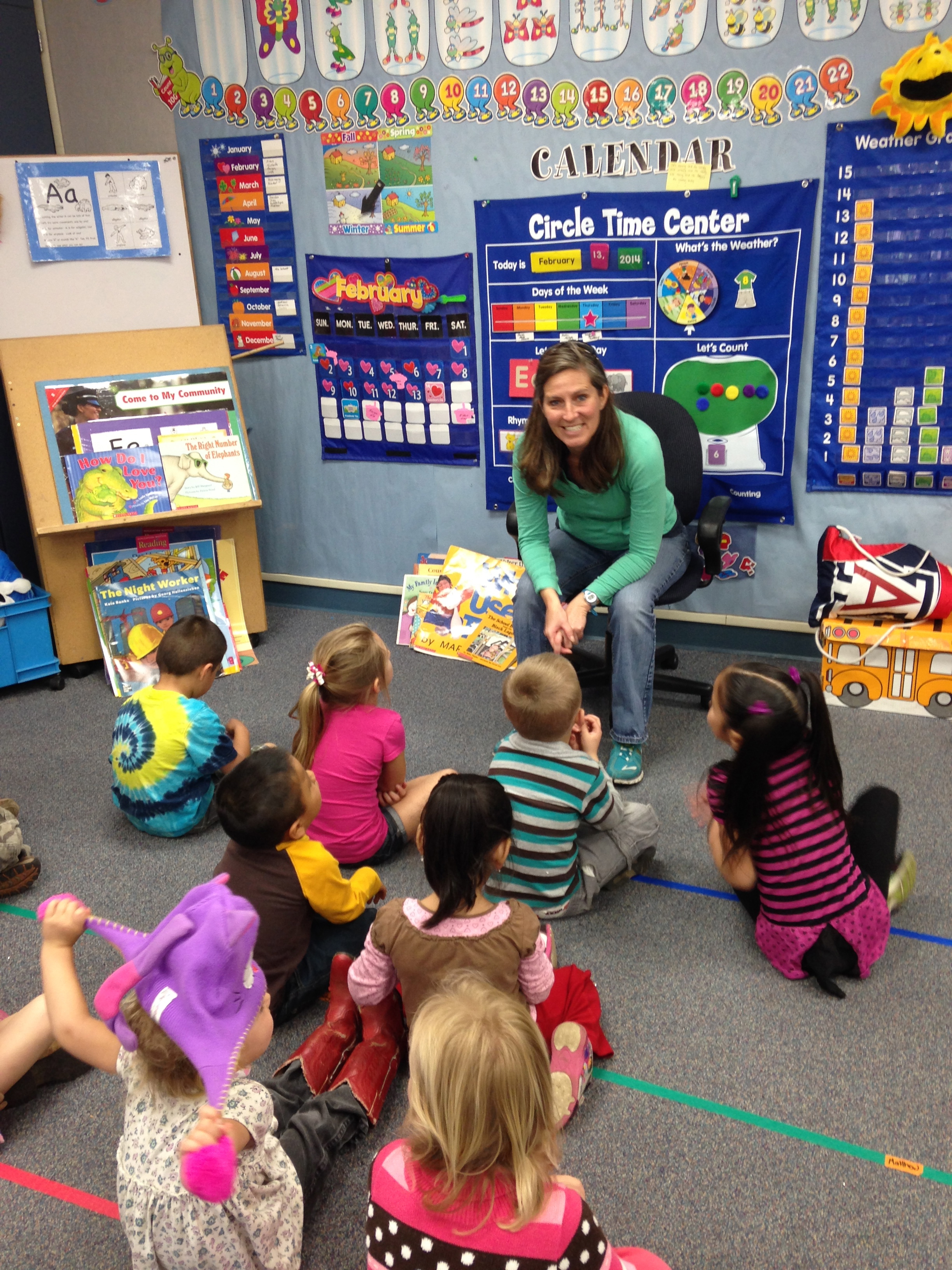
With the ESK class, ready to sing and hunt for letter of the week in the garden

February Garden Tour

Time for a walk around the garden.  Leave your jackets at home—it’s 76 degrees here today in Julian.

I picked up these banners at a garage sale in my effort to add holiday touches to the garden.

IMG_2534

Miss Lynn added these:

IMG_2535

Valentines Day is the rule of thumb for planting peas, and peas we did plant!

IMG_2549

Kale is our harvest of the month, and my parent helpers/Garden Beneficials cooked up kale chips at our outdoor kitchen for the fifth graders.  One thing I have become convinced of during my tenure as garden teacher—-NUTRITION EDUCATION WORKS!  These kids were gobbling down the kale chips, begging for more, asking for the recipe, declaring it to be one of their favorite foods….uh, kale chips!

Harvesting from our new 3×3 beds:

IMG_2513

Cooking in our new little convection oven at our outdoor food prep station:

IMG_2518

Munching away:

IMG_2528

A Farm to School project recently finished!  I had sets of banners made for the crops that are grown in San Diego each season.  The winter set now enhances the indoor area where children pick up their lunches.

IMG_2488

Next to the banners is one of the photographs taken by a student in our after-school photography program Kids with Cameras, identifying the chef behind the meal.

IMG_2489

Early start kindergarten and kindergarten students focus on a “letter of the week.”  I’m using these empty picture frames to teach garden vocabulary.  The students hunt for them, and we learn the name of the object framed.  D-d-d-d for daffodil!

IMG_2533

Lastly, our district recently received a Live Well San Diego proclamation from our county board of supervisor for our wellness programs.  Pictured left to right–County Supervisor Diane Jacob, School Board president Eileen Tellam, Superintendent Kevin Ogden, and me.  Also recognized were Teresa and Jeremy Manley who were also present at the meeting.

IMG_2564

Thankful for restoration work

Last Thanksgiving break found me finishing a big project at the junior high garden.  We received funding to plant out the hillside adjacent to the garden with California natives.  I looked around for a volunteer landscape consultant, but when there were none to be found, I buckled down and did the research myself on the question:  What are the best native plants for slopes?

Visiting the “natives only” Las Pilitas nursery in Escondido (and their super informative website: http://www.laspilitas.com) told me everything I needed to know.  Planting natives requires adherence to a few important principles:

  • Ground should be saturated before the plant goes in so all the water isn’t drawn away.
  • Natives need lots of water the day they are put in the ground.
  • After that, you water only when you test the soil with your finger and feel that it is dry.  If it’s wet, leave it.  One exception seems to be that slope plants need water twice a week to get established.
  • Fall is a great time to plant because the rains will take up the slack in getting them established.
  • After they are established, they may need supplemental water in the summer—but after that, they’re good to go!
  • Shredded redwood bark (sometimes called “gorilla hair”) is a excellent choice for thick mulching around the plant.  I bought as many bags as I could shove in my car.
  • Natives are awesome:  They are appropriate to the area, create habitat, and thrive with minimal resources.

Here’s another cool aspect of this project.  We have four 60 gallon rain barrels hooked up to a portable classroom at the junior high.  Up until a few weeks ago we used this water exclusively—-no tap water at all—-to plant 40 plus plants on the hillside.  People wonder if small rainwater catchment systems make a difference.  They do!   Sixty gallon barrels fill very quickly catching even a modest amount of rain off a large surface, like a building’s roof.  Of course, they are now empty with our (distressing) dry spell.  We might get some rain tomorrow night, however, which will not only take care of the once-a-week watering they require to get established, but will also fill the barrels again to get us through the next stretch of (super distressing) drought.

I pulled students in to the planting when possible, grabbing a few volunteers at recess and taking students out during a Thursday enrichment class.  Rains in November, however, dictated the planting schedule, so I found myself there alone, digging, planting and mulching.  The hillside is bare and a little eroded, so putting in the plants helps to beautify one of the outdoor areas where children eat—an element in creating a Farm to School program.  These plants will also stabilize the bank over time while creating appropriate habitat for birds and butterflies.  So as I teetered on the hillside, digging holes and gazing down on our public school, I felt thankful  for restoration work which turns out to be personally restorative as well—a good way to kick off my Thanksgiving break.

Many thanks to the Community United Methodist Church of Julian Gallo Fund for making this project possible!

IMG_1931

The hillside is dotted with beautiful little natives, reaching deep for water.

IMG_1932

The big vision is to have this entire hillside landscaped with California natives. We’re 40+ plants on our way.

New cameras, same ole magic

Kid with Cameras 4.0 just came to a lovely close.  Through Julian United Methodist Church’s Gallo Fund, we were able to purchase ten “teaching cameras” for the project.  Formerly, we worked with whatever cameras the kids had access to, and we spent a lot of time fiddling with each one.  It worked, but everything is now so much easier–the cameras are always available, batteries are charged, instruction is given once to everyone, and we don’t need to download images at the end of every class.

Over seven weeks, we had a classes taught by various local photographers.  Jeff Holt and Bill Bevill taught camera fundamentals:

IMG_1488

Then Anne Garcia took us through principles of composition, using her own work as examples as well as a few photos of Graham Wilder’s.

IMG_1503

We headed out to shoot in the school garden, with the objective of using some of the best images for a Garden Club photo card fundraiser.

_DSC0315

Photo courtesy of Bill Bevill

IMG_1516

Another class was held at Down the Road farm for farmer/chef portraits.  Enlargements of some of the day’s best photos will be hung in the school cafeteria to help children make connections between their lunch and the people that had a hand in growing/preparing it.

IMG_1616

Dave Pierce taught a class on still life, described here.

IMG_1675

Graham Wilder, a new instructor with Kids with Cameras, showed the students some of his images, encouraging them to find the “extraordinary in the ordinary.”

Image 7

Then we walked to downtown Julian to do just that.

IMG_1729

Another new addition to the class was the process for choosing the “best photo” to exhibit.  In the past, the instructors got together to look at film to pick the image.  This year, each instructor took home the memory cards for two students after our last day of shooting.  From those photos, the teacher narrowed them down to the best 10-12 images.  Then during our last class, they sat with the students for 1.5 hours and talked through each photo, discussing them at length and asking the kids for feedback.  Ultimately, the student picked their favorite.  I think this approach worked great:  the student had ownership of the photo to be exhibited, but they chose from a small pool already screened by the instructors, drawing upon their expertise.  As educational experiences go, I think this class was simply incredible.

IMG_1863

IMG_1864

As is now our tradition, we ended with an evening reception at the public library. Instructors spoke about the class, students talked about their photos, and everyone enjoyed refreshments while milling around with the artists.

_DSC0563

Photo courtesy of Bill Bevill

All photos remain on display for two weeks, and then the students get to take them home, along with a CD of all of their photos. Thanks to everyone involved for making this program an unqualified success!

_DSC0568

Photo courtesy of Bill Bevill

DSC_0647_4

Photo courtesy of Jeff Holt

DSC_0662_2

Photo courtesy of Jeff Holt

Garden Tour: September 2013

Never have I gone so long without a post—never have I had a busier first six weeks of school.  (A friend gently pointed out I always say that.)  Anyway, welcome back, dear readers.  Let’s stroll around and catch up.

Starting at the junior high garden, the umbrellas were installed at the mosaic tables, providing much needed shade in these warm school months.  We got good ones–sturdy and rated for wind.

IMG_1317

I met with two “Garden Beneficials” on a Saturday to dig up comfrey and broccoli at Mary’s house to transplant to school.  (Gardens grow community!)

IMG_1328

How how I love these ladies! (Laural and Mary)

Grant money paid for this all-weather chalkboard.  Domingo hung it for us behind the outdoor kitchen prep island so that we can write recipes, illustrate lesson plans, and more!

IMG_1359

Once again applications went out to the fifth grade students, and I picked a new crop of 10 ambassadors.

IMG_1422

IMG_1424

Four varieties of fresh figs were donated by the Farm Stand in Escondido for a taste test at recess.

IMG_1372

For our harvest of the month (September—tomatoes), we harvested, made salsa, learned tomato trivia, looked at pictures of heirlooms, and read children’s books.  My “garden beneficials” group continue to bless us all with their time and commitment to teaching with me in the garden.

IMG_1432

IMG_1434

IMG_1393

One week I gave two tours: one to the United Methodist Women, another to the Ramona Garden Club.  Both were big garden lovefests.

IMG_1382

I lalso led a weekend fieldtrip to Camp Stevens as part of our Farm to School program.  Camp Stevens has an amazing organic farm, garden and outdoor education program—an incredible resource in Julian.  We played “Jays vs. Chickadees” under the oak trees and then went out to the field to make our own salsa on the spot.  You took a chip, went and grabbed a cherry tomato off the vine, then brought it back and piled on onions, peppers, cucumbers that Rita was furiously chopping up.  Repeat.

Image 7

IMG_1459

IMG_1452

After helping to harvest the spaghetti squash, we headed back to the main camp for their “seasonal supper” to which they invite the larger community.

IMG_1468

All the bins back at school got turned and compost sifted to make room for this year’s lunchtime scraps. Ambassadors are posted at the trashcans at lunch to help kids put their leftovers in the right bucket, and then third grade helpers come out to dump the scraps, add straw, add rainwater, and then return the buckets to the lunch area.

IMG_1427

And finally, I’ve enjoyed working with my son’s 2/3 class every Friday for a half hour of “garden time”—a new thing I’m trying with his teacher.  We are learning songs, memorizing plant names, eating what’s ready, going on sensory walks and drawing in our journals.  My son’s class is a very sweet group of kids who absolutely love the garden, and I look forward to our time together each week.

IMG_1398

Garden journals

Every year I volunteer to be a parent reading helper in my kids’ classes.  This year I asked the teacher if I could be the garden teacher instead!  She said “yes,” and so every week I have the class for a 1/2 hour of garden class.  During our first class, each table of children received a pile of patterned and handmade papers, old seed packets and pages from gardening catalogues as well as a 50 cent composition notebook.  They then proceeded to decorate the books they will use all year long to record garden vocabulary, keep their drawings and make journal entries.  Last week we listed the words “snapdragon” and “transplant” and then made a chart of warm season and cool season vegetables.  We went to the garden to plant a cool season veggie (broccoli) and tasted a warm season veggie (tomato.)  I like that they will have these keepsake journals to take home at the end of the year, full of all of their new gardening knowledge.

IMG_1318IMG_1321

IMG_1360

The end-of-school wrap-up, kinda

School’s out!  A moment celebrated every year by the “waving to the busses” pulling out for the last time until mid-August.

And so, things were also finishing up in the garden, kinda.

I did a bunch of make-up garden lessons (on peas!  surprise!) and came to love the book “First Peas to the Table” by Susan Grigsby about Thomas Jefferson’s annual contest with his neighbors.

IMG_7015

We did a lot of mulberry eating.

IMG_7020

My senior ambassadors worked on a mosaic stepping stone that will stay in the garden, acknowledging their two years of service.

IMG_7025

On the second day of summer, we held our (belated) annual tea party for Administrative Professionals day.  I tried to organize it on the actual holiday in May, or thereabouts, but discovered that stealing away all seven of our administrative staff at the same time might  inadventently make the school crumble in on itself.  These wonderful people make it happen every day, and I love that we’re on our fourth year of celebrating them in the garden.

IMG_7049

IMG_7040

The new PLUS team (junior high leadership) also came out for a 2-hour service project during the first week of summer, helping to spread woodchips, deadhead herbs and flowers, tear out peas, put in tomatoes and squash, mulch, tidy up the breast cancer awareness ribbon garden, and water.

IMG_7058

IMG_7069

This is what the ribbon looks like when the daffodil and tulips are out of season. It needs a lot of tidying to keep the shape and outline, made with red bark and white stones.

IMG_7068

Ta-dah! What were peas are now tomatoes, the Harvest of the Month for August and September.

And finally, I set up the summer watering schedule for our volunteer families, made exactly 100% easier this year by the fact that my friend and fellow Master Gardener put in timed irrigation to ALL of our edibles.  Now we just have to water the ornamentals a couple times a week with rainwater.  Thank you dear Mary!

IMG_7026

Another Big (and Yummy) Idea

Although we have used our Whole Foods-funded cooking station for simple food prep, we recently used it for one of our Big Ideas—full-fledged cooking classes in the garden.  Chef Greg from Healthy Adventures, through California School’s VEBA program, provided an afternoon of cooking instruction as part of our staff wellness program.  He made white bean hummus, Greek salad with swiss chard and kale, and spring peas with dates and walnuts.

IMG_6843

IMG_6837

Best part?  We harvested many of the ingredients on the spot!

IMG_6851

IMG_6854

And look!  Harvest of the Month!  Thanks Chef Greg for an awesome afternoon.

IMG_6860

Early morning wonders

Beginning to tidy up the garden for this weekend’s tour, I opened the small cedar hutch and found myself looking directly at this:

IMG_6908

I immediately closed the door and ran to get my favorite fifth grade entomologist out of class.

IMG_6912

The swallowtail must have been drying its wings because it was perfectly still, allowing us to move the box to which it was attached and put it under a tree.

IMG_6914

Avery and I spent a good ten minutes taking pictures and video, making observations just inches away, and marveling together.  It was wonder-full.

Here’s another wonderful thing: I knew her teacher would allow me to take her out for ten minutes, missing a bit of class time, for this teachable moment.  Thanks Mrs. Croman.

Garden Tour: May 2013

Time to wander around the school garden.  Join me.

Let’s start with the roses.

IMG_6796

IMG_6806

When the breeze is blowing, and you get a waft of honeysuckle flowers, it’s a little bit of heaven.

IMG_6802

Another 3×3 square foot gardening model, with the pvc criss-cross hoop.  Planted with kale, swiss chard, peppers and marigolds.

IMG_6801

Gazebo windowboxes planted with flowers purchased at the Warners Springs Mother’s Day plant sale as well as plants I scored for free at the end of Master Gardener Spring Seminar.

IMG_6798

Also new to the gazebo, an inhabited bird nest in the rafters!

Garden Addition 03

Peas, glorious peas.

IMG_6901

GARDEN FAIL.  We planted this out with three varieties of spinach, which barely sprouted then turned yellow, despite babying.  Keepin’ it humble, in the garden.

IMG_6903

Sidewalk art adjacent to the garden.

IMG_6897

We took our artist-made solar fountain inside for the winter so that it wouldn’t crack in the low temperatures.  It’s now back home, though in a different location—closer to the habitat bed.

IMG_6906

Looks like we may have our first crop of grapes when school resumes.

IMG_6905

Kat Beck introducing the preview films in order to introduce the Wild and Scenic Film Festival at an all-school assembly.  After watching “Watermelon Magic,” we’ve witnessed students standing over plants and whispering, “grow, grow, grow!”

Image 7

Lastly, giving Backcountry Collaborative partner awards, I got to gush about my Garden Beneficials and University of Wednesday parent helpers.  I made the point: not only do they do A LOT of work in the garden, but they also love the garden with me.  I am grateful for both.

IMG_6793