To market, to market (to fund all our ideas!)

Today we held our annual Fall Garden Market on Main Street, Julian.  Chances are we’ll be there tomorrow, because we have a lot of big ideas we want to fund.  Here are a few snapshots from the day:

Tying up the native strawberry plants with burlap and raffia. Garden Ambassadors propagated the plants.

IMG_5364

IMG_5370

Photo cards from Kids with Cameras, apple print cards by the third graders and the seeds we saved from our snapdragons during a University of Wednesday class.

IMG_5385

The kids helped set up and then made corn husk dolls.  (Avery wore the Pooh costume all day!)

IMG_5384

IMG_5383

Rosemary wreaths were popular!  I want to do this activity again with students—maybe a Mothers’ Day gift?

IMG_5380

The sale always has the backbone of gourmet baked goods, thanks to Rita!

IMG_5381

We sold daffodil bulbs in baskets, with directions for planting.

IMG_5374

Marisa and Kathy worked all day!  Thank you friends!

IMG_5369

Raised today:  $473!

IMG_5372

Outdoor food prep station? Check!

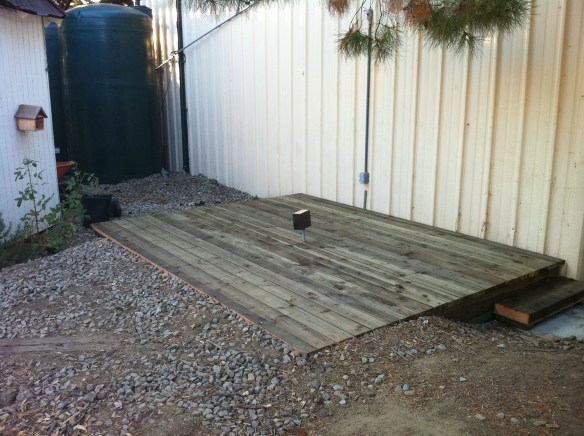
I mentioned that Whole Foods Foundation and Food Corps funded an outdoor food prep station in the garden.  To review, this is what the area looked like before:

IMG_4724

A deck was built to fit the space…

IMG_4894

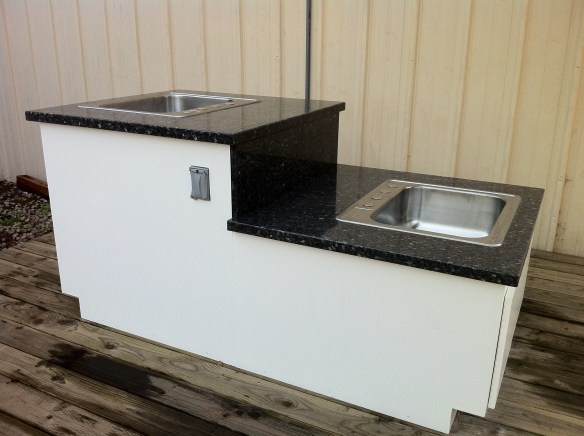
…and a split-level “food prep station” added!  (The two levels are for lower and upper grade-sized kids.)

IMG_5346

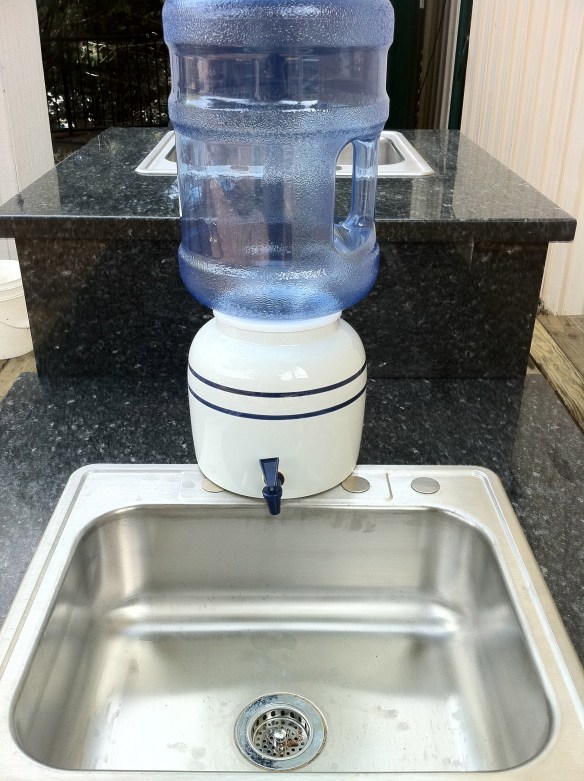
Stainless steel sinks can be used to wash produce with fresh water from dispensers.

IMG_5348

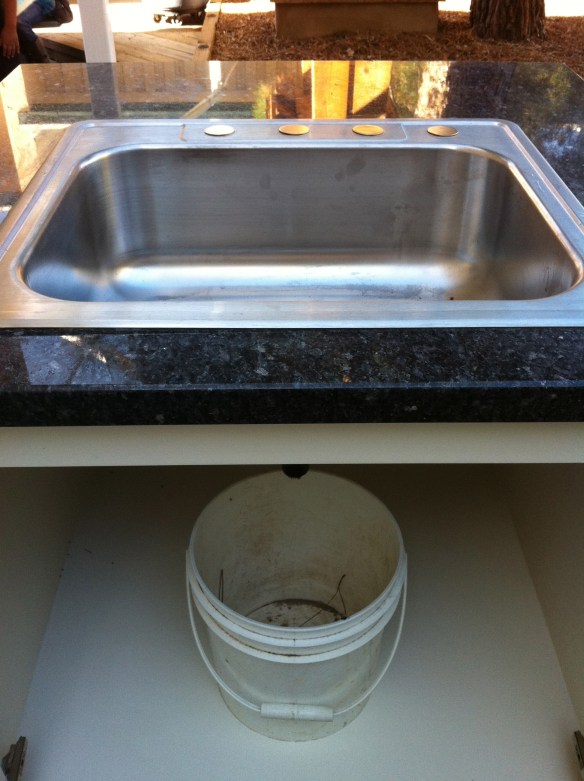
Buckets in cabinets below catch the water to reuse on plants.

IMG_5341

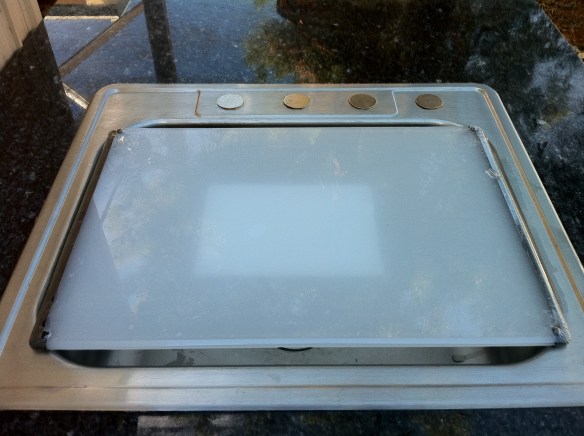
Sinks can be covered with cutting boards to increase work space.

IMG_5344

Both sides have electrical outlets for simple appliances, such as our pizza oven and wok.  We also purchased a solar over.  I’ve been keeping my eyes open at garage sales for other tools such as a salad spinner and a flat grill/panini press.

IMG_5284

The stage is set for great culinary and educational outcomes!

Xeriscape + Botantical Drawing

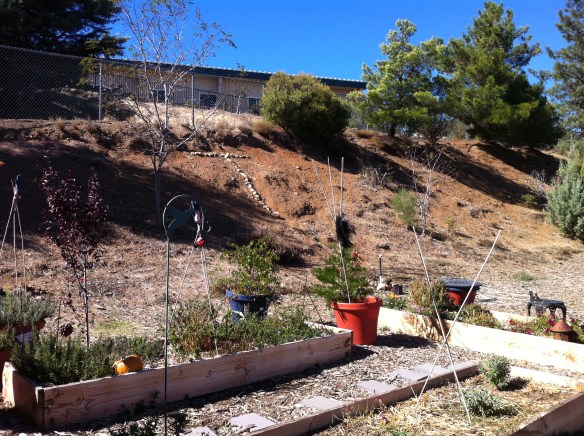
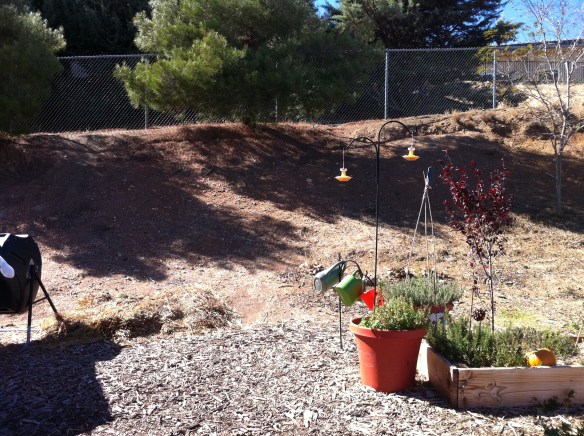
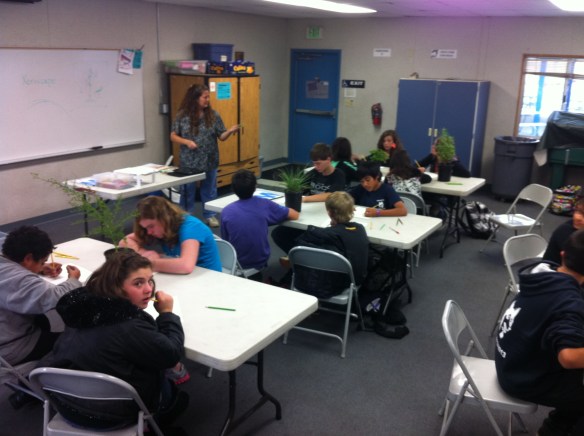
Our junior high has an enrichment afternoon called Tech Thursday, much like the elementary’s University of Wednesday.  Marisa and I just completed two sessions on xeriscape and botantical drawing.  First, I explained the principles of xeriscape (drought-tolerant landscaping) and talked about our plans to have students help us plant a “demonstration garden” on the slope edging the school garden.

IMG_5059

IMG_5060

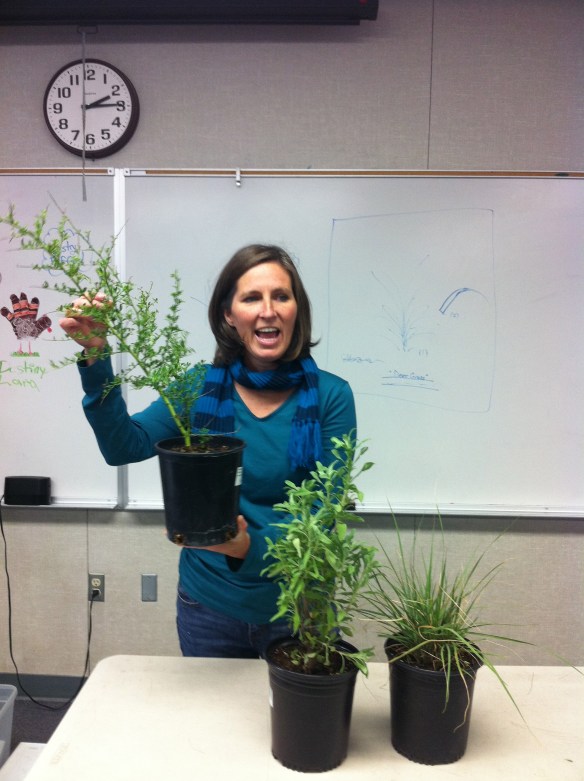
Then I introduced a handful of “rockstar” plants.  I gave a little natural history and botany for each.

IMG_5229

Mouthing off about ceanothus, deer grass and salvia

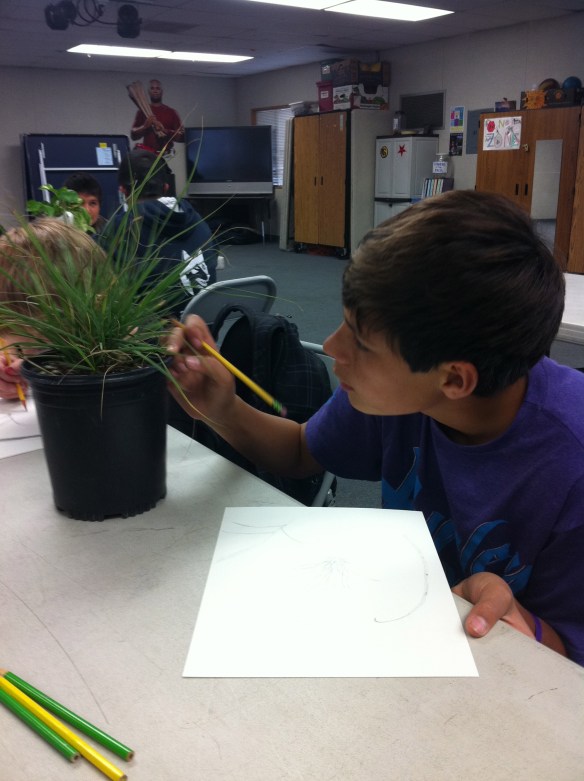
Then, to help students really look at the plants, Marisa took over and talked about the art of botanical drawing.

IMG_5217

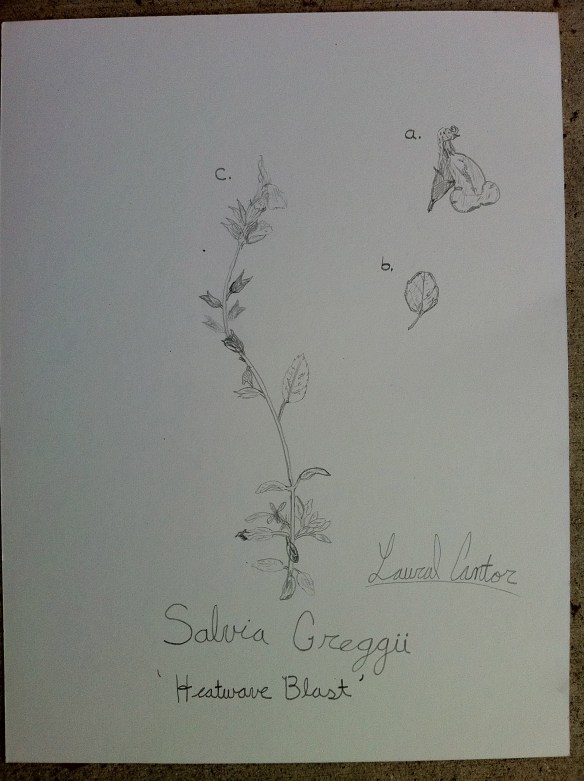
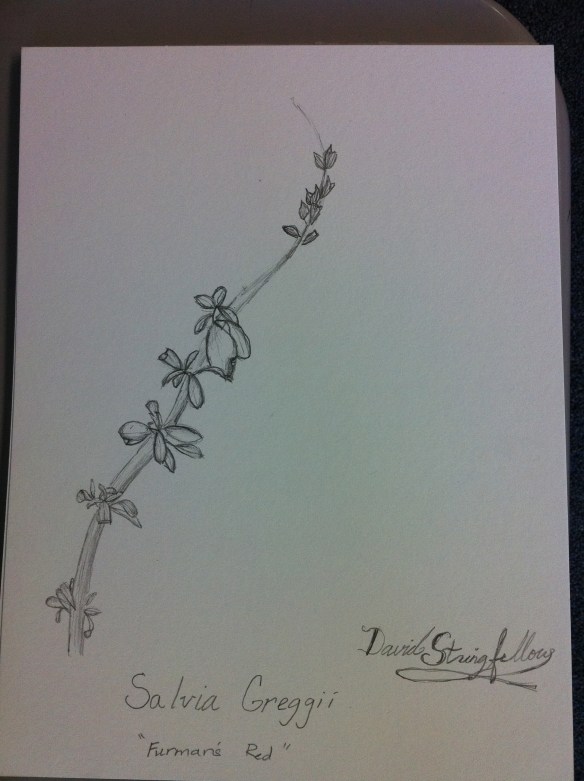
Students then began to sketch.  Our hope is that they learned a bit about this style of drawing.  We also hope that they have learned a few plant ID’s, having looked so carefully at the plants.

IMG_5216

002

Two particularly great examples:IMG_5324IMG_5299

Last step!  Kids in the after school Club Live program putting them in the ground…in the drizzle! photo

From Julian to the MOPA

True:  Four Julian students currently have photographs hanging in the Museum of Photographic Arts in Balboa Park.  This is a great story and my dear friend Ann recently wrote it up for the Julian Journal, and her account from the November edition is reprinted (with gratitude) below.

Julian Youth Exhibit Photographs at MOPA

Trustees and members of the Museum of Photographic Arts (MOPA) filled its atrium last month as guests of honor, four students from Julian Junior High, arrived for an artist’s reception to open “Photo/Synthesis,” the 7th Annual Youth Photography Exhibition.

Seventh-graders Taylor Cole, Trevor Denny, Ethan Elisara and Kaleigh Kaltenthaler enjoyed appetizers and music, and mingled with the public, sharing a love of photography nurtured by their involvement in “Kids with Cameras,” an afterschool enrichment program.  Some of the students had never been to MOPA before.  For others, opening was a new experience.  For all of them, it is the first time their artwork was on display in a venue that is nationally recognized for its contribution to the world of photography.

The theme of this year’s youth exhibition, environment and sustainability, is a subject right up the alley of these students who spent most of their time taking photos in the school garden and on Volcan Mountain.  The show was open to students from throughout San Diego County.  Applicants submitted original photos and an artist statement.  A panel of five experts in the field of photography reviewed about 300 entries to select 100 images for the show.  Jurors considered the quality of the image, how it fit into the theme and how well the student’s written words supported his or her photograph.

Deborah Klochko, executive director of MOPA, spoke at the reception saying, “We live in a visual world; how we see that is important.”

She encouraged guests to take a moment to talk with the artists, saying that their voice plays an important role.  Klochko considers photography to be the most important media of the 21st century.

While she says, “Creativity is important,” she also emphasized the importance of visual literacy.

She spoke of the volume of images in the world today, saying that until one understands the structure of an image—how it is made and how it can be manipulated—one can be controlled by the image instead of being in control.  This is why the museum embraces the philosophy of lifespan learning, with programs for children and adults.

“The museum is proud to showcase the work of the youth, which is exciting for the audience as well,” she says.

In the gallery, the photos are arranged by sub-topics within the theme.

Hung with a group of floral photos is Trevor Denny’s close-up of a bee on a flower petal.  Denny, who thinks “It’s pretty cool” to have his photo in a museum exhibition, never thought about how complex bees are until he examined one through the lense of this camera, focusing on details like the patterns in their wings and the hairs on their bodies.

For Ethan Elisara, who “feels really good” about having his artwork in the show, it was capturing the moment when a cattail stalk released its seeds into the air that caught the attention of the jurors.  Elisara’s photo, which hangs with a group of “not your typical nature images,” has a mysterious quality that engages viewers.

Just a few of the photos on display used portraiture as a way to approach the subject, and that’s where Taylor Cole’s dramatic image of a child’s shadow on the bark of a tree burned in the Cedar Fire is found.  Cole, who “felt like a V.I.P.” at the reception, juxtaposes in her photo the contrast of the tragedy of a natural disaster with the playfulness of a child.

In a group of photos that show mankind’s effect on the earth, Kaleigh Kaltenthaler’s artwork is the lone example of a positive way in which human beings have impacted the environment.  Kaltenthaler said she was “fired up” to be surrounded by all of the photos as she talked with people about her image of a grinding stone and mortar.

Klochko publically credited Jeff Holt with doing a great job with a talented group of students.

The show, beautifully organized by Lori Sokolowski, continues through January 27, 2013.

All students pose with instructor Jeff Holt

68 grants nationwide—and we got one!

USDA Awards First Grants to Increase Local Foods in Eligible Schools:  68 Projects Support Nearly 2 Million Students

WASHINGTON, Nov. 14, 2012 – Agriculture Deputy Secretary Kathleen Merrigan today announced more than $4.5 million in grants for 68 projects, spanning 37 states and the District of Columbia, to connect school cafeterias with local agricultural producers. 

“When schools buy food from nearby producers, their purchasing power helps create local jobs and economic benefits, particularly in rural agricultural communities,” Merrigan said. “Evidence also suggests that when kids understand more about where food comes from and how it is produced, they are more likely to make healthy eating choices.” 

The first-ever USDA Farm to School grants will help schools respond to the growing demand for locally sourced foods and increase market opportunities for producers and food businesses, including food processors, manufacturers, distributors. Grants will also be used to support agriculture and nutrition education efforts such as school gardens, field trips to local farms, and cooking classes. 

We heard last Friday that our district received one of these coveted grants in what we’re told was a very competitive grant cycle. (Thank you Susi!)  This means, among other things, that I will be the Farm to School Grant Coordinator for the next year, starting December 1st.  And you can be sure I’ll be sharing all that I learn here (and there, and everywhere).  Here’s what I’ve learned so far:  it’s very exciting to get a cutting edge federal grant in your little country school district.

Here’s hoping the trend becomes the future

School and community gardens are exploding.  I hope that it’s not just a good trend, but a move toward the new normal.

There is so much to learn from others’ efforts, and I love to get out and see what’s happening other places.

Last week I took my kids to the Great Park in Irvine where they have an impressive demonstration garden called the Farm + Food Lab.  Wow!  Also, my sister is involved with her girls’ wonderful school garden in San Jose.  I posted pictures of cool ideas from both places under the Children’s Garden Ideas tab in the black menu above.  There are also pictures of “best practices” from school gardens across the state from last year’s road trip.  Please visit! And if you have a photograph of an outstanding idea, feel free to e-mail it to me and I’ll include it in the library.  Thanks!

Mint, mum, mulch…

Garden educators know that it is challenging to work with a full class in the garden.  Most garden tasks just don’t lend themselves to 25 (or more) kids.  As such, I am experimenting with creating “discovery-based” activities that spread the kids out independently, with the teacher giving content and instruction up front and then acting as a resource to the kids as they complete the task.  Yesterday’s lesson confirmed to me that this is a good way to go, with dozens of opportunities to teach words and concepts one on one.

I enjoyed the alphabet scavenger hunt with first grade so much that I decided to adapt it to fourth grade.  To begin, students gathered at the table.  I told them that the day’s lesson was paying attention when we’re in the garden, for two reasons. One, there is always something going, and you’ll miss it if you’re checked out.  Two, Mrs. Elisara is sneaky.

I then gave a ten minute talk on what’s current in the garden.  As I spoke, I referenced a list of vocabulary words on the white board behind me: cool season vegetables, annuals, perennials, solar fountain, photovoltaic cell, etc.  At the end we repeated all the words together.  Then I erased them.

I explained that there were 26 clipboards with crayons placed around the perimeter of the garden in alphabetical order, clock-wise.  Students could go up to any clipboard and write down a word they “saw, heard or felt” in the garden.  If the word was already on the sheet, they couldn’t repeat it.  The clipboard had to be put back in the same place.  It was perfectly OK to ask an adult for the names of things.  (We had four volunteers on hand to teach vocabulary to every child who really paid attention to this rule!)  Every word used the first time was one worth one point. Every time a child had to be asked not to run—minus one point.  Every word that was on the board that I talked about earlier:  worth three points!  (Sneaky!)

Points would be awarded for creative words but not silly ones, and the top five point-earners would be invited to have lunch in the garden the following day with me, with a special garden treat (zucchini bread).

Read the “M” list, with special attention on the last word!

Sculpture from the water’s edge

A solar fountain—on the wish list from the beginning of the project and now a charming, bubbling reality in the garden.

I’ve mentioned that I am now part of a network of Master Gardeners in San Diego County (I’ve written about it here and here.)  We have a listserv on which I posted a question about solar fountains.  The garden club decided to buy one, and I was looking for recommendations to help me sort through all of the on-line options.  Running water in the garden is one of the few things we don’t have, and I knew kids would love seeing it pumped by the sun.  I figured—not everything in the garden has to be unique—a nice, standard, store-bought fountain will be just fine.  But then….

My classmate, Deirdre Allen, wrote to me to let me know she was currently making fountains.  We had been seat mates during a MG fieldtrip, and I remembered seeing iphone photos of the beautiful pottery she does at home. A great price, a few e-mailed pictures, and next thing you know, she’s in Julian installing a gorgeous handcrafted piece.

(Meanwhile) the 2012 Master Gardener class has been self-organizing trips to see each other’s gardens.  On Monday I had the pleasure of hosting my classmates at the school garden, including Deirdre, and I cloaked the fountain so that we could officially welcome it to its new garden home.

Thank you Stan Miller for all of the photos above!

Isn’t it beautiful?  It’s nestled next to our dry riverbed, to which it lends the lovely spilling sound of water.  The river stones in the basin and the tree stump make it look as though it was always meant to be in that exact spot.  Deirdre’s business is called “Sculpture from the Water’s Edge” (she lives in a San Diego beach city), and you can call her with questions and/or orders at 713-857-5637.

Destination farm stand

Last week Kids with Cameras took a field trip to a farm stand run by a Julian family dedicated to sourcing food as locally as possible.  First our guest instructor, Bill Bevill, worked with the students on sharp focus and filling the frame, and then we drove five minutes down the road to Wynola Flats Produce.  Stacey Peyakov was a wonderful host, allowing kids to roam through the store as well as the orchard, snapping away. The indoor/outdoor space allowed for experimenting with lighting, and the produce gave us a chance to capture colors, textures, and patterns.  One of the goals of both the KWC program and the garden is to develop in kids a “sense of place”—what makes living in Julian unique and wonderful?  To do that you have to get out and look around, and what better way to do that than with a camera in hand?

Photo courtesy of Jeff Holt

The whole story in 8 minutes

Recently I made this imovie about the entire garden project for a grant proposal.  I think it tells the story quite succinctly, and I hope you’ll enjoy it!  (By the way, it has been a HUGE week in the garden with lots of great stories to tell but I’ll have to wait to recover from it all to tell them.  Good stuff coming!)