Unknown's avatar

About kidsingardens

Interested in everything that can happen in children's garden

Do a small job, be our hero

You know how a single job can be quick work for one person, and a seemingly massive task for another?  I’ve thought about this a lot, in my quest to get everything done in the school garden that needs getting done.  And I’ve come up with this idea: compiling a list of small jobs in the garden and putting it out to our community at large to see if we can get any takers.  The idea is that if you want to help our school garden, you don’t necessarily need to join the Garden Club or commit to a big, ongoing project.  Just look over our list of “small jobs” and see which ones might be easy and fun for you to do. We’ll quickly reimburse you for any expenses.  Come do one job and be our hero for the day!

Take our wheelbarrow.  It needs fixed, and for me to do it, I’d spend an inordinate amount of time assessing it, researching what bolts and nuts and braces it would need, and then shopping for the right things, and finally locating all of the necessary tools. (Sad, but true.) Yet for the right person with the right tools…this would be a relatively quick task.

My church has expressed interest in helping with the garden, and so I published a list of jobs in a newsletter, and Hans (who also happens to be my next door neighbor) was the first to say he’d help out.  In no time at all, he got our wheelbarrow operational and repaired a fruit tree sign as a bonus!  I was so grateful to cross this task off my list, thanks to Hans’ willingness to serve!  It’s a good example of a community member investing in kids and public schools, even though his own children have long since graduated.  Thanks neighbor!

Creating wildlife habitat on the school campus

Did you know you can register your backyard as a “certified wildlife habitat” through the National Wildlife Foundation?  Or your schoolyard?  If you have the four elements of habitat, and can show that you garden in an environmentally friendly way, you can earn this distinction.  You can then display a NWF sign, which can help educate others about the elements of habitat that people can provide for wildlife in our own backyards (no matter how small) and school grounds.

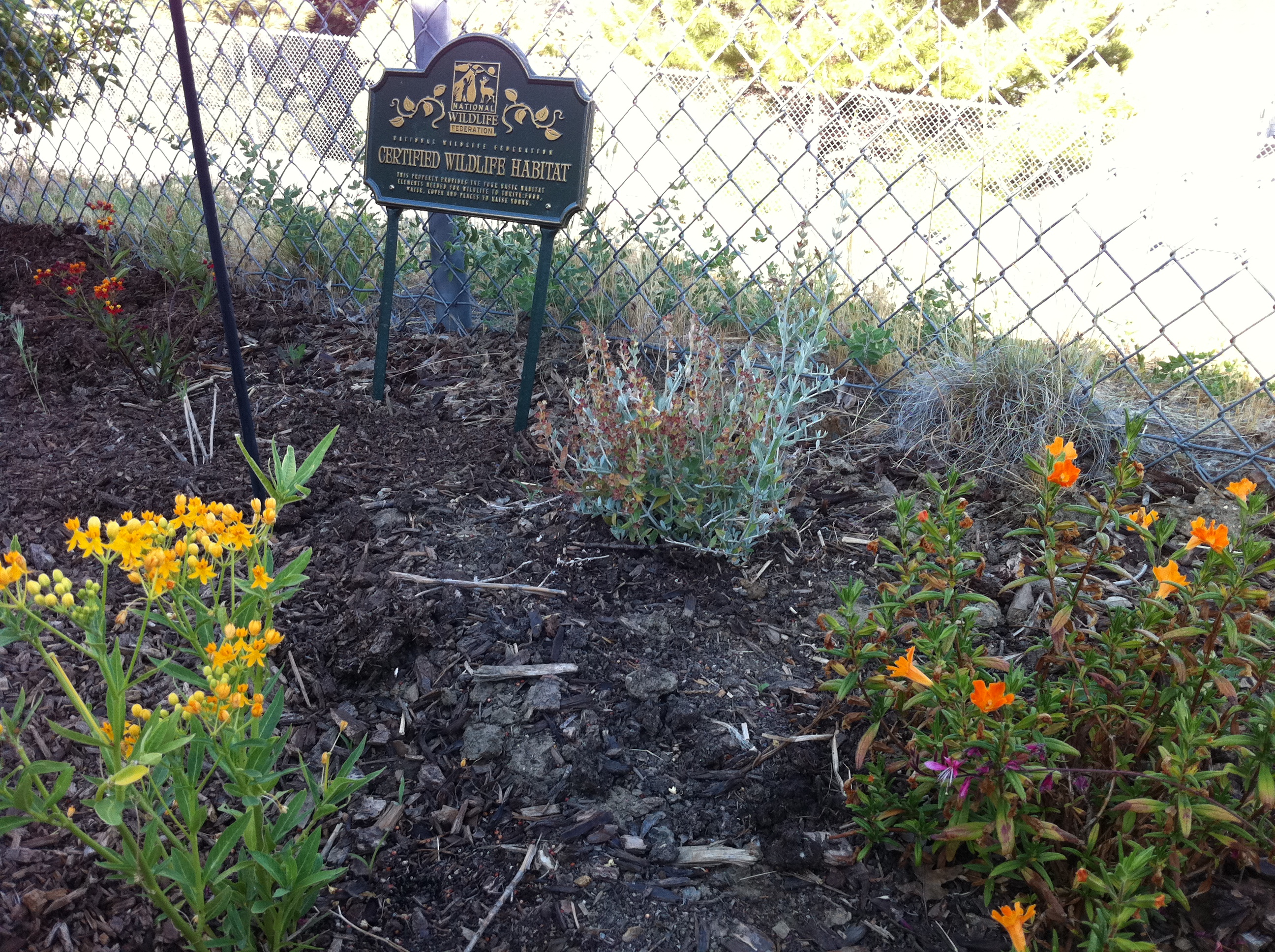
Our school garden has met these requirements (both in a butterfly/hummingbird habitat bed and also throughout the larger garden), and we recently did the paperwork and received our sign.  After the photos below, read more about the habitat elements and go here for more information.

We got the fancy yard sign, so the total cost with registration was $119

Asclepsias (host for larval monarch butterfly), monkey flower and germander to attract hummingbirds

All habitats need a water source, even as simple as a bird bath. Rocks placed inside give birds a place to perch. Our water evaporates quickly, but if yours doesn’t, be sure to empty every few days for good mosquito control. Also pictured are lavender and buddleia (butterfly bush)

Even a pile of rocks can be a habitat element for lizards

Extra feeders and a birdhouse

 From the National Wildlife Foundation website:
bee on coneflower

Provide Food for Wildlife

Everyone needs to eat! Planting native forbs, shrubs and trees is the easiest way to provide the foliage, nectar, pollen, berries, seeds and nuts that many species of wildlife require to survive and thrive. You can also incorporate supplemental feeders and food sources.

bird drinking water

Supply Water for Wildlife

Wildlife need clean water sources for many purposes, including drinking, bathing and reproduction. Water sources may include natural features such as ponds, lakes, rivers, springs, oceans and wetlands; or human-made features such as bird baths, puddling areas for butterflies, installed ponds or rain gardens.

rabbit

Create Cover for Wildlife

Wildlife require places to hide in order to feel safe from people, predators and inclement weather. Use things like native vegetation, shrubs, thickets and brush piles or even dead trees.

blue bird at nesting box

Give Wildlife a Place to Raise Their Young

Wildlife need a sheltered place to raise their offspring. Many places for cover can double as locations where wildlife can raise young, from wildflower meadows and bushes where many butterflies and moths lay their eggs, or caves where bats roost and form colonies.

And finally….

What sustainable gardening practices do I need to certify?

You should be doing two things to help manage your habitat in a sustainable way.
Soil and Water Conservation: Riparian Buffer • Capture Rain Water from Roof • Xeriscape (water-wise landscaping) • Drip or Soaker Hose for Irrigation • Limit Water Use • Reduce Erosion (i.e. ground cover, terraces) • Use Mulch • Rain Garden
Controlling Exotic Species: Practice Integrated Pest Management • Remove Non-Native Plants and Animals • Use Native Plants • Reduce Lawn Areas
Organic Practices: Eliminate Chemical Pesticides • Eliminate Chemical Fertilizers • Compost

Gardening: so complicated, so easy

Two weeks ago the topic in Master Gardeners was temperate fruit trees.  As we reviewed all of the things that can negatively affect fruit set, I had this overwhelming thought:

How does anything grow at all when there are so many things that can go wrong?

Really, a gardener could get freaked out looking into all of the variables that allow a healthy plant to grow.  Consider the odds against fruiting—abscission of bud and flowers, weather, competition, disease, insect pests, shade, improper pruning…..

But then this is also true:  you can buy a tomato plant, put it in soil, water it regularly and you will probably get a tomato.  And you will most likely be blind to all of the things that conspired together to make things go right.

I find that a lot of gardening—life itself?—is about holding these two things in tension.

1)  It’s complicated.  Lots of things can go wrong, and lots of things can go right.  As we meet hard stuff with courage and persistence and faith, we ought to meet the good stuff with some deep gratitude. I will truly never look at fruits and vegetables the same way again because everything I have learned has taught me that they are nothing short of miracles.

2) It’s simple.  I think it’s important to slow down and demystify things so that we don’t get overwhelmed and paralyzed by them—things like gardening and scratch cooking and raising children and car maintenance.  We ought not to overcomplicate things.  We try, learn, experiment, fail, succeed, and ultimately, make progress.  At the end of the day, we’ll probably have grown something good.

Exhibit A: a wisteria vine growing up our pergola:

And here’s the wisteria vine we planted six feet away, same soil, same orientation, same watering and care.

Yep, nothing there.  It died, and I have no idea why. See? Complicated.

But then there’s this: artichokes.

Photo courtesy of Marisa McFedries

Photo courtesy of Marisa McFedries


Kids with Cameras 2.0

On Wednesday evening we wrapped Kids with Cameras 2.0 (an afterschool photography program I’ve written about here and here.)  Program partners (Garden Club, Volcan Mountain Foundation, Club Live and volunteer instructors) held a reception at the public library with brief remarks, a celebratory presentation of some of the kids’ best shots, and delicious refreshments. The collection will remain on display for the next couple weeks at the Julian Library, and photo gift cards are on sale at the front office of the elementary school.

The photos we chose for the show represent all of the topics we covered (sports photography, composition, environmental portraiture, using manual settings, etc.) as well as fieldtrips (shooting in the school garden, at our historic cemetery and on Volcan Mountain.)

Representing Volcan Mountain and the volunteer photographers/instructors, Jeff Holt did a brilliant job of sneaking an art lesson into the remarks as he went over why we chose each photograph.  Each kid was individually affirmed, and it was totally cool.

Below: a few of the students whose “show” picture happened to be taken during the school garden session.  (Glares are from the room lighting and not in the original photographs.)

And of course, it was beautifully, extravagantly catered by my dear Rita.

Thank you to Bill Benson, Bill Bevill, Anne Garcia, Dana Pettersen, Jeff Holt and David Pierce for making Kids with Cameras a simply outstanding program.  3.0—-here we come!

Spring Garden Market

Twice a year we hold a “Garden Market” on Julian’s Main Street to raise money for the garden.  Here are highlights from this Spring’s effort.

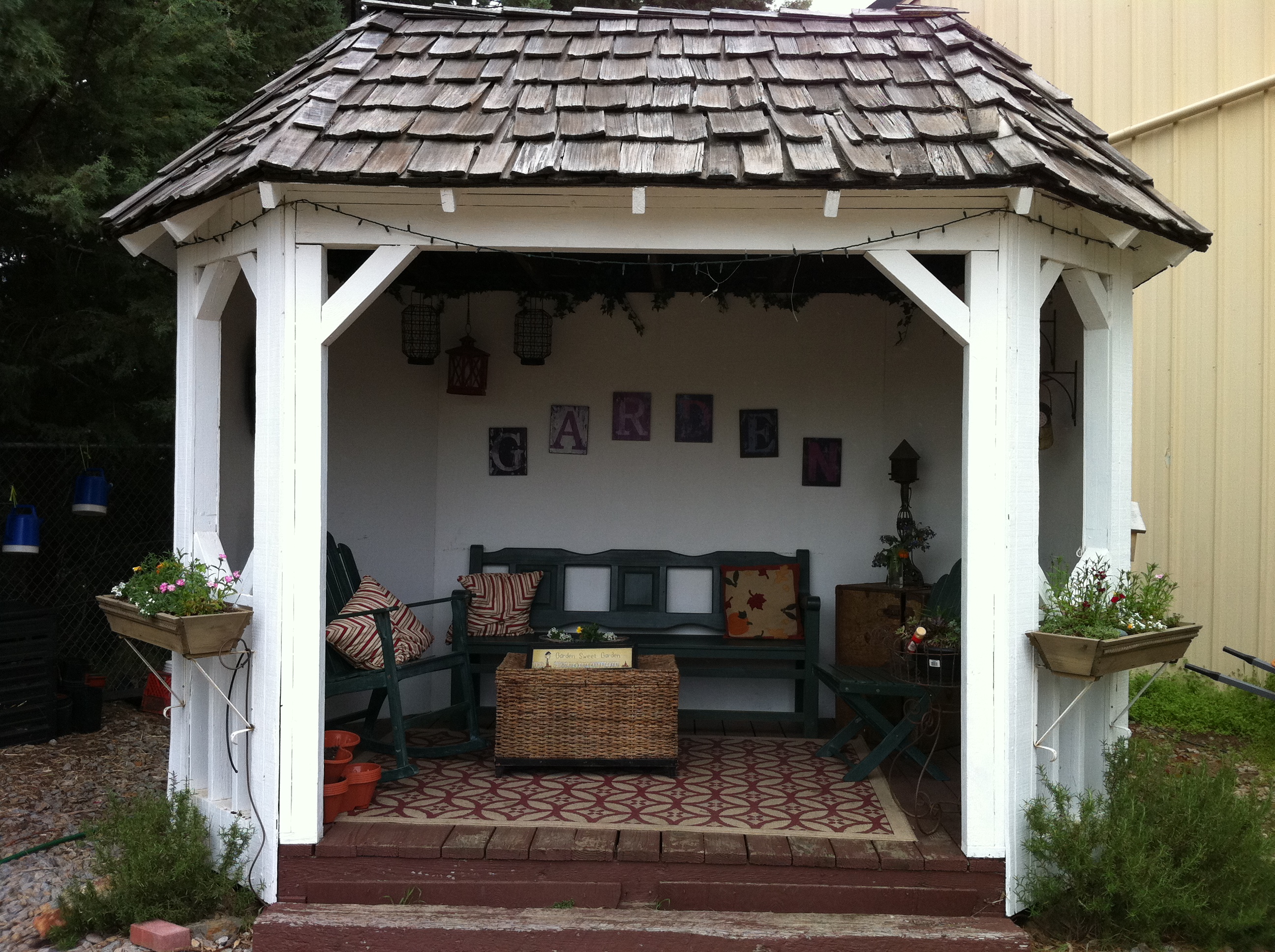
Our multi-purpose gazebo

It has been in the background of many posts, but now I’m putting it front and center.  Our gazebo! Renovated by Garden Club members, this old, battered, brown storage unit became a delightful focal point and meeting place. For decades the structure had been sitting there, nearly invisible, until fresh eyes reimagined it.

How is our dear gazebo used?  Let me count the ways.  The gazebo is where…

  • students eat lunch
  • families hang out after school while siblings do extracurricular activities
  • reading buddies sit together to pore over books
  • counselors meet with students
  • staff hold meetings
  • parents snack on garden treats at Open House
  • events are held such as our annual tea party for Administrative Professionals Day
  • Garden Club members survey the work of the last three years!

12-year old, on rainwater harvesting

For the “Be Smart Water Conservation Essay/Art Contest” sponsored by the San Diego County Water Authority, Ethan won first place in the sixth grade category. Here he is talking with the Education Outreach Coordinator, Celeste Pack.

Thumbs up for hands-on learning

We’re always talking about how good experiential education is for kids.  Hands-on instruction just seems to deliver content in a way that kids learn.  Or perhaps…all people learn?   In my master gardener training, we have five hours of class a week.  The mornings are excellent lectures, and the afternoons are often workshops/labs.  I have loved the experiential piece, reaffirming the vast possibilities for garden-based education.  Here are some snapshots of the experiential component of the Master Gardener program in San Diego:

This slideshow requires JavaScript.

Scary statistics/hopeful trends

At our backcountry collaborative meeting this week, a guest speaker from the San Diego County Office of Education talked about the growing national obesity epidemic.  Consider these frightening statistics she mentioned:

-A child born today in the U.S. is likely to have a shorter lifespan than his/her parents.

-40% of children in San Diego County are considered overweight or clincally obese.

-The Department of Defense has called the obesity epidemic an issue of national security because 75% of young people otherwise eligible for service in the armed forces cannot pass the fitness test.

The good news is that we are starting to see an increased emphasis on physical education, outdoor exposure, and healthy eating habits in school programs, community initiatives and funding opportunities.  Similarly, increasing attention is also being placed on connecting school children to local, fresh food, often through school garden programs.  One thing I hope to do more with kids at our school is to help them understand where and how food is grown in our community, starting with our neighborhood farms and reaching out into the county.

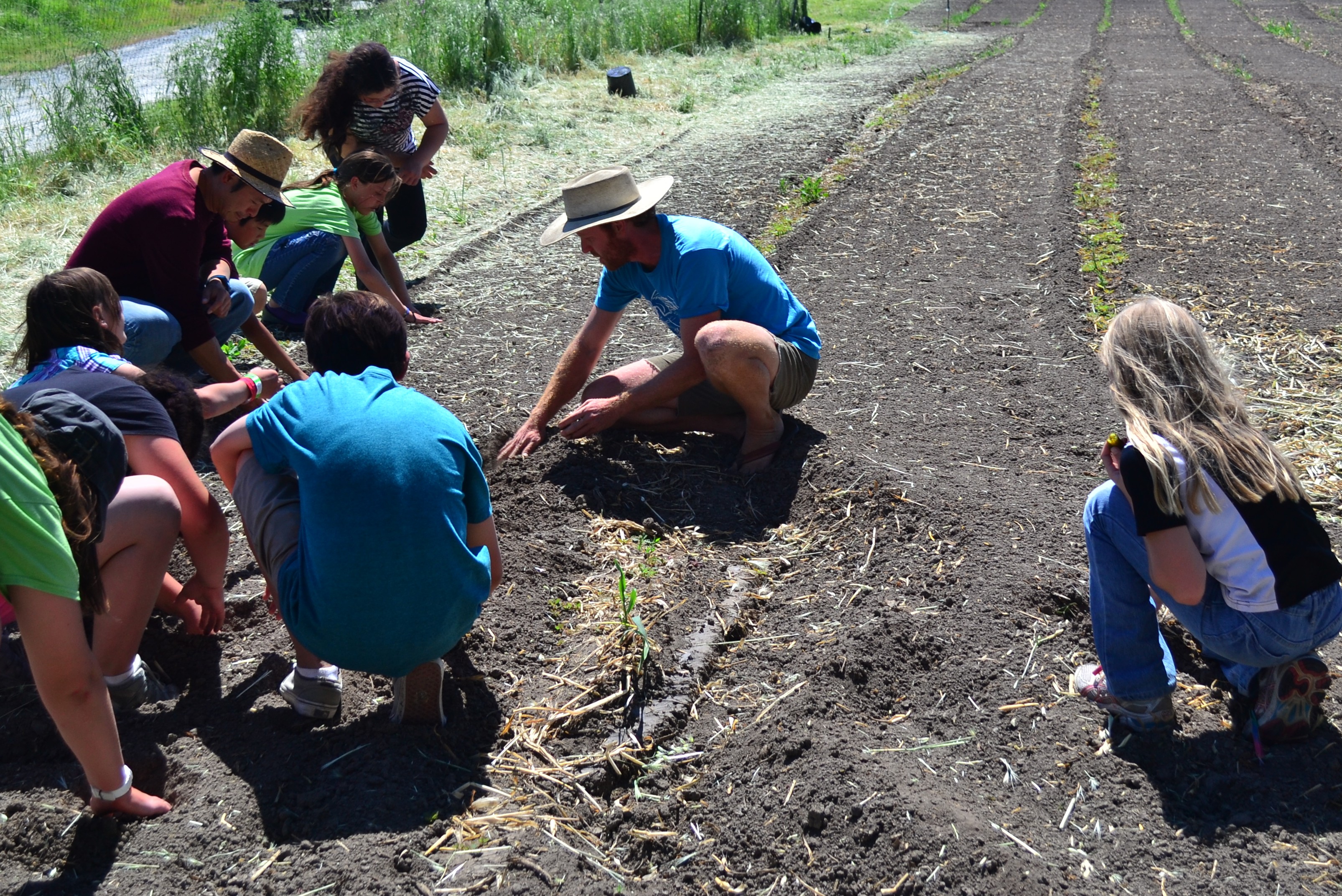
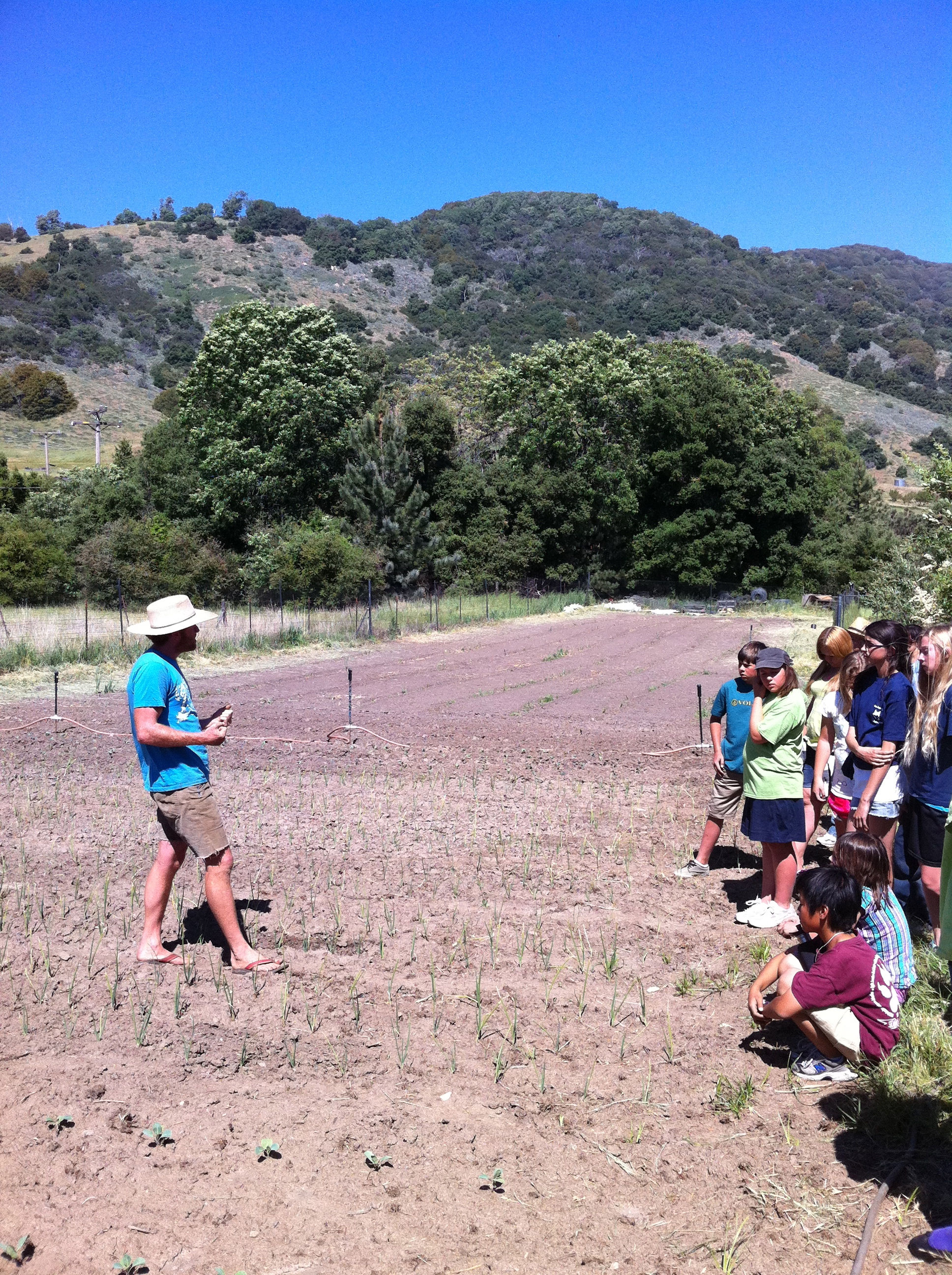
Yesterday I led an after school field trip for the GATE students to Volcan View Farms where we were given a tour by local farmer and early-friend-to-our-school-garden, Ryan Wannamaker.

Ryan showing how he “grows” soil—the rye grass and bell beens grown in this field as a cover crop and plowed under six weeks ago now make for rich and rejuvenated soil for this year’s plantings (Photo courtesy of Marisa McFedries)

Up close with what’s growing now in Julian (Photo courtesy of Marisa McFedries)

Talking about 3,000 onion transplants in the shadow of Mount Volcan


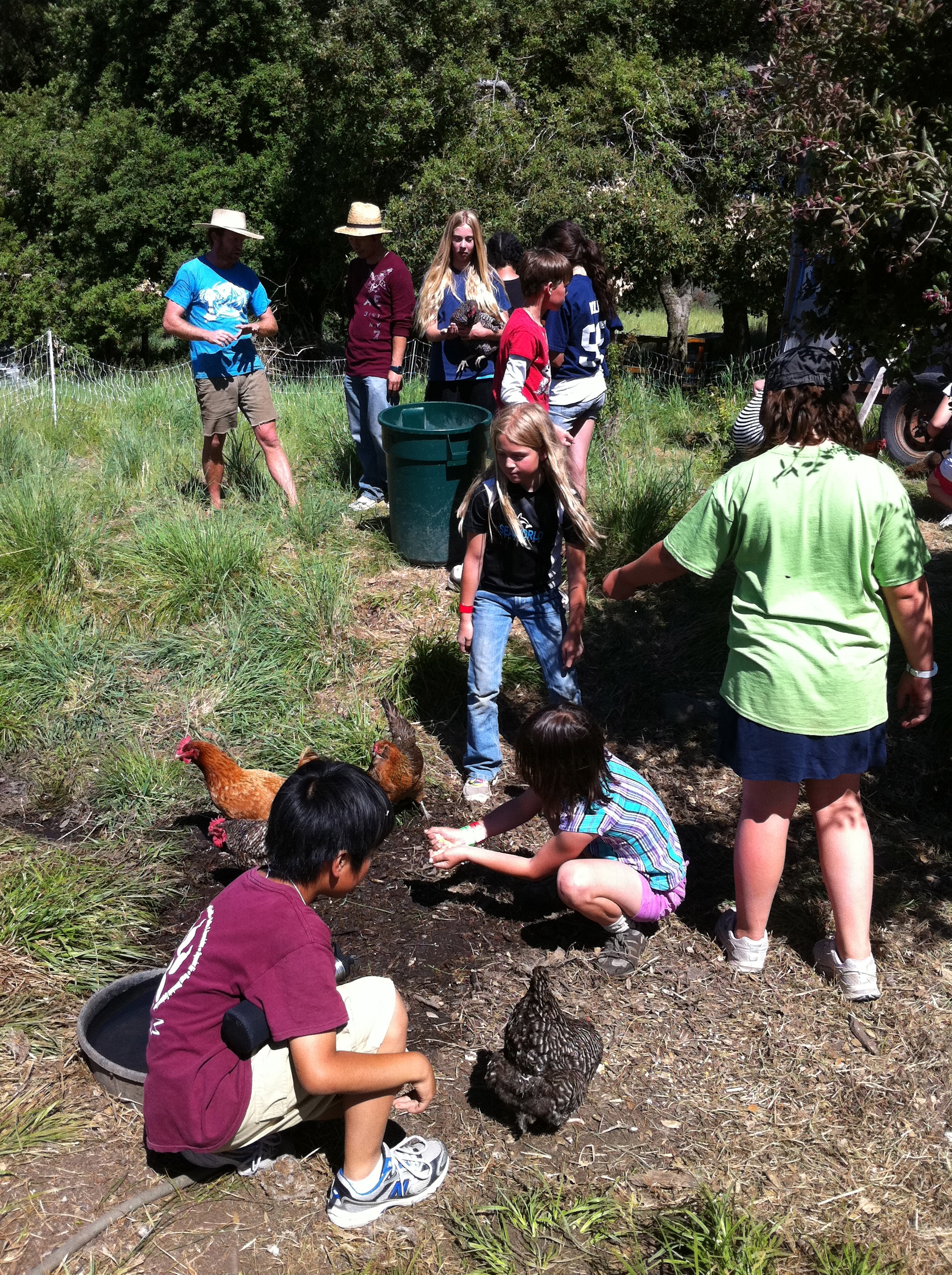
Hanging with the chickens

Gardens as places to recharge

The goal of this blog is to tease out all of the good things that school gardens can do.  Some things are obvious: kids learn good nutrition when they plant, tend and harvest their own food.  But other things are more subtle, and I like to point out these less obvious values.  A benefit of school gardens that I have never heard explicitly talked about before is described below by Susi Jones, the executive director of our family resource center.  A beautiful campus gardens is a place where staff can recharge.  Susi writes:

It may seem curious to see a school staff member wandering in the Character Garden in the middle of the day, but not when you think of gardens as an antidote to the day’s chaos!

Our beautiful school garden- with its native strawberries, gazing ball, dry rock river bed, and flowering orchard- was a calming retreat for me on a particularly busy morning. My feet took me to the garden before I really had determined where I was headed.  After just a few minutes of wandering in the garden by myself, enjoying the quiet and peaceful surroundings and collecting my thoughts, I was ready to head back and meet the next challenge.

I know that school gardens enrich curriculum and are healthy for children… and now I know that our school garden is where I will head the next time I want a few moments to relax, refocus, and reenergize.