2 garden ideas: one harvested, one homegrown

HARVESTED from That Bloomin’ Garden.  Visit her wonderful blog for all of the actual how-to instructions!  My Garden Ambassador loved painting this gameboard on a tree stump during lunch time.  We are looking around for playing pieces—until then, pebbles vs. leaves!

IMG_6628

IMG_6630

Outdoors checkers or chess, anyone?

IMG_6643

HOMEGROWN, at our school in the Friendship Garden cared for by the special education students.  I am in love with the idea of repurposing school infrastrucutre in the garden.  I have a picture of an old-fashioned jungle-gym-climbing-tower being used as a trellis here, and a photo of a filmstrip cart from the 70’s now serving as a taste test cart here.

This year we received brand new salad bars from the Let’s Move Campaign.  One day on my way to the garden I spied the old salad bar, awaiting its doom by the maintenance shed.  So I asked the custodian to move it to the Friendship Garden, and the teachers/kids planted it out.  (Note: sneezeguard removed.)

IMG_6815

One of the teachers told me that the kids love it, especially because they can get up really close to the plants to observe, water and harvest. (That strawberry looks ready!)

IMG_6820

Farm to School and gardening in San Diego

I should have just pitched a tent at the San Diego County operations center last week because I was there for two different events, three days in a row.  Both make me glad I live in San Diego County where good things are happening in the farm/gardening world.

The first:  Let’s Go Local! Showcase.  This was a “meet and greet” between school district food service staff and local farms and distributors.  As I’ve discussed before, creating a Farm to School program is challenging because there are so many disconnected pieces to connect.  This innovative, model event sought to make the process easier by bringing the two sides of the conversation together—buyers and sellers in the transaction over school food.  Or as the Union Tribute* put it:

San Diego County has more than 6,000 small farms, including one-third that cultivate produce. But with no single broker between the growers and schools, the first step can be a logistical maze for districts.  The San Diego County Farm to School Taskforce, a subcommittee of the Childhood Obesity Initiative, helped bridge that gap on Thursday with a showcase at the county operations center in Kearny Mesa.  Representatives from about 30 school districts met with distributors and growers who set up booths that overflowed with produce in a farmers market-like setting on an upstairs patio.

IMG_6681

IMG_6674

IMG_6677

Then on Saturday, I was a plant schlepper for the San Diego Master Gardeners Spring Seminar.  This is a full-day of workshops, lectures, cooking lessons (there was a singing chef!) and a marketplace of plants, gardening tools and garden art.  It was incredible, and I was proud to be a small part of it as an MG.

IMG_6715

IMG_6703

IMG_6711

IMG_6700

Master Gardeners are known for their birdhouse gourds

IMG_6695

Master Gardeners also has a committee that makes birdhouses from recycled bits and pieces that they sell at events

IMG_6710

Official t-shirt? Check. Name badge? Check. Broad-brimmed gardening hat? Check.

Union Tribune article

Harvest of the month: peas

Next year I will be leading the effort to introduce a Harvest of the Month program at our school.  To get it started, we’re doing a pilot this month.

The backbone of this program is a set of excellent resources provided by a Network for a Healthy California (http://www.harvestofthemonth.cdph.ca.gov).  For each fruit or vegetable, they provide an educator guide, a parent newsletter, a community handout and a menu template on which you can print your school lunch calendar.

I attended the all-district staff meeting at the beginning of the month to introduce the program and pass out information to the teachers.  These multi-page guides have lots of information about the selected fruit or vegetable: nutrition, history, botany, recipes, science, literature links, etc.

IMG_6747

During a University of Wednesday class, the children rotated to three stations related to peas. Here’s a craft template I created for an indoor station. (It was windy that day!)

IMG_6642

Tip: Michaels has a single pack of cardstock greens in all different shades.

IMG_6652

At another station, the students did a set of drawings of peas, which were planted in succession so that they could observe them at different stages of growth—also, to stretch out the harvest.

IMG_6654

IMG_6729

At my station we sampled sweet pea hummus, and we talked about all of the ingredients.  We also did a fennel taste test because I had some to use from our donated produce box.

I’m going to teach more pea-themed lessons this month so I’ve been checking out every children’s book I can find with the word”pea” in the title and creating a working annotated bibliography.  I’d love to find a grant to eventually purchase every title on the list.

IMG_6782

We also made some decorations for the garden to announce the monthly harvest.  Here our 8th grade PLUS leadership kids are finishing up a banner started by the fourth grade.

IMG_6632

This is a banner I had printed locally.

IMG_6776

And finally, a taste test!  Snap peas were in our Be Wise Box this week, and I supplemented them with 2 lbs. from the Warner Springs Farmers Market I visited last night.  An ambassador took data (“”Do you like it?”), and once again, the peas have it!

IMG_6763

IMG_6760

Big ideas, big events in our small town

If you are a Julian/San Diego local, consider yourself invited to the following events that relate to gardening, Farm to School and environmental activism/awareness.   If you’re not, consider this a window on some of the super cool stuff coming up in the next four weeks in our little town.

Wild and Scenic Film Festival

For the last eleven years the Wild and Scenic Film Festival has kicked off in its home, Nevada City.  After that, it travels.  Local committees organize to bring the films to their city, and Julian is lucky enough to have a group of visionary folks (read Nancy, Brian and Terry!) and a supporting organization (Volcan Mountain Foundation) who successfully brought it to Julian last year and are bringing it back again this year, bigger and better.  From Friday to Sunday (May 17-19), our little town will show 44 films about the planet—from gorgeous nature films to inspiring environmental activist stories to thrilling adventure documentaries.  Along with the films, there are hikes, naturalist-led children’s activites, food, receptions, chats with the filmmakers, and more.  I can’t wait!  This year, the committee has also arranged for films, all featuring children and the environment, to be shown at assemblies at the elementary schools and junior high the week before the festival. (See list of kid-related films below.)  And during the festival itself, Cafeteria Man will be shown and the director will be present to discuss the project.  (Remember, we got a chance to talk with Cafeteria Man—a charismatic chef who revolutionized Baltimore’s public school lunch program— at our recent USDA conference.) To top it off, the event benefits the Volcan Mountain Foundation which I’ve written about here.

Learn more about the festival, buy on-line tickets and/or drool at the general awesomeness of this event at:  www.julianfilmfestival.com

Julian Garden Tour

As a fundraiser for Julian’s Farm to School program, the Julian Garden Tour will be presented on Saturday, June 1st from 10:00-4:00.  Presented by the Julian Triangle Club and supported by the Julian Educational Foundation, this self-guided tour will feature seven gardens with their resident gardeners on hand to chat with visitors.  The gardens will range from an ambitious permaculture project in Pine Hills to an integrated waterwise residential landscape in Kentwood to our own charming school garden.  A $20 ticket buys a map to all locations and can be purchased at the elementary school or Julian Town Hall.  Seedlings donated by Heather Rowell and Julian-specific gardening handbooks, compiled by Sally Snipes, will be available for sale. (Many, many thanks to Sunday Dutro—the dynamo behind this incredible effort.)  More info? Check out the Julian Garden Tour Facebook page.

Family Fun and Fit Day

This Farm to School fieldtrip is the first in a series which will help Julian families explore our local food economy.  We will be visiting Cook Pigs Ranch, a family-owned farm that specializes in sustainably raised heritage pigs. To learn more about their passion for happy animals and good food, please visit: http://www.cookpigs.com  (This is just for Julian families—please r.s.v.p. to me directly if you’d like to come along.)

All together now:   Goooooooooo Julian!

SAMPLE FESTIVAL FILMS

Young Voices for the Planet, Citizen Scientist

13-year-old Anya, an indigenous Siberian girl, sees her world literally melting away. She joins Arctic scientist Max Holmes’ research team, learns about her ecosystem and shares what she learns with her schoolmates. (4min)

Young Voices for the Planet, Olivia’s Birds and the Oil Spill
Olivia loves her New York forest and the Louisiana gulf coast where her grandparents live. When the BP Oil Spill devastates the coast, Olivia creates 500 paintings of her feathered friends to raise funds for Audubon’s bird rescue. (7min)
 
Watermelon Magic
Richard Power Hoffmann

International audiences will delight in this nearly wordless burst of color and music that draws inspiration from film classic “The Red Balloon”.  Weaving together documentary and narrative elements, “Watermelon Magic” chronicles a season on the family farm, as young Sylvie grows a patch of watermelons to sell at market.  The film employs a dynamic visual style that uses high-resolution stills at varying shutter-burst frame rates with stunning time-lapse sequences to trace the journey from seed to flower to fruit. When harvest time arrives, Sylvie must decide if she will share her precious watermelon babies with the world. www.springgardenpictures.org (USA, 2013, 38min)
 
How The Kids Saved The Parks
Andy Miller, Robin Moore
 
You know those movies where the kids get together and do something awesome? When they unite to overcome insurmountable odds? Maybe win the championship from the favored bad guys. Maybe embark on an epic quest to stop the grown ups from doing something stupid. This is one of those movies, except this one really happened. This is the story of a group of great kids that worked day and night to save the California State Parks that they love – this is ‘How The Kids Saved The Parks’. www.plusmproductions.com  (USA, 2012)

Kindergarteners + math + garden

One of my favorite things about the school garden is discovering ways it is being used by teachers, staff and families.  A few weeks back, a mom was out at the table, orchestrating a birthday celebration for her son.  Earlier in the day, the kindergarten class was looking for patterns.  What a great lesson, Mrs. White!  She wrote to me later:

So…we had an amazing day in the garden! It really helped our math work to “come alive!” 
DSC00742
DSC00741

Photo courtesy of Mrs. White

DSC00753

Photo courtesy of Mrs. White

Why do we forget food can be simple?

And by we I mean me.  Do you forget this too? I sometimes think a meal or a packed lunch has to be more involved than it needs to be, when simple foods are often whole/raw/minimally prepared and really the best for you.

A compelling example follows.

A couple weeks ago I picked up our first box of donated organic fruits and vegetables from Be Wise Ranch. For the first activity I decided to teach the Garden Ambassadors to sauté zucchini and run a taste test for their fifth grade class.  The recipe I found called for garlic, ginger, and soy sauce, and after I gathered these extra ingredients I thought….nope, change of plans.  We’re going to cook these zucchini with a little bit of safflower oil and salt.  By isolating the variable, we’d know whether or not they like zuc, without the ginger or garlic confusing their “yum” or “yuck” vote.

IMG_6361

The maiden voyage of our outdoor food prep station!

My lesson plan got simpler too.  Nonetheless, there was so much to teach:

-the importance of weighing our yield, how to read a scale, how to subtract a tare (oh my goodness, high school chemistry coming from some deep recess of my brain), the different   smoke points for different cooking oils, food safety, how a wok works, how to spell wok, how to spell sauté, why it’s important to cut veggies in similar sizes, and on and on and on……

IMG_6365

The kids took turns stirring, rotating around the island

And here are three incredible outcomes:

1) 26 kids voted “yum.”  Only one recorded a “yuck.” Remember this is unadorned, lightly stir-fried zucchini, and kids “hate” vegetables.

2)  I had three zucchini left over, and each of ambassadors was begging to take them home.  I offered one to the first kid who remembered how to spell sauté.  Then we drew slips of paper for the other two.  (One read–“Yay, you get the zucchini!” The other: “Sorry, maybe zucchini next time.)  It bears repeating: WE DREW CARDS FOR ZUCCHINI.

3) I spoke with the mom of one of the ambassadors later that day.  She said her daughter not only asked to stop at the store that afternoon to buy zucchini so she could show her family how to cook it, but she had also called her grandmother to make sure she put a few zucchini plants in her spring garden this year.

This is the hope, and in our garden, the reality: that these little lessons learned at school in gardening, nutrition, and science get transferred home.

Something’s fishy with the strawberries

On Science Day, the upper grade students did a scavenger hunt.  (The questions are copied below for those garden coordinators among you.) The prize?  Lunch in the garden, with treats.

A week later, the dozen students with the most correct answers joined me for lunch at the garden table, and I laid out organic strawberries and oranges from our Be Wise Box.

Interestingly enough, one of the students had a box of store-bought, non-local strawberries with her, and as she shared them, the kids started an impromptu comparison taste test.  And as you can guess—it was no contest. The kids said the local, organic strawberry on the left was intensely flavorful and juicy–the one on the right had virtually no taste at all.

IMG_6375

025

Photo courtesy of Marisa McFedries

So wonderful to see kids connecting the dots themselves….It’s like the girl on the right is saying “Hmmmm, something ain’t right here!”  (You never know what teachable moments will present themselves in the garden.)

Science has a lot to do with….

asking good questions

and being observant

 Read the questions below.  The answers are somewhere in the garden.  If you are observant, you will find the answers!  The kids with the most correct answers found will be have lunch in the garden after Spring Break, with garden treats!

We can measure the temperature of the air, of water and of soil.  Soil usually has to be a certain temperature in the spring before it’s wise to put plants in the ground.  Find a soil thermometer in the garden and report the current soil temperature:

There is more variety in vegetables, flowers, herbs and fruit that you’d expect.  Find the seed catalogue and write down the number of different kinds of peas you can order (add the snow peas, snap peas and shelling peas together.)

How much rainwater is currently in the tanks?  (The gauge is at the top)

Seeds usually look and feel smooth.  What are their surfaces generally like when viewed under a microscope? Why do you think this is so?

Name one poisnous plant.

Notice how some of the fruit trees are flowering.  Why is this not necessarily a good sign in Julian in late March?  What could happen to these flowers?  What would happen to the fruit?

Beds #2, #3, #4 and #6 are planted out with peas.  Which bed was probably planted first?  Which was planted last?

How much rain did we get during our last storm?

Look at bed #1.  How many DIFFERENT varieities of daffodils are in this bed? (There are 2600 different named hybrids of daffodils in the world.)

Take a look at the bucket of finished compost in the wheelbarrow.  What did this soil used to be?

Name three herbs we are growing in the garden.

What are the four things that are necessary for habitat?

Find the seed packets.  Which plant will be the last to harvest?

A trellis is a fence-like structure planted in a garden bed for plants to grow up.  How many of our garden beds have some type of trellis?

There is one small tree in the only round garden bed in the garden.  What is it called?  Is it dead?

Collecting garden ideas in the Capital

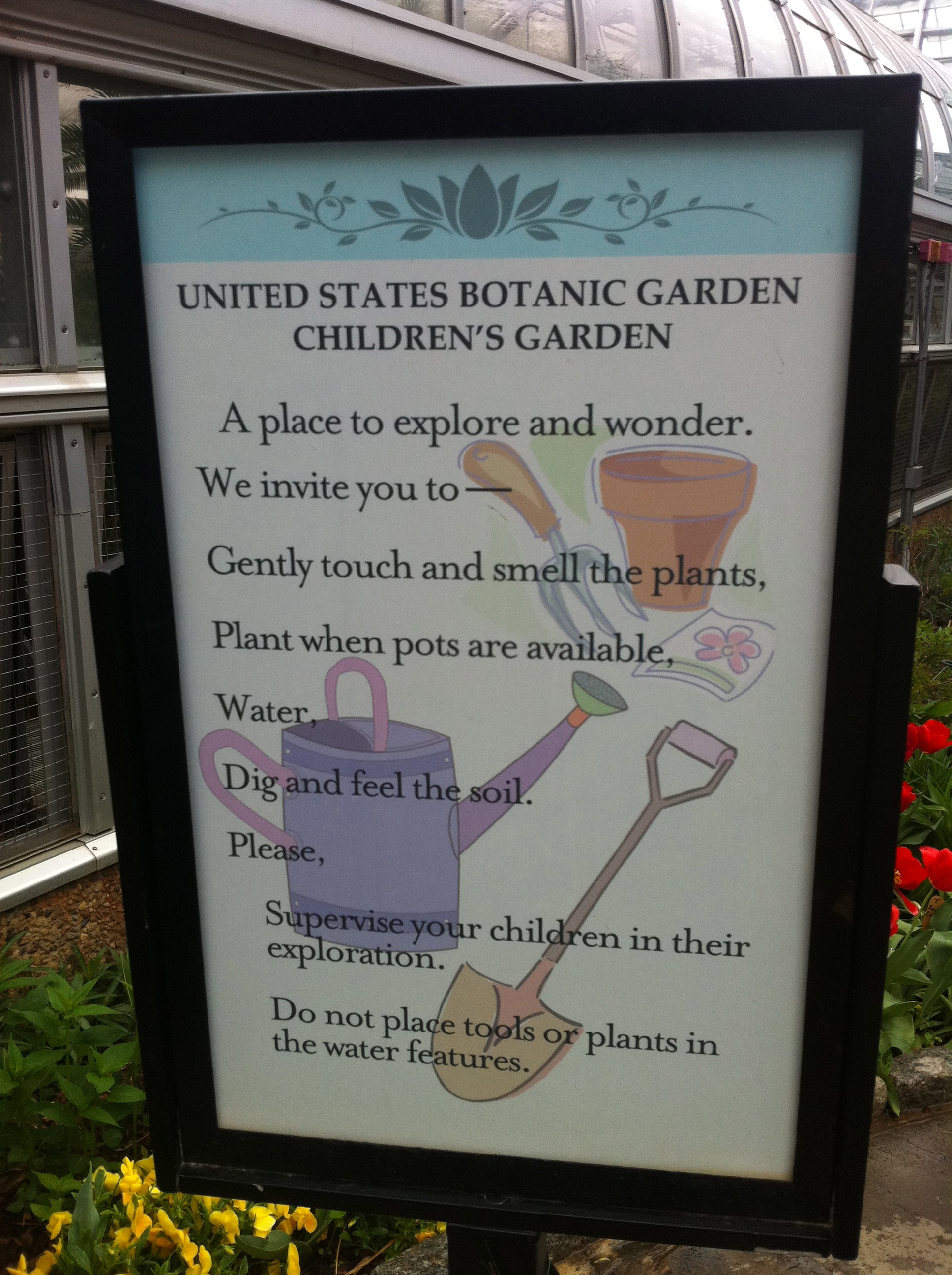
As has become my custom, I took pictures of some sweet ideas for children’s gardens at the United States Botanic Gardens.

Upfront, they give permission to use the senses:

IMG_6471

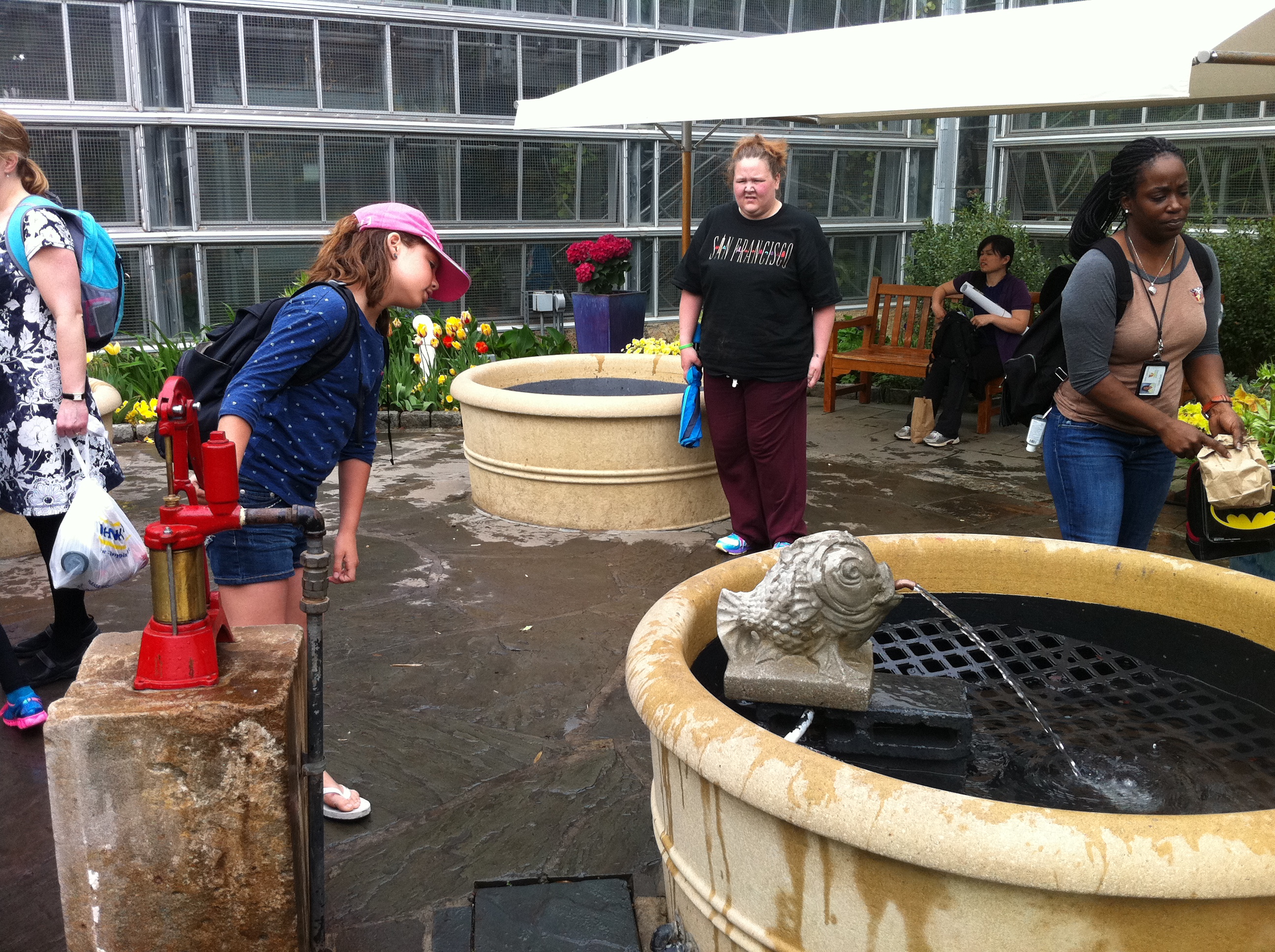
Kids cranked on this old-fashioned pump to fill the pool…

IMG_6474

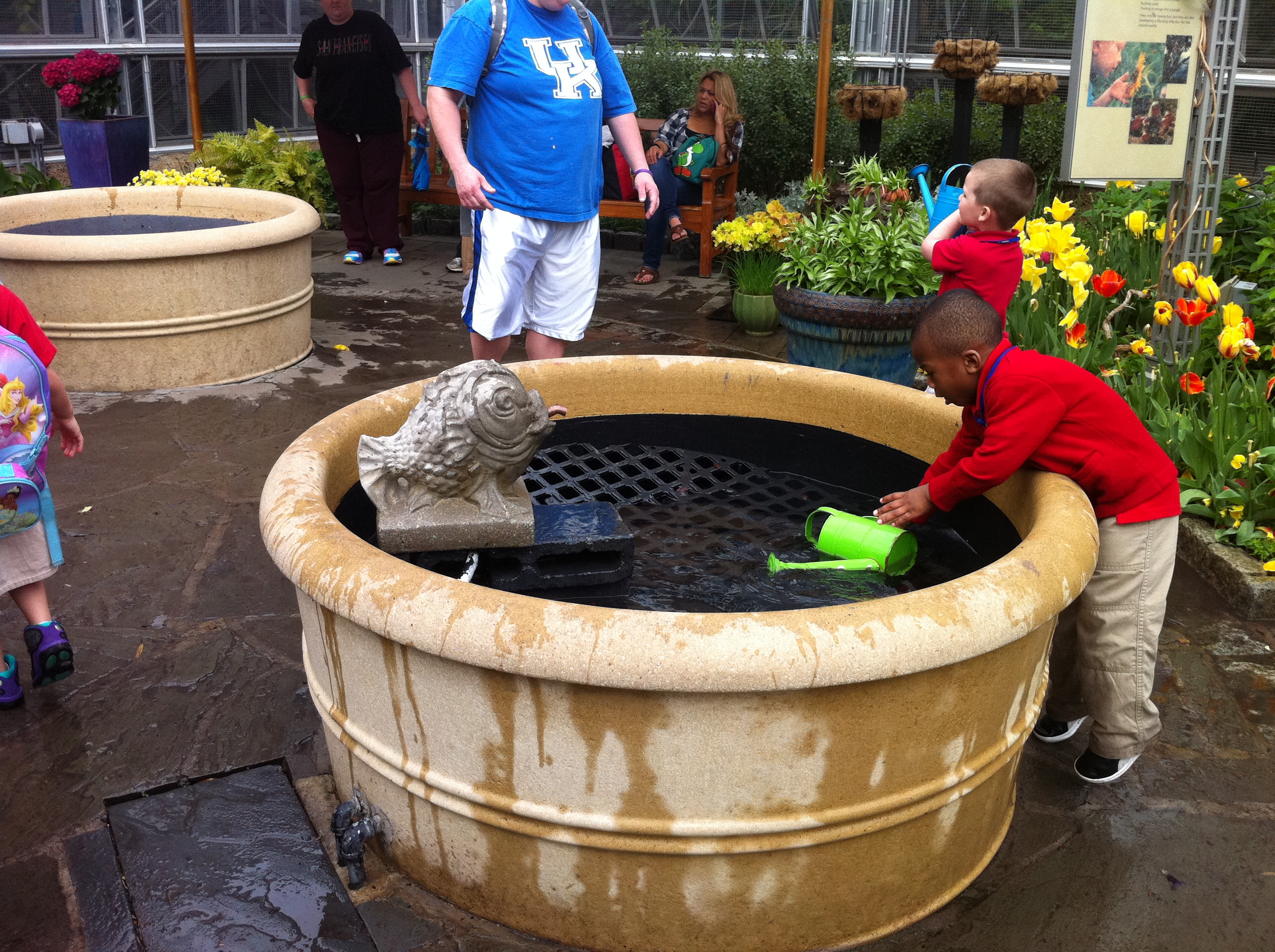
….and then kids filled up watering cans….

IMG_6473

….and watered everything in sight.   ( I imagine they’ve got the most well-draining soil imaginable)….

IMG_6470

Brightly painted details always add a touch of whimsy.

IMG_6476

If you’re reading this and you’d like to help me install a mailbox in our school garden, I would take you up on it.  I love this idea as a way to store how-to handouts for visitors (i.e. One of our beneficials is working on a one-page sheet on how to construct your own gopher cages to plant in.)

IMG_6506

We saw an exhibit on plants that traveled because of the Perry Expedition.  I’m completely intrigued by the worldwide migration of plants, and I think it’s a good hook for pulling kids in to both botany and history.

IMG_6499

Rooftop gardens are big right now, but how fun that this one on top of a playhouse is accessible and eye-level (at least for adults?)

IMG_6483

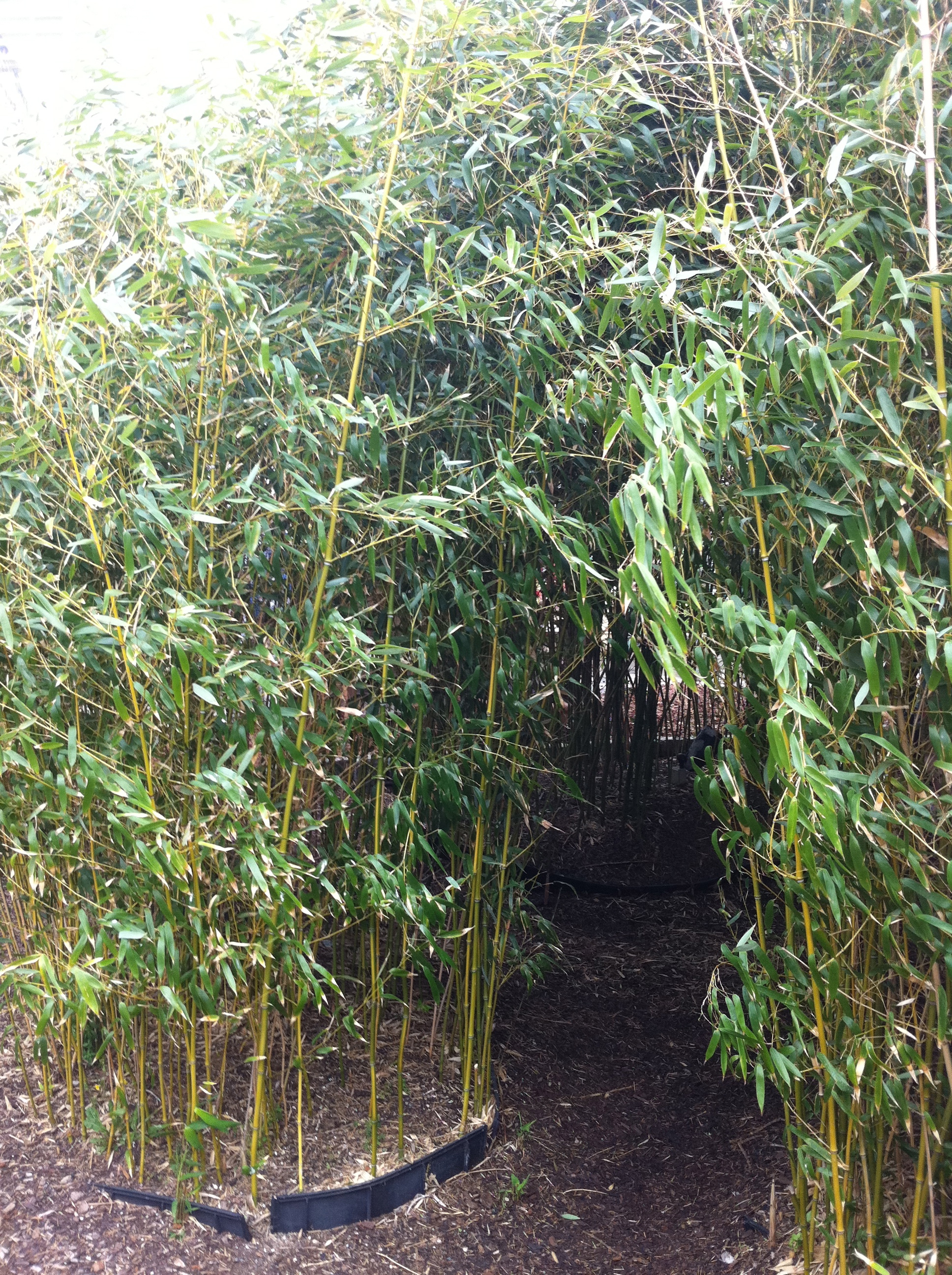
A common element in children’s gardens: little, green spaces to crawl into.  Here: a bamboo grove of one’s own.

IMG_6479

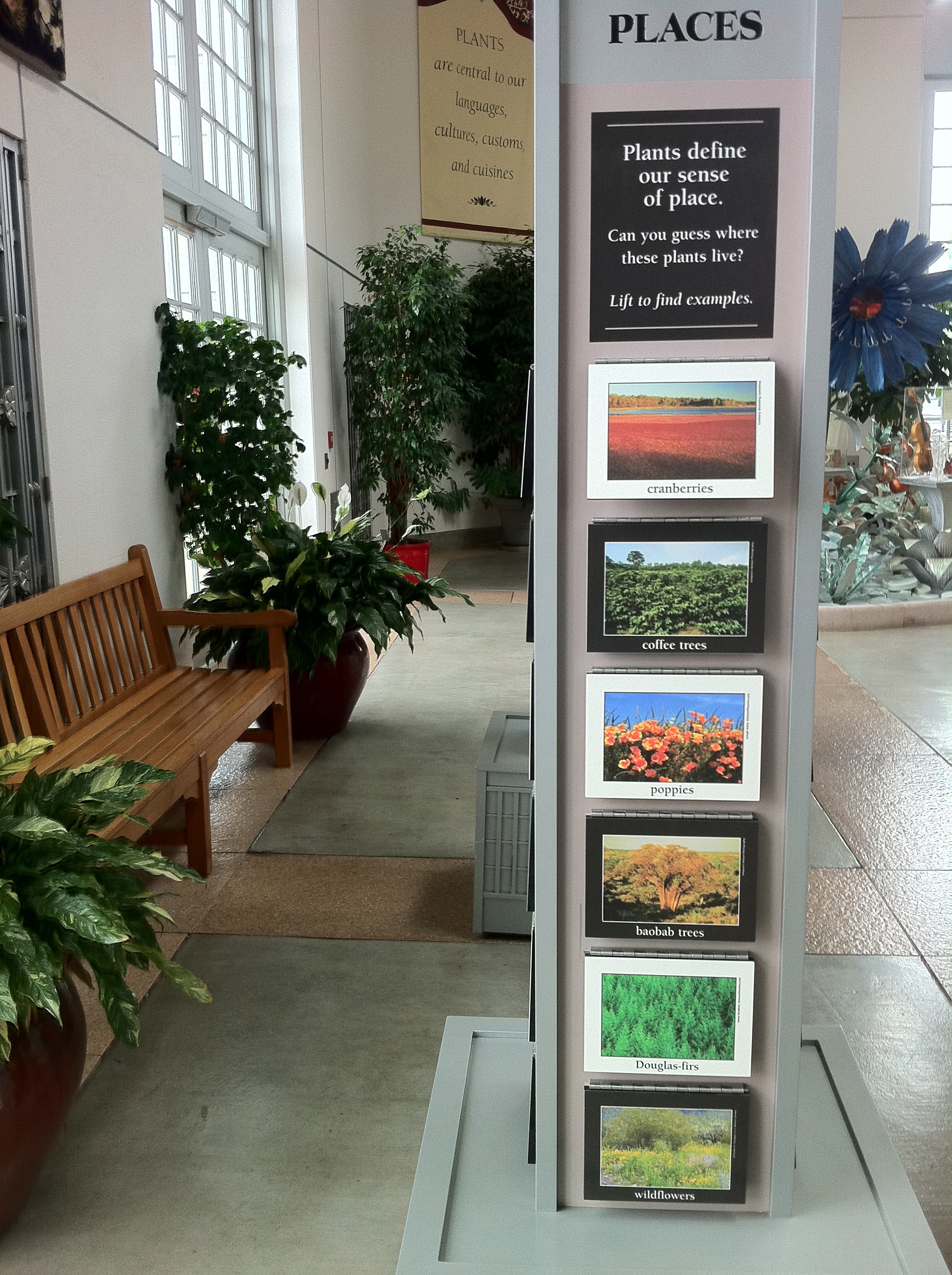
Another personal interest:  how do plants, trees and flowers contribute to our sense of place?  I know I feel more “grounded” every year in Julian as I learn my plants, note subtle changes in the succession of blooms, recognize patterns in the seasons, expect certain smells, etc.

IMG_6503

Another angle to explore in the garden:  food across cultures.  This was built for smelling!

IMG_6505

A few experiential stations were set up.  At this one we made seed balls with soil, clay and wildflower seeds to toss in a garden, vacant lot, etc.  The woman encouraged me to take it home, even though I live in California. I was on vacation, so I didn’t strike up a conversation about my classified work with native plants, and just politely gave it to my D.C. friend. 🙂

IMG_6488

The low-hanging fruit?

If you’ve been to Julian, you’ll know we are associated with one thing above all else:  apples.  Orchards, apple pie, the annual Apple Days celebrations, apple-themed gifts in the shops, etc.

Say Julian–think apples.

And every day in our cafeteria we serve apples from Oregon and Washington State, even when Julian apples are in season.

This is one of a million ways in which our food systems are disconnected. It happens all around the world, to the detriment of our planet (all that transportation!) and our palate (stored and shipped food is often inferior, for obvious reasons.)

Naturally, in my role as Farm to School planning grant director, this is one of the first things I’m tackling.  And as simple as it sounds—swap out one apple vendor for another—it’s really very complicated, in ways that you can only appreciate when you dive into the specifics of the ways things are, as I’ve been doing.

Big thought for the day: systemic change is hard.

But not hopeless.  We are working away diligently on the ways things could be by investigating how to get local apples and pears onto our school lunch menu.

Until then, we’re going to do one better:  plant apple trees on our campus.

Yesterday the organizer of the newly-formed Julian Apple Growers Association, Teak Nichols, came by school to spend the afternoon putting bare root trees in the ground with our Garden Ambassadors.  Raised here in Julian, Teak has a passion for preserving the collective knowledge base, economic importance and cultural resource of apples.  So we worked with a handful of kids to enlarge our small orchard.  He’ll be back to teach pruning, and I imagine many other things as we connect his group with our efforts at school.

Teak had just asked a question like, “Who wants to plant the Fuji?”  Um, is the enthusiasm of these kids coming across?

038

Photo courtesy of Marisa McFedries

Under Teak’s instruction, the kids dug the holes, properly sited the trees, filled them in, watered, staked, labeled and wrapped sunburn protection around the trunks.  (Notice their official gear.  The shirts were meant for formal occasions, but these kids love any excuse to put on their ambassador shirts.)

112

Photo courtesy of Marisa McFedries

Beautiful weather, outdoor education, the promise of fruit, excited kids….I’m not great at containing my excitement.

207

Photo courtesy of Marisa McFedries

242b

Photo courtesy of Marisa McFedries

Garden Tour, April 2013

Join me as we take our periodic stroll around the garden!

Junior High students often change the message on the blackboard hung in their garden.  Yes, welcome indeed!

IMG_6194

I might have mentioned we are planting a lot of peas to get ready for our first Harvest of the Month program in May.  (Pinecones are to discourage critters from walking in the bed.)

IMG_6220

As we were harvesting the broccoli, one child told me she didn’t know that the part of broccoli we eat is curled up flowers. I told her we’d leave one plant in the ground to flower so she could see for herself.

IMG_6222

Broccoli is also coming up in one of our container gardens.  That’s one of the funny things about school gardens—mystery plants!  (Someone, at some time, had an idea, a vision, a spare plant…who knows?)

IMG_6226

The strawberry plants look luscious.  Keep. meaning. to. enclose. them. in. nets.

IMG_6214

The tulips are finally up in the breast cancer awareness ribbon.  Watching them bloom took on new meaning for me this year as two very brave and beautiful friends of mine have kicked cancer’s butt in the last year.

IMG_6282

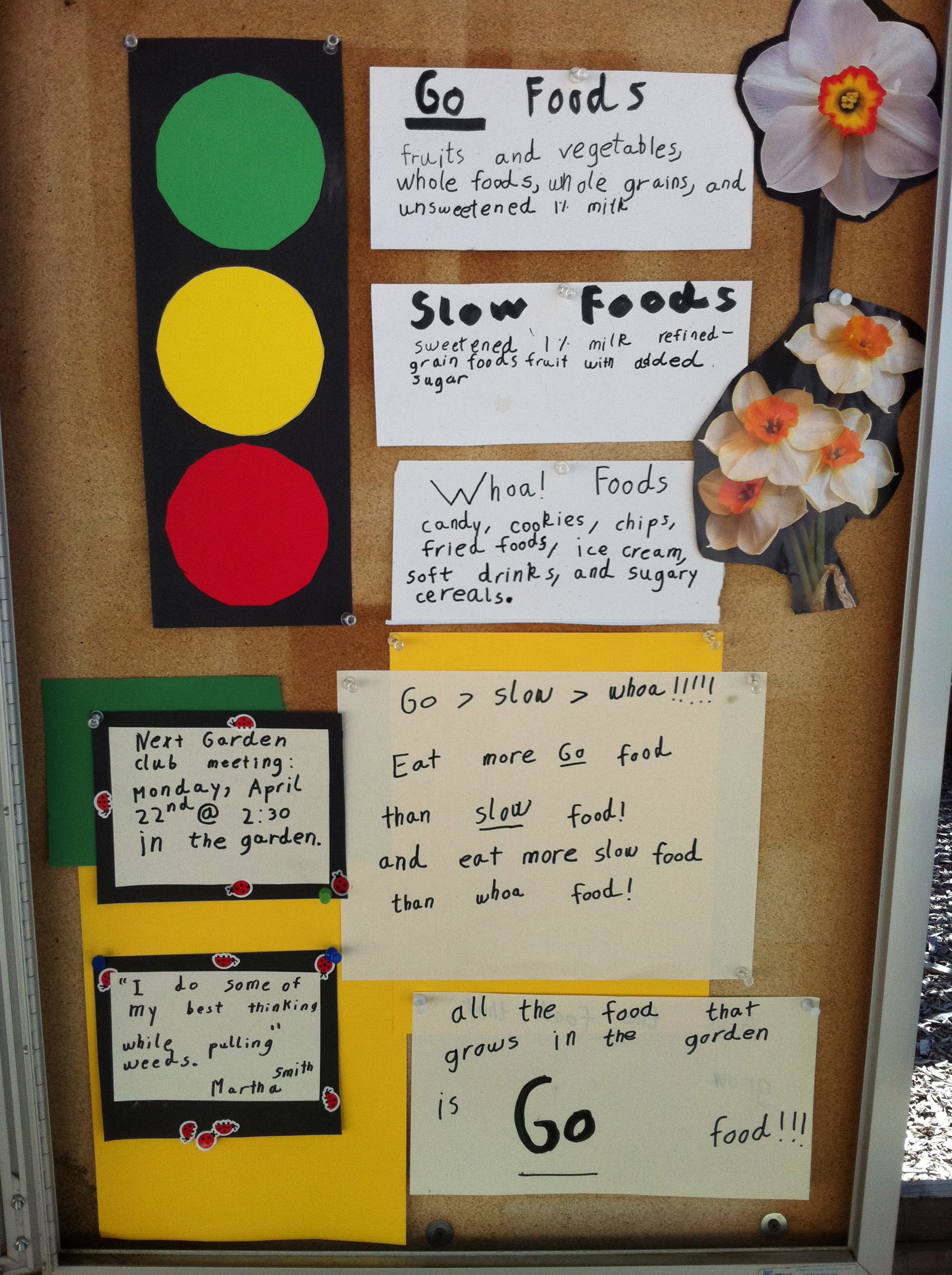
New child-created signage on the bulletin board on the CATCH nutrition concept:  go, slow and whoa foods.

IMG_6269

We’ve been moving native strawberries out of this prime veggie growing location to the hillside around the fruit trees, as a move toward a permaculture fruit tree guild.  We hadn’t moved all of them by Science Day though so I split the bed to make some room for pea planting, pinning back the strawberries with some white picket fencing we keep moving around the garden.  Cute!

IMG_6290

Someone donated this flag last year, and we fly it—announcing our allegiance to daffodils!

IMG_6298

Mrs. Shull’s fourth grade class peas.  Each child did a letter on an index card, I laminated them and kids taped them to bamboo skewers.

IMG_6284

We have a gazillion wildflower seeds in the garden, from seed ball making activities, former projects, etc.  Wildflowers have a special immunity in our garden.  Wherever they want to pop up, we gladly let them stay.

IMG_6305

This little donated table broke.  No worrries. With a tree stump standing in, it makes another cozy little spot to hang out in the garden.

IMG_6273

A local grape grower trimmed these for us!  Our first crop this fall?  (Stay tuned.)

IMG_6288

Look who decided to bloom.  (Oh little wisteria, you have no idea how close you were to being uprooted.)

IMG_6262

Our honeysuckle reading teepee.  Last week a child sitting inside yelled, “Mrs. Elisara!  Come here!  There’s a chrysallis at the top of the teepee!”  Sure enough, a butterfly-to-be was dangling from the ceiling.  (The president of the entomology club later ID’ed it.)

IMG_6261

If you’re not familiar with Box Tops, they are the little pink coupons found on hundreds of products.  Schools collect them and mail them in, receiving 10 cents for each one.  It adds up, and at our school, the proceeds have been earmarked for the garden.  Twice a year we receive a check.  Here’s what we bought with our latest earnings: pea trellises, bean towers, seed starting mix, trays, compost, and our 3×3 raised bed frame.

IMG_5976

Finally, it’s always good to step back and get the big picture!

IMG_6276