Food Day Nibbles, part 2

To celebrate National Food Day at the end of October, our elementary and junior high schools presented 14 workshops about agriculture, nutrition and cooking to which students rotated all day. Here’s a taste of all of the hands-on learning that happened.

Resource Conservation District of San Diego joined us for the first time to teach kids to make pots out of newspaper and plant herb seeds for windowsill gardens.

IMG_4840

IMG_4887

Julian schools alumna Jill talked about growing up in Julian, going to UC Santa Cruz and starting her own farm, Mountain Chickadee Farm .

IMG_4875

Chef Greg from Healthy Adventures Foundation taught another wonderful cooking class.

IMG_4880

Camp Stevens headed up a workshop on making fresh smoothies.  Very hands on with the kid-safe knives!

IMG_4841

Mr. Martineau led a fun and educational workshop on the use of animal byproducts in everyday products, having students guess ingredients.  Also included: how many bug parts in different foods—perfect for junior high!

IMG_4851

UC Regent’s Farm Smart program once again joined us and presented another excellent hands-on workshop on corn.

IMG_4869

Chef Jeremy from Jeremy’s on the Hill (and Jeremy’s on the Campus, our school lunch program) led a workshop at the junior high, talking about his restaurant and getting feedback from kids about school lunch
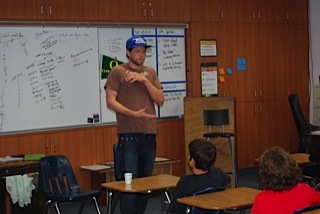
Image 10

Mrs. Croman taught a special music class with food songs!

IMG_4898

Kids pressed their own apple juice from local fruit, with help from the Julian Apple Growers Association.

Image 6

IMG_4864

The amazing Mrs. Cantor taught the kids to make sweet and savory crepes.  Later in the day volunteers delivered extras to all of the volunteers and staff.  Final count:  280 dinner plate sized crepes.

IMG_4847

Local family and farm Cook Pigs joined us, talking about their sustainable operation and letting kids interact with their dog and piglet Chewbaca.

IMG_4838

Juicing seminars, with the bicycle blender out for a spin! Image 14 Image 8 Image 11

All students returned to their classrooms to write about the day in their garden journals.

IMG_4899

Not pictured:  Mr. Pierce showed and discussed food films from the Nourish series, Mr. Duffy taught a food safety class as he and Mr. Lay made chicken-veggies kebabs on the garden’s BBQ, and Miss Carmen led a class on “eating real.”

We also extended Food Day into our after-school program with more cooking classes and a fieldtrip to a local restaurant.  I played a memory game with kitchen utensils and followed with a taste test of guavas, papayas, dates, fresh figs, etc.

IMG_4894

If you were involved in any way, thank you!!!  Will you come again next year? 🙂

Start with the ending

In addition to being one of my favorite David Wilcox songs, this is also how I feel about any big project.  Mission statements are important because they serve as a roadmap to where you want to go.  Our school garden has had one for a long time, and I return to it all the time, but just yesterday we finished a project to have it printed on a sign and hung in the garden for all to see.

IMG_4043

IMG_4044


IMG_4045

And just in time for this Saturday’s 2nd Annual Julian Garden Tour!  If you’re in Southern California, consider coming up for the day.  Seven gardens are on display, including the school garden, from 10-4.  Tickets, which are the maps to and the descriptions of the gardens, are $20 and can be bought at Town Hall on Main Street or Julian Elementary on the day of the event.  All proceeds benefit the district’s Farm to School efforts.

Thank you to Leslie and Brian at Wet Duck Design for creating and installing our sign!


March Garden Tour

It’s March in the garden, and it couldn’t be prettier.  Stroll with me.

Carmen from Julian Pathways led the effort to start a monthly “have lunch with your parent in the garden” event.  The first attempt was an unqualified success with over 50 students and parents sharing a meal on Friday afternoon.

Image 4

Photo courtesy of Scot Copeland

Image 3

Photo courtesy of Scot Copeland

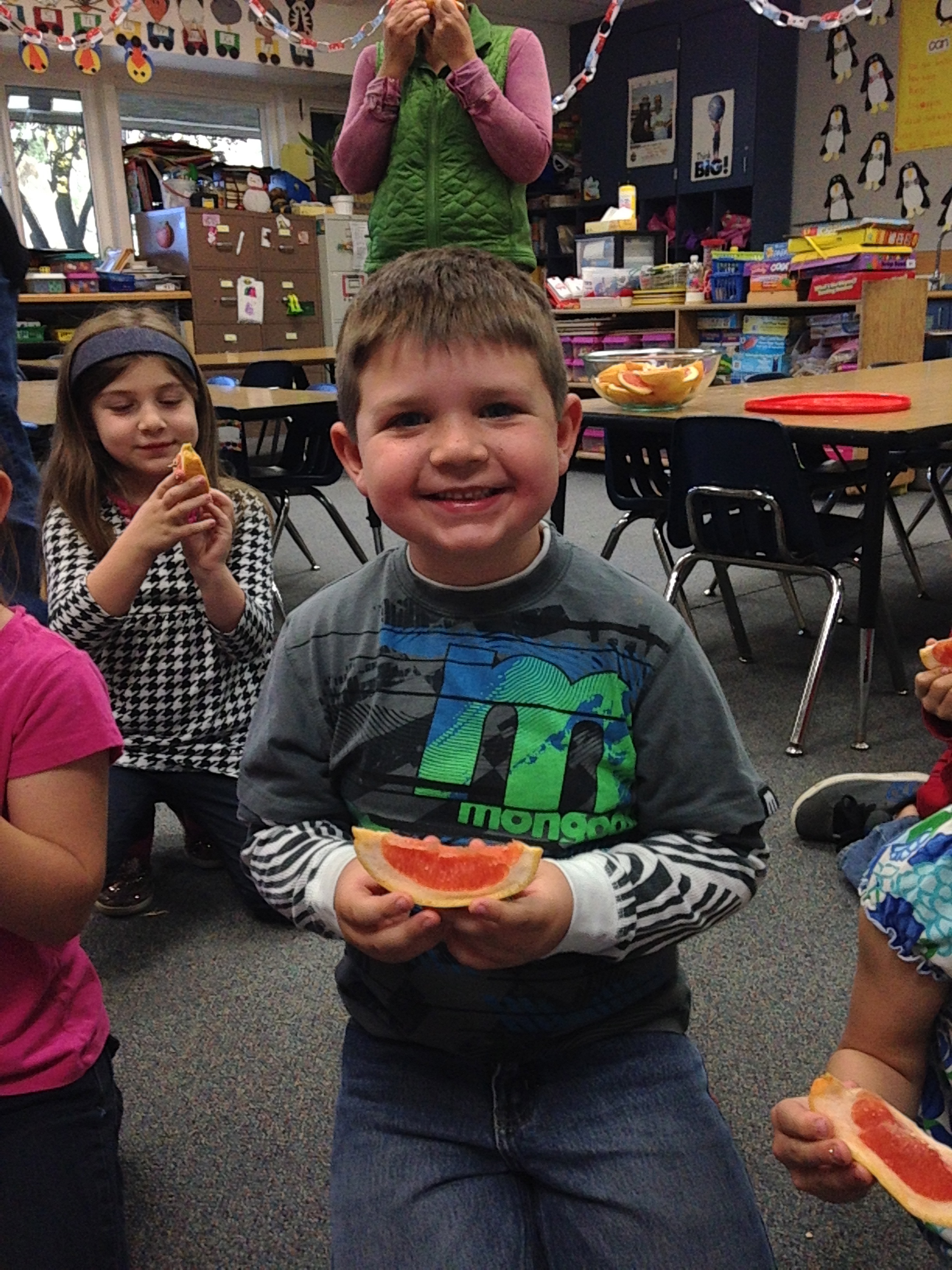
Our Harvest of the Month is citrus.  Citrus doesn’t grow in Julian so we tasted delicious grapefruit from the “neighboring” town of Borrego.

IMG_2836

IMG_2837

The breast cancer awareness ribbon is in full bloom!  Photo courtesy of 6th grade student Avery McFedries.

Image 11

Miss Lynn recently spruced up the gazebo with a new “coffee table,” pillows and a thorough cleaning.

IMG_2884

She also tucks these little things around the garden.  I love discovering them.

IMG_2885

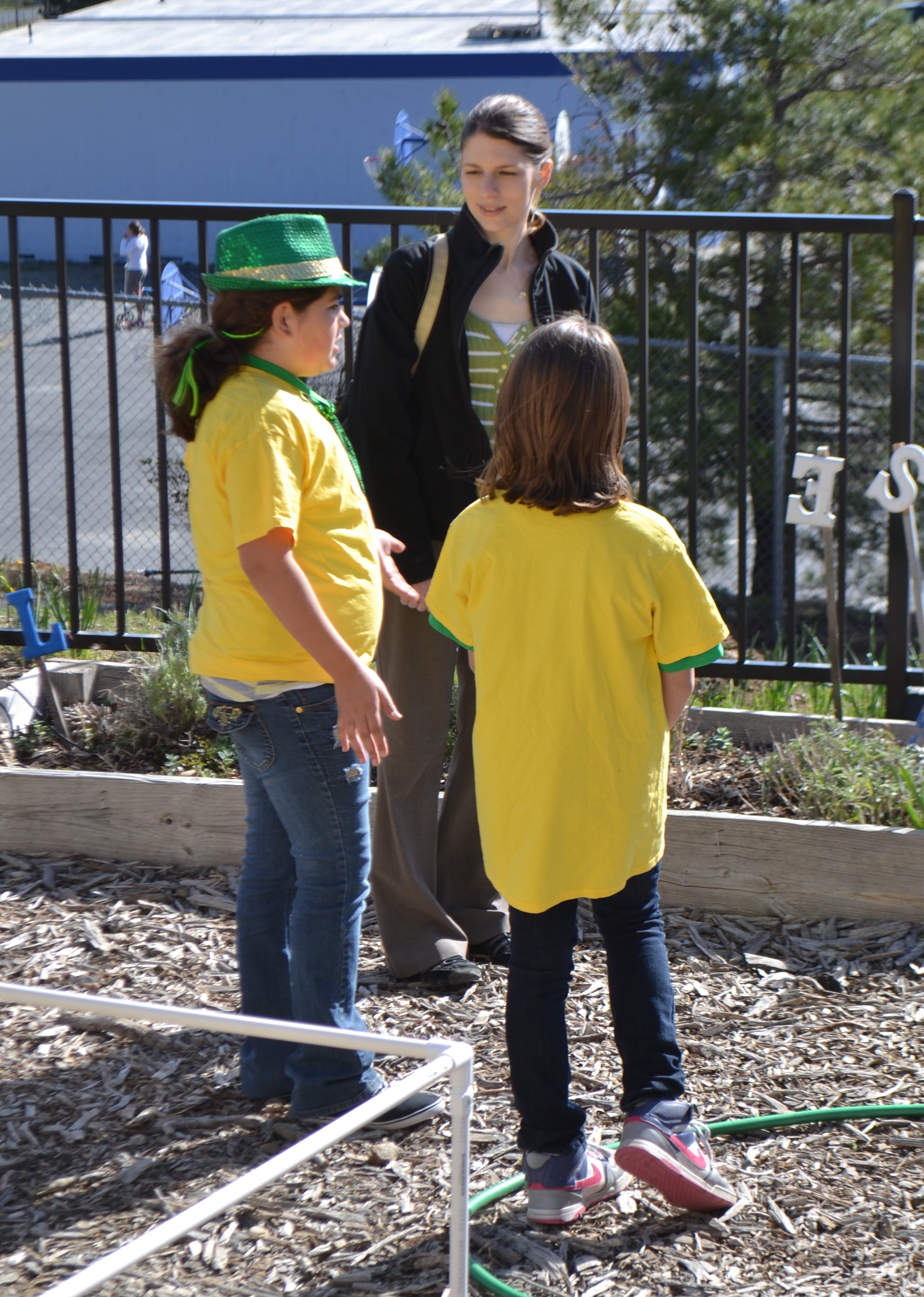
Pediatric residents from UCSD do part of their community health rotation at our district, through Pathways.  Garden Ambassadors, decked out in St. Patrick’s attire, give the doc a tour.

Image 8

We added a geranium to the new mailbox to match the flag.

IMG_2881

Second grade students seeded this new circular bed and wagon with California wildflowers.

IMG_2882

After the rains, one of the garden volunteers found this on the back slope of the garden.  We’re thinking bobcat?

IMG_2827

It was the garden’s turn to make a display for the front office.

IMG_2626

Julian kids get to plant a lot of daffodils but they rarely get to go back and pick them.  I had students make “surprise” bouquets for their teachers from flowers in the garden.

IMG_2774

I’ll close with a link that captures our teacher “flash mob” last October on National Food Day.  “We can change the world”—not just a pop song!  The truth!  (Right, Susi?)

http://www.youtube.com/watch?v=Y2ZZmOzmFqQ

Almost 200 children, in the garden, every week

Parents started the elementary school garden 4.5 years ago.  We started by cleaning the space up, followed by more cleaning up of the space.  We built structures, renovated a gazebo, added raised beds, commissioned a table, put the compost bins in place and began fundraising and grant writing.  Every year we push the project forward—adding wildlife habitat, fruit trees, a solar fountain, works of art, native plants, a rainwater harvesting system….  Three years ago we launched Garden Ambassadors..and then two years ago I began teaching a formal garden class every Wednesday afternoon during our enrichment classes.  Last year we dove head first into Farm to School.

This February our garden education program took a big leap forward.  Every class now goes to the garden, every week, for a 30-40 minute class which I am honored to teach.  Children are in the garden all day long, doing more than we’ve ever done before–learning vocabulary, writing, singing, planting, harvesting, cooking, eating, mapping, creating, exploring.  It has been thrilling.  Thank you to everyone whose vision, hard work and love for “kids in gardens” has brought us to this point!  Extra special thanks to Julian Pathways (our on-campus family and student support center which I will write more about soon)  for making this phase of garden instruction possible!

IMG_2538

With the ESK class, ready to sing and hunt for letter of the week in the garden

February Garden Tour

Time for a walk around the garden.  Leave your jackets at home—it’s 76 degrees here today in Julian.

I picked up these banners at a garage sale in my effort to add holiday touches to the garden.

IMG_2534

Miss Lynn added these:

IMG_2535

Valentines Day is the rule of thumb for planting peas, and peas we did plant!

IMG_2549

Kale is our harvest of the month, and my parent helpers/Garden Beneficials cooked up kale chips at our outdoor kitchen for the fifth graders.  One thing I have become convinced of during my tenure as garden teacher—-NUTRITION EDUCATION WORKS!  These kids were gobbling down the kale chips, begging for more, asking for the recipe, declaring it to be one of their favorite foods….uh, kale chips!

Harvesting from our new 3×3 beds:

IMG_2513

Cooking in our new little convection oven at our outdoor food prep station:

IMG_2518

Munching away:

IMG_2528

A Farm to School project recently finished!  I had sets of banners made for the crops that are grown in San Diego each season.  The winter set now enhances the indoor area where children pick up their lunches.

IMG_2488

Next to the banners is one of the photographs taken by a student in our after-school photography program Kids with Cameras, identifying the chef behind the meal.

IMG_2489

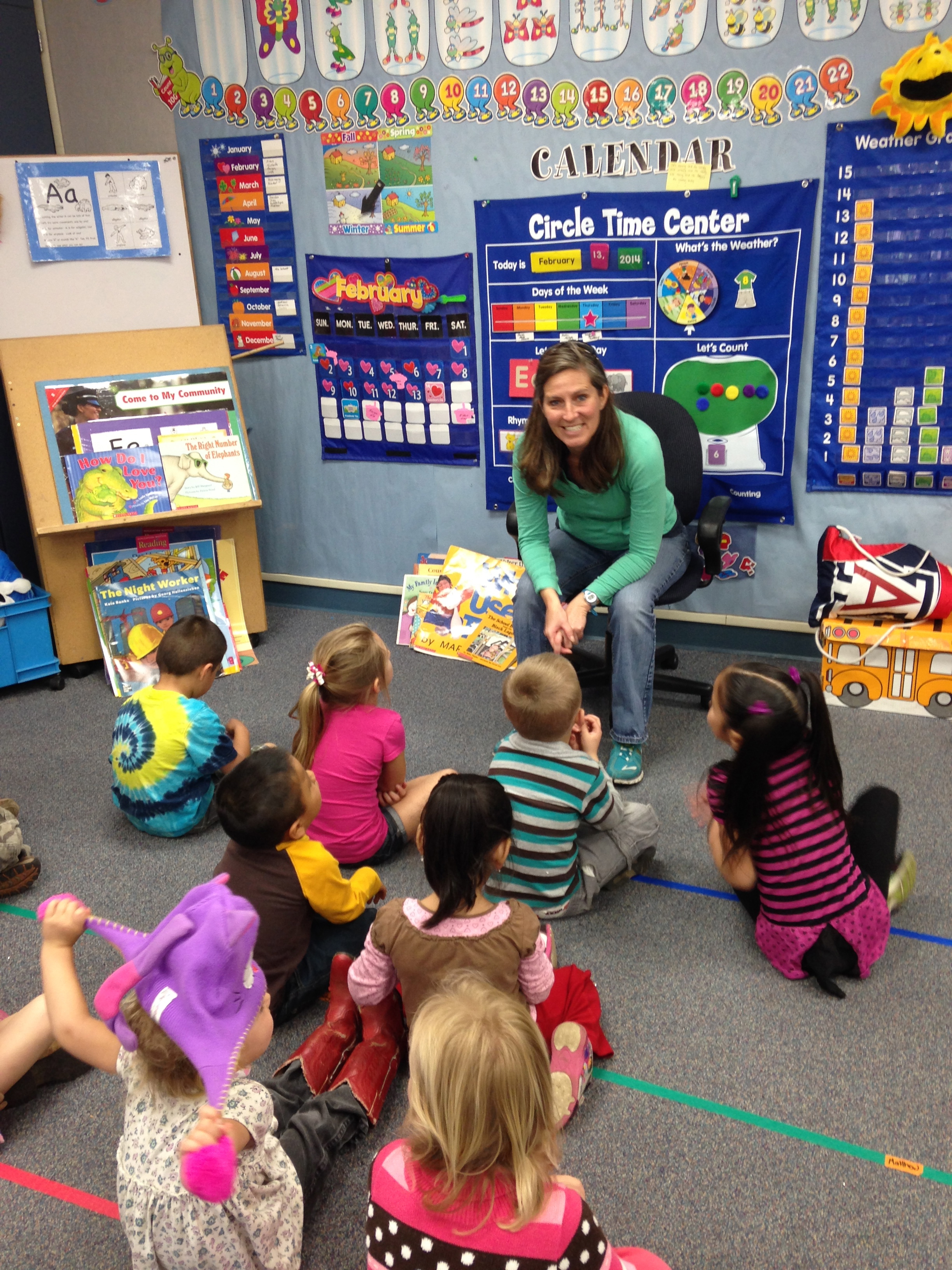
Early start kindergarten and kindergarten students focus on a “letter of the week.”  I’m using these empty picture frames to teach garden vocabulary.  The students hunt for them, and we learn the name of the object framed.  D-d-d-d for daffodil!

IMG_2533

Lastly, our district recently received a Live Well San Diego proclamation from our county board of supervisor for our wellness programs.  Pictured left to right–County Supervisor Diane Jacob, School Board president Eileen Tellam, Superintendent Kevin Ogden, and me.  Also recognized were Teresa and Jeremy Manley who were also present at the meeting.

IMG_2564

Thankful for restoration work

Last Thanksgiving break found me finishing a big project at the junior high garden.  We received funding to plant out the hillside adjacent to the garden with California natives.  I looked around for a volunteer landscape consultant, but when there were none to be found, I buckled down and did the research myself on the question:  What are the best native plants for slopes?

Visiting the “natives only” Las Pilitas nursery in Escondido (and their super informative website: http://www.laspilitas.com) told me everything I needed to know.  Planting natives requires adherence to a few important principles:

  • Ground should be saturated before the plant goes in so all the water isn’t drawn away.
  • Natives need lots of water the day they are put in the ground.
  • After that, you water only when you test the soil with your finger and feel that it is dry.  If it’s wet, leave it.  One exception seems to be that slope plants need water twice a week to get established.
  • Fall is a great time to plant because the rains will take up the slack in getting them established.
  • After they are established, they may need supplemental water in the summer—but after that, they’re good to go!
  • Shredded redwood bark (sometimes called “gorilla hair”) is a excellent choice for thick mulching around the plant.  I bought as many bags as I could shove in my car.
  • Natives are awesome:  They are appropriate to the area, create habitat, and thrive with minimal resources.

Here’s another cool aspect of this project.  We have four 60 gallon rain barrels hooked up to a portable classroom at the junior high.  Up until a few weeks ago we used this water exclusively—-no tap water at all—-to plant 40 plus plants on the hillside.  People wonder if small rainwater catchment systems make a difference.  They do!   Sixty gallon barrels fill very quickly catching even a modest amount of rain off a large surface, like a building’s roof.  Of course, they are now empty with our (distressing) dry spell.  We might get some rain tomorrow night, however, which will not only take care of the once-a-week watering they require to get established, but will also fill the barrels again to get us through the next stretch of (super distressing) drought.

I pulled students in to the planting when possible, grabbing a few volunteers at recess and taking students out during a Thursday enrichment class.  Rains in November, however, dictated the planting schedule, so I found myself there alone, digging, planting and mulching.  The hillside is bare and a little eroded, so putting in the plants helps to beautify one of the outdoor areas where children eat—an element in creating a Farm to School program.  These plants will also stabilize the bank over time while creating appropriate habitat for birds and butterflies.  So as I teetered on the hillside, digging holes and gazing down on our public school, I felt thankful  for restoration work which turns out to be personally restorative as well—a good way to kick off my Thanksgiving break.

Many thanks to the Community United Methodist Church of Julian Gallo Fund for making this project possible!

IMG_1931

The hillside is dotted with beautiful little natives, reaching deep for water.

IMG_1932

The big vision is to have this entire hillside landscaped with California natives. We’re 40+ plants on our way.

Winter Garden Tour

And by winter, I mean the months of November and December and not the weather, as it has been distressingly warm here in Southern California.  Shed your jacket and join me as we take a look around the garden in the past few months.

I’ve seen school gardens that add holiday decorations throughout the year, so I’ve been keeping my eyes out for ornaments and wreaths at garage sales.  At the end of my church’s rummage sale, everything was on sale for $1 a box. I walked away with big plastic ornaments and wreaths.  Students help me put it all up at the end of a garden class (building ownership!), and we added bunches of freshly cut incense cedar.

IMG_2072

IMG_2074

IMG_2079

A modest radish and broccoli harvest was enough for a treat on a whole grain cracker in Mrs. Younce’s class.

IMG_2038

Parent, friend and native plant guru Art Cole planned and purchased natives for the area to the side of the Kandu Gate.  Plants include creeping snowberry, “Joyce Coulter” Manzanita, monkey flower, sedge, yarrow and currants. Garden Ambassadors helped me dig holes and excavate rocks.

Later I added red mulch and plant markers to help keep students from walking over them.

IMG_2080

Our November Backcountry Collaborative marked the end of our 1 year USDA Farm to School grant.  Pictured below are a few of the seasonal crop banners we had made to decorate our lunch area.  Also pictured are two eight grade students (confession: the boy is mine) who are introducing the food film they made for their elective class, Food Justice.  The title of their film:  Pie-oneering, The story of the first commercial pie restaurant in Julian.

photo 2-1

“Garden Beneficial” Harvey and Mr. Copeland worked with students to build 3×3 beds to increase our edible space, a goal of our Farm to School planning grant.

photo 1

IMG_2078

Our harvest of the month for November and December: beautiful broccoli!  Notice the hoops and the agrobon, which we’ve used a bit with a few cold/snowy nights.

IMG_2075

Mrs. Dawson’s class harvested the rest of the broccoli for their holiday party, and the irrigation box has been stored inside in anticipation of freezing nights.  (Cross your fingers!)

Wreath making with herbs (primarily rosemary) and cedar was a successful holiday activity.  And the classrooms have never smelled better!

IMG_2016

IMG_2017

Happy New Year everyone!  Here’s to more stories flowing from the school garden….

New cameras, same ole magic

Kid with Cameras 4.0 just came to a lovely close.  Through Julian United Methodist Church’s Gallo Fund, we were able to purchase ten “teaching cameras” for the project.  Formerly, we worked with whatever cameras the kids had access to, and we spent a lot of time fiddling with each one.  It worked, but everything is now so much easier–the cameras are always available, batteries are charged, instruction is given once to everyone, and we don’t need to download images at the end of every class.

Over seven weeks, we had a classes taught by various local photographers.  Jeff Holt and Bill Bevill taught camera fundamentals:

IMG_1488

Then Anne Garcia took us through principles of composition, using her own work as examples as well as a few photos of Graham Wilder’s.

IMG_1503

We headed out to shoot in the school garden, with the objective of using some of the best images for a Garden Club photo card fundraiser.

_DSC0315

Photo courtesy of Bill Bevill

IMG_1516

Another class was held at Down the Road farm for farmer/chef portraits.  Enlargements of some of the day’s best photos will be hung in the school cafeteria to help children make connections between their lunch and the people that had a hand in growing/preparing it.

IMG_1616

Dave Pierce taught a class on still life, described here.

IMG_1675

Graham Wilder, a new instructor with Kids with Cameras, showed the students some of his images, encouraging them to find the “extraordinary in the ordinary.”

Image 7

Then we walked to downtown Julian to do just that.

IMG_1729

Another new addition to the class was the process for choosing the “best photo” to exhibit.  In the past, the instructors got together to look at film to pick the image.  This year, each instructor took home the memory cards for two students after our last day of shooting.  From those photos, the teacher narrowed them down to the best 10-12 images.  Then during our last class, they sat with the students for 1.5 hours and talked through each photo, discussing them at length and asking the kids for feedback.  Ultimately, the student picked their favorite.  I think this approach worked great:  the student had ownership of the photo to be exhibited, but they chose from a small pool already screened by the instructors, drawing upon their expertise.  As educational experiences go, I think this class was simply incredible.

IMG_1863

IMG_1864

As is now our tradition, we ended with an evening reception at the public library. Instructors spoke about the class, students talked about their photos, and everyone enjoyed refreshments while milling around with the artists.

_DSC0563

Photo courtesy of Bill Bevill

All photos remain on display for two weeks, and then the students get to take them home, along with a CD of all of their photos. Thanks to everyone involved for making this program an unqualified success!

_DSC0568

Photo courtesy of Bill Bevill

DSC_0647_4

Photo courtesy of Jeff Holt

DSC_0662_2

Photo courtesy of Jeff Holt

Food, ready for its closeup

Under Mr. Pierce’s instruction, today’s afterschool photography program Kids with Cameras class tackled still life, starring fruits and vegetables, to go with our “food focus” for this semester.  Stacey Peyakov from our local produce stand Wynola Flats donated produce for us to work with (thank you, Stacey!)

IMG_1646

I threw in my own week’s groceries as well as every basket, platter, small bowl and linen in my house.  Other instructors added vases, spools of yarn, a jug of paintbrushes, bowls, shells, lanterns…..  We ended up with a great selection of props.

IMG_1649

IMG_1648

Mr. Pierce gave an excellent short presentation on the concept of “still life,” and then outlined a few things the kids should be thinking about: light, texture, color, shadow, etc.

IMG_1654

Then the kids went for it.  And I loved it.  100% of the kids, 100% engaged, for 100% of the class.  I was in pedagogical heaven.

Selecting materials:

IMG_1655

IMG_1656

Our ratio of instructors/adults to students was almost 1:1.  The kids consulted with the teachers, and the teachers helped to set up their shots.

IMG_1659

One of the students suggested we tip over the tables to make areas to create the arrangements This worked great as a way to hang linens or butcher paper for backdrops.

IMG_1662

IMG_1675

IMG_1668

Watching the students exercise their creativity was a joy.  They’d work with one set of items they collected, arranging and re-arranging, and after getting their photographs, they’d head back and try something totally different.  I’d say they were definitely “in the zone.”

IMG_1679

IMG_1683

IMG_1681

These faces say it all!  A great day!

IMG_1676

Garden Tour: September 2013

Never have I gone so long without a post—never have I had a busier first six weeks of school.  (A friend gently pointed out I always say that.)  Anyway, welcome back, dear readers.  Let’s stroll around and catch up.

Starting at the junior high garden, the umbrellas were installed at the mosaic tables, providing much needed shade in these warm school months.  We got good ones–sturdy and rated for wind.

IMG_1317

I met with two “Garden Beneficials” on a Saturday to dig up comfrey and broccoli at Mary’s house to transplant to school.  (Gardens grow community!)

IMG_1328

How how I love these ladies! (Laural and Mary)

Grant money paid for this all-weather chalkboard.  Domingo hung it for us behind the outdoor kitchen prep island so that we can write recipes, illustrate lesson plans, and more!

IMG_1359

Once again applications went out to the fifth grade students, and I picked a new crop of 10 ambassadors.

IMG_1422

IMG_1424

Four varieties of fresh figs were donated by the Farm Stand in Escondido for a taste test at recess.

IMG_1372

For our harvest of the month (September—tomatoes), we harvested, made salsa, learned tomato trivia, looked at pictures of heirlooms, and read children’s books.  My “garden beneficials” group continue to bless us all with their time and commitment to teaching with me in the garden.

IMG_1432

IMG_1434

IMG_1393

One week I gave two tours: one to the United Methodist Women, another to the Ramona Garden Club.  Both were big garden lovefests.

IMG_1382

I lalso led a weekend fieldtrip to Camp Stevens as part of our Farm to School program.  Camp Stevens has an amazing organic farm, garden and outdoor education program—an incredible resource in Julian.  We played “Jays vs. Chickadees” under the oak trees and then went out to the field to make our own salsa on the spot.  You took a chip, went and grabbed a cherry tomato off the vine, then brought it back and piled on onions, peppers, cucumbers that Rita was furiously chopping up.  Repeat.

Image 7

IMG_1459

IMG_1452

After helping to harvest the spaghetti squash, we headed back to the main camp for their “seasonal supper” to which they invite the larger community.

IMG_1468

All the bins back at school got turned and compost sifted to make room for this year’s lunchtime scraps. Ambassadors are posted at the trashcans at lunch to help kids put their leftovers in the right bucket, and then third grade helpers come out to dump the scraps, add straw, add rainwater, and then return the buckets to the lunch area.

IMG_1427

And finally, I’ve enjoyed working with my son’s 2/3 class every Friday for a half hour of “garden time”—a new thing I’m trying with his teacher.  We are learning songs, memorizing plant names, eating what’s ready, going on sensory walks and drawing in our journals.  My son’s class is a very sweet group of kids who absolutely love the garden, and I look forward to our time together each week.

IMG_1398